

Snake plants are known for being tough and nearly indestructible. So when you notice soft, mushy, or bending stems, it can feel alarming.
The good news? Soft stems are usually fixable — especially if you act quickly. In this guide, you’ll learn what causes soft stems on a snake plant and exactly how to fix the problem step by step.
Why Are Snake Plant Stems Soft?
Soft stems on a snake plant (Sansevieria or Dracaena trifasciata) almost always point to moisture-related stress. These plants store water in their thick leaves and rhizomes, so too much water quickly causes damage.
Here are the most common causes:
1. Overwatering (Most Common Cause)
Snake plants prefer dry soil. When watered too frequently, the roots sit in wet soil and begin to rot. Once roots rot, the leaves lose support and turn soft or mushy at the base.
Signs of overwatering:
- Yellowing leaves
- Soil that stays wet for more than a week
- A foul smell from the pot
- Black, mushy roots
2. Poor Drainage
Even if you water correctly, poor drainage can trap moisture.
This happens when:
- The pot has no drainage hole
- The soil is too dense or compacted
- Decorative cachepots hold excess water
3. Root Rot
Root rot is the advanced stage of overwatering. It spreads upward from the roots into the base of the leaves, causing soft, collapsing stems.
If the base of the leaf feels slimy or smells unpleasant, rot is likely present.
4. Cold Damage
Snake plants are sensitive to cold temperatures below 50°F. Exposure to cold drafts or freezing temperatures can cause cells to rupture, leading to soft, watery leaves.
Step-by-Step: How to Fix Soft Stems on Snake Plant
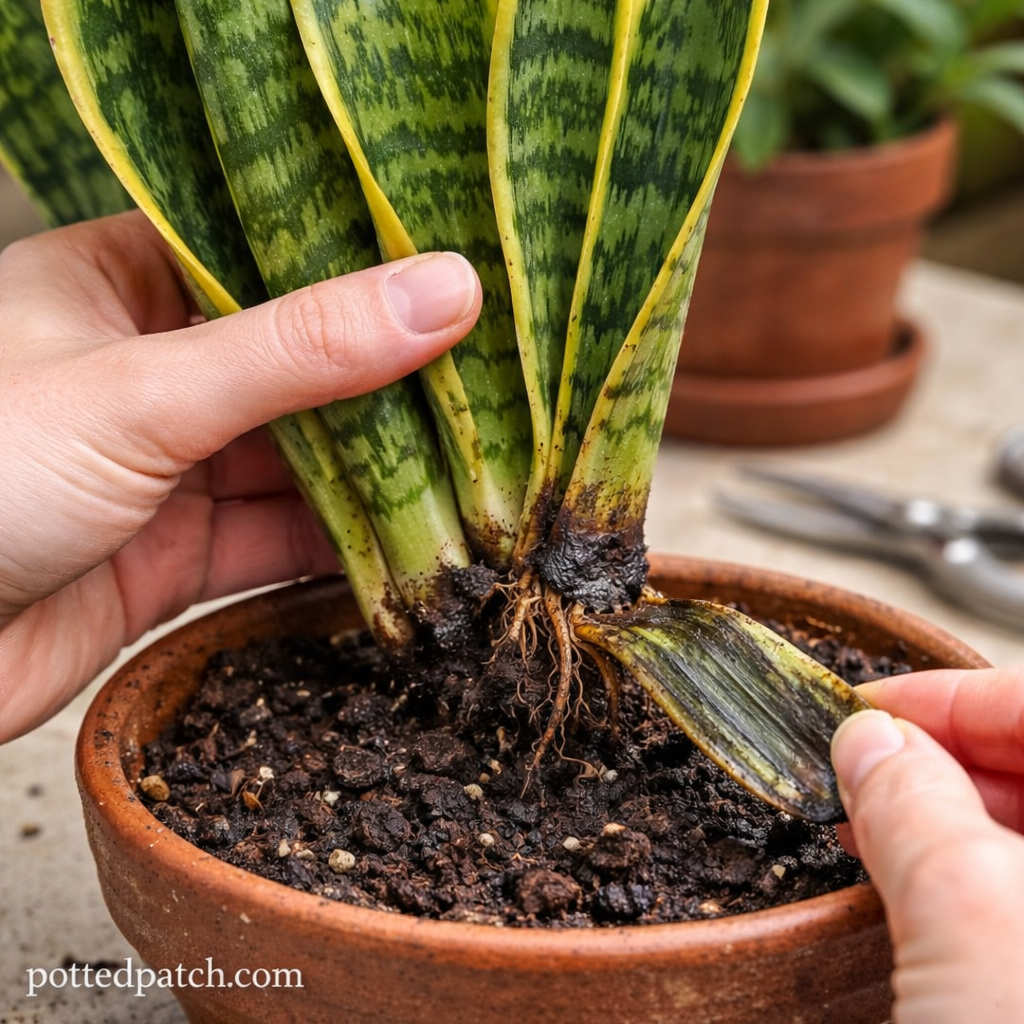
The solution depends on how severe the damage is.
Step 1: Remove the Plant from the Pot
Gently take the plant out and inspect the roots.
Healthy roots are:
- Firm
- White or light tan
- Crisp, not mushy
Rotten roots are:
- Brown or black
- Slimy
- Smelly
If roots look healthy and the soil is just wet, you caught the issue early.
Step 2: Trim Away Rotten Roots and Leaves
If rot is present:
- Use clean, sterilized scissors.
- Cut away all mushy, black roots.
- Remove any soft or collapsing leaves at the base.
- Discard affected material — do not compost.
Only firm, healthy sections should remain.
Step 3: Let the Plant Dry Out
After trimming:
- Leave the plant out of soil for 24–48 hours.
- Allow the roots and cut areas to dry and callous.
This prevents rot from spreading when you replant.
Step 4: Repot in Fresh, Well-Draining Soil
Use a pot with drainage holes and a fast-draining soil mix.
Ideal soil mix:
- Cactus or succulent soil
- Add perlite or pumice for extra drainage
Avoid regular heavy potting soil without amendments.
Place the plant back into dry soil and do not water immediately. Wait about 5–7 days before the first light watering.
Step 5: Adjust Your Watering Routine
After recovery:
- Water only when the soil is completely dry.
- In most homes, this means every 2–4 weeks.
- In winter, even less.
Always test soil moisture by inserting your finger 2–3 inches deep before watering.
Can a Soft Snake Plant Recover?
Yes — if the rot hasn’t reached the entire rhizome.
If only one or two leaves are soft, remove them and the rest of the plant can survive.
If the base is fully mushy, you may need to propagate healthy leaf sections instead.
How to Propagate if Damage Is Severe
If the main plant cannot be saved:
- Cut a firm, healthy leaf.
- Let the cut end dry for 24 hours.
- Place it in water or well-draining soil.
- Keep in bright, indirect light.
New roots will eventually form, allowing you to start fresh.
Preventing Soft Stems in the Future
Snake plants thrive on neglect. To avoid soft stems:
- Use pots with drainage holes
- Choose fast-draining soil
- Avoid watering on a schedule
- Keep away from cold drafts
- Empty decorative trays after watering
Remember: It’s much easier to revive an underwatered snake plant than an overwatered one.
When to Worry
You should act quickly if:
- The base of the plant smells foul
- Multiple leaves collapse at once
- The plant feels unstable in the soil
Early intervention dramatically improves recovery chances.
Final Thoughts
Soft stems on a snake plant are almost always a moisture issue. While it can look serious, most cases are reversible with proper trimming, fresh soil, and better watering habits.
Once corrected, snake plants bounce back and continue to thrive with minimal care.
If you’ve caught the problem early, your plant should recover just fine.