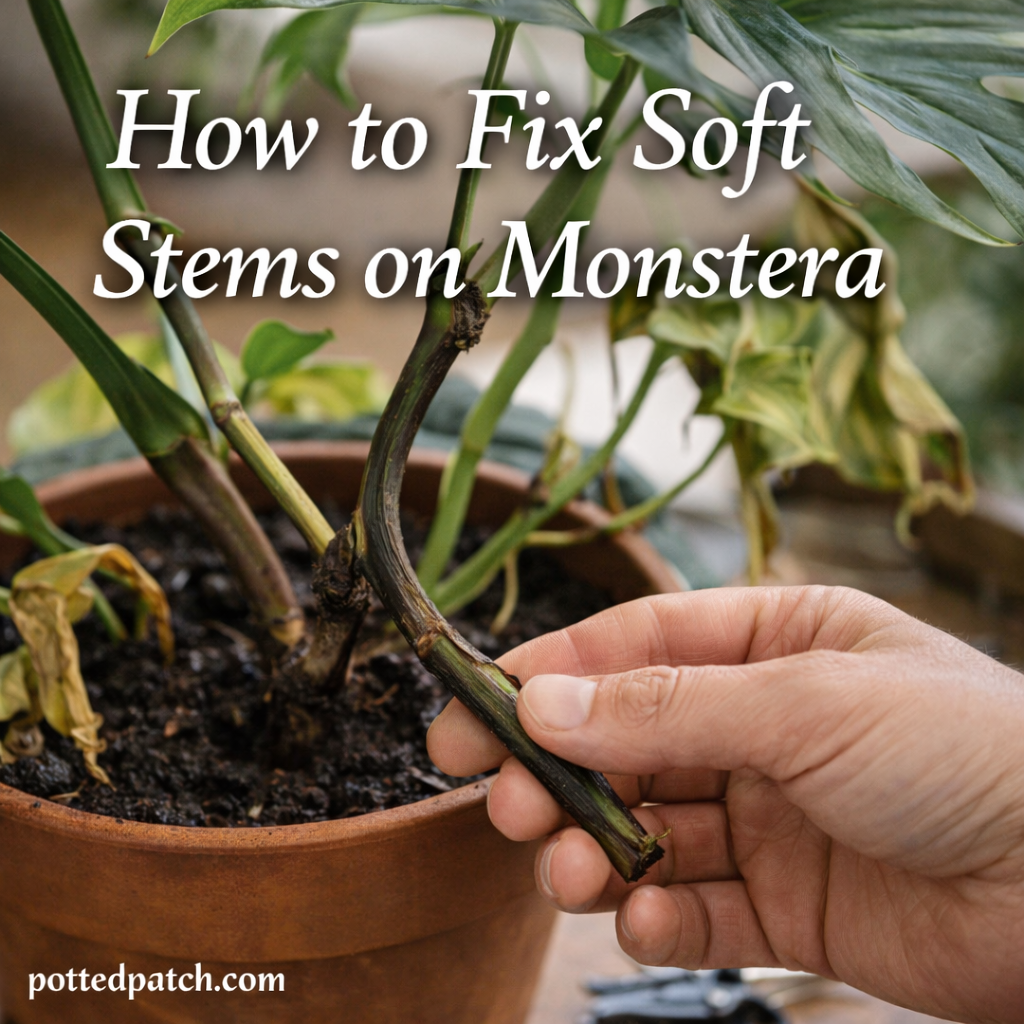
Soft stems on a monstera are a clear sign that something in the plant’s care routine is off. Healthy monstera stems should feel firm and supportive, even as the plant grows larger. When stems become soft, bendy, or mushy, the issue usually involves watering, roots, or environmental stress.
This guide explains why monstera stems turn soft, how to identify the exact cause, and what steps to take to fix the problem before permanent damage occurs.
Why Monstera Stems Become Soft
Soft stems don’t happen randomly. They’re almost always a response to stress at the root or stem level.
The most common causes include:
- Overwatering and root rot
- Poor drainage or compacted soil
- Low light over long periods
- Cold temperatures or drafts
- Bacterial or fungal stem rot
Identifying the cause early makes recovery much easier.
Check for Overwatering and Root Rot First
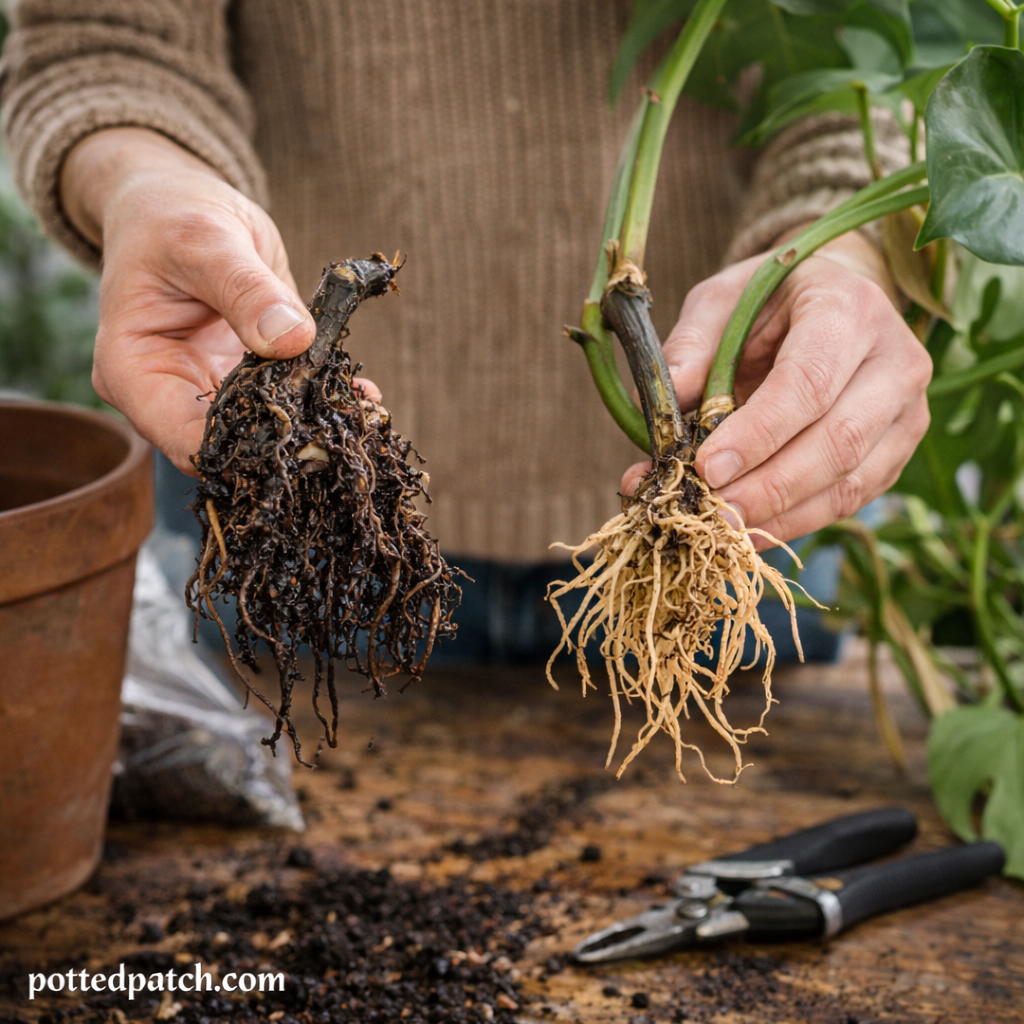
Overwatering is the leading cause of soft monstera stems.
When roots sit in soggy soil, they lose access to oxygen and begin to rot. Once roots fail, the stems above them soften because they’re no longer supported properly.
Signs of overwatering include:
- Soft or mushy stems near the base
- Yellowing leaves, especially lower ones
- Soil that stays wet for days
- A sour or rotten smell from the pot
If these symptoms are present, act quickly.
How to Fix Soft Stems Caused by Overwatering
If overwatering is the issue, follow these steps:
- Remove the monstera from its pot
- Gently shake away excess soil
- Inspect the roots
- Trim away black, mushy, or foul-smelling roots
- Repot in fresh, well-draining soil
- Use a pot with drainage holes
Allow the plant to dry slightly between waterings going forward.
Evaluate Soil and Drainage Quality
Even if you’re watering carefully, poor soil can trap moisture and cause stem problems.
Monstera need loose, airy soil that drains quickly.
Good monstera soil should include:
- Standard potting mix
- Perlite or pumice for drainage
- Orchid bark or coco chunks for airflow
Avoid dense, compacted soil that holds water too long.
Low Light Can Weaken Monstera Stems
Insufficient light causes slow growth and weak, soft stems over time.
In low light, monstera struggle to produce sturdy tissue. Stems may bend, droop, or feel rubbery even if watering is correct.
For best results:
- Place monstera in bright, indirect light
- Avoid dark corners or rooms with small windows
- Rotate the plant occasionally for even growth
Better light often leads to firmer stems within a few weeks.
Cold Stress and Temperature Issues
Monstera are tropical plants and dislike cold conditions.
Exposure to cold air can damage stem tissue, making it soft or discolored.
Watch out for:
- Drafty windows in winter
- Air conditioning blowing directly on the plant
- Temperatures below 60°F (16°C)
Move the plant to a warmer, more stable environment if needed.
Check for Stem Rot or Disease
If the stem feels soft, dark, and wet rather than flexible, rot may be present.
Stem rot often starts at the soil line and spreads upward.
Signs include:
- Dark brown or black patches on stems
- A foul smell
- Rapid collapse of the plant
In this case, pruning is necessary.
How to Save a Monstera with Rotting Stems
If rot hasn’t spread too far:
- Sterilize pruning shears
- Cut the stem above the affected area
- Remove all soft or dark tissue
- Allow the cut to dry and callus
- Propagate healthy sections if needed
Sometimes propagation is the only way to save a severely affected plant.
Support Weak Stems While the Plant Recovers
After fixing the underlying issue, provide support while the monstera rebuilds strength.
Helpful options include:
- Moss poles or stakes
- Soft plant ties
- Adjusting the plant’s orientation toward light
Support prevents further stress while new, healthy growth develops.
How Long Does It Take for Stems to Firm Up?
Recovery time depends on the cause and severity.
- Mild watering issues: 2–4 weeks
- Root rot recovery: 4–8 weeks
- Severe rot or repotting shock: several months
Old damaged stems may not fully recover, but new growth should be firm and healthy.
Final Thoughts on Soft Monstera Stems
Soft stems are a warning sign, but they’re often fixable when caught early. Focus on correcting watering habits, improving drainage, and ensuring proper light and temperature.
Once the root system recovers, monstera usually return to strong, upright growth and continue thriving indoors. 🌿