Spider plants (Chlorophytum comosum) are known for being easy, fast growers. When healthy, they produce long arching leaves and baby “spiderettes” that dangle beautifully from the mother plant.
So if your spider plant seems stuck, not producing new leaves, or hasn’t made babies in months, something is off.
The good news? Slow growth is almost always fixable.
In this guide, we’ll break down the most common causes of slow growth and exactly how to correct them.
What “Normal” Growth Looks Like
Before fixing anything, it helps to know what’s typical.
A healthy spider plant should:
- Produce new leaves regularly during spring and summer
- Grow noticeably fuller over a few months
- Eventually send out long stems with baby plantlets
- Maintain bright green or variegated leaves without fading
If yours isn’t doing these things, let’s troubleshoot.
1. Not Enough Light
Why It Causes Slow Growth
Spider plants tolerate low light — but they do not thrive in it.
In dim corners, they survive but grow very slowly. Leaf production decreases, and variegated varieties may lose contrast.
How to Fix It
- Move the plant to bright, indirect light
- Place near an east-facing window for gentle morning sun
- In darker homes, consider a grow light
Avoid harsh direct afternoon sun, which can scorch leaves.
Improvement timeline: 2–4 weeks after adjusting light.
2. Overwatering (Most Common Issue)
Why It Causes Slow Growth
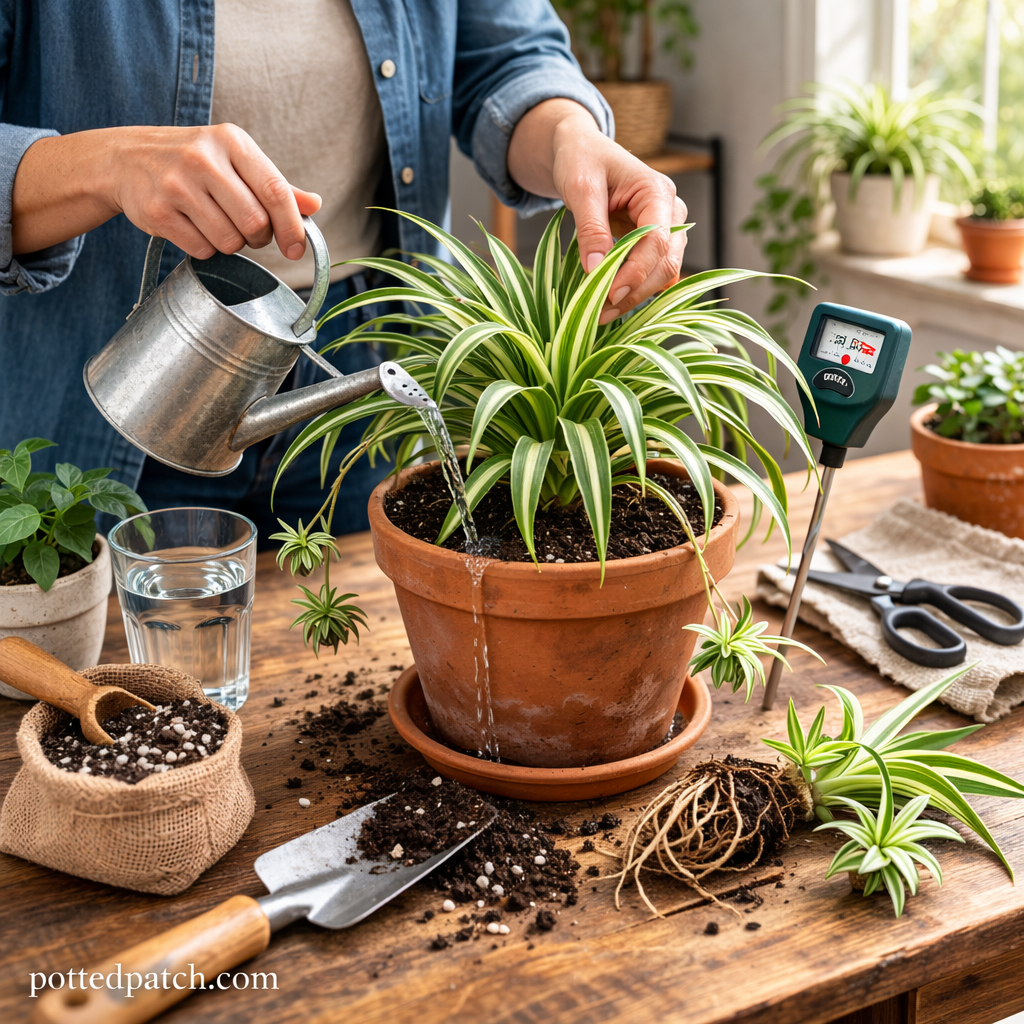
Spider plants have thick, tuberous roots that store water. Constantly wet soil suffocates roots and slows nutrient uptake.
Symptoms often include:
- Pale or droopy leaves
- Mushy soil
- No new growth
How to Fix It
- Let the top 1–2 inches of soil dry before watering.
- Ensure the pot has drainage holes.
- Use well-draining soil (houseplant mix + perlite works well).
If roots smell rotten, repot into fresh soil immediately.
Improvement timeline: 3–6 weeks after correcting watering habits.
3. Root Bound and Out of Space
Spider plants grow quickly and can become root bound.
When roots fill the entire pot, growth slows because there’s no room left to expand.
Signs It’s Root Bound
- Roots growing out of drainage holes
- Soil dries extremely fast
- Plant looks crowded and dense
How to Fix It
- Repot into a container 1–2 inches larger
- Loosen roots gently before replanting
- Use fresh, well-draining soil
Best time to repot: Spring or early summer.
Growth usually resumes within a few weeks.
4. Nutrient Deficiency
Spider plants are light feeders, but they still need nutrients during growing season.
If your plant hasn’t been fertilized in a year (or ever), growth may stall.
How to Fix It
- Use a balanced liquid houseplant fertilizer
- Dilute to half strength
- Feed once per month in spring and summer
- Do not fertilize in fall and winter
Avoid overfertilizing — too much can burn roots and worsen the problem.
5. Cold Temperatures
Spider plants prefer temperatures between:
- 65–80°F (18–27°C)
Cold drafts, especially below 55°F, slow growth significantly.
How to Fix It
- Move away from drafty windows
- Keep away from AC vents
- Avoid placing near exterior doors in winter
Growth usually resumes when temperatures stabilize.
6. Low Humidity (Minor Factor)
Spider plants are adaptable but grow faster in moderate humidity.
Extremely dry indoor air can slow growth slightly.
Easy Fixes
- Group plants together
- Place on a pebble tray
- Run a humidifier in winter
This isn’t usually the main cause — but it can help overall health.
Quick Troubleshooting Checklist
If your spider plant isn’t growing, check:
- Is it in bright, indirect light?
- Are you letting soil dry slightly between watering?
- Does the pot have drainage?
- Is it root bound?
- Have you fertilized during growing season?
- Is the room temperature above 60°F?
Correcting even one of these can restart growth.
When to Expect Faster Growth
Spider plants grow most actively in:
- Spring
- Summer
Growth naturally slows in fall and winter due to shorter daylight hours.
If it’s winter, patience may be the only fix needed.
Final Thoughts
Slow growth in spider plants is rarely a death sentence. It’s usually a signal that light, water, space, or nutrients need adjustment.
Start with light and watering — those are the biggest factors.
Once conditions improve, spider plants are resilient and bounce back quickly.
With the right care, you’ll see fuller foliage and new spiderettes before long.