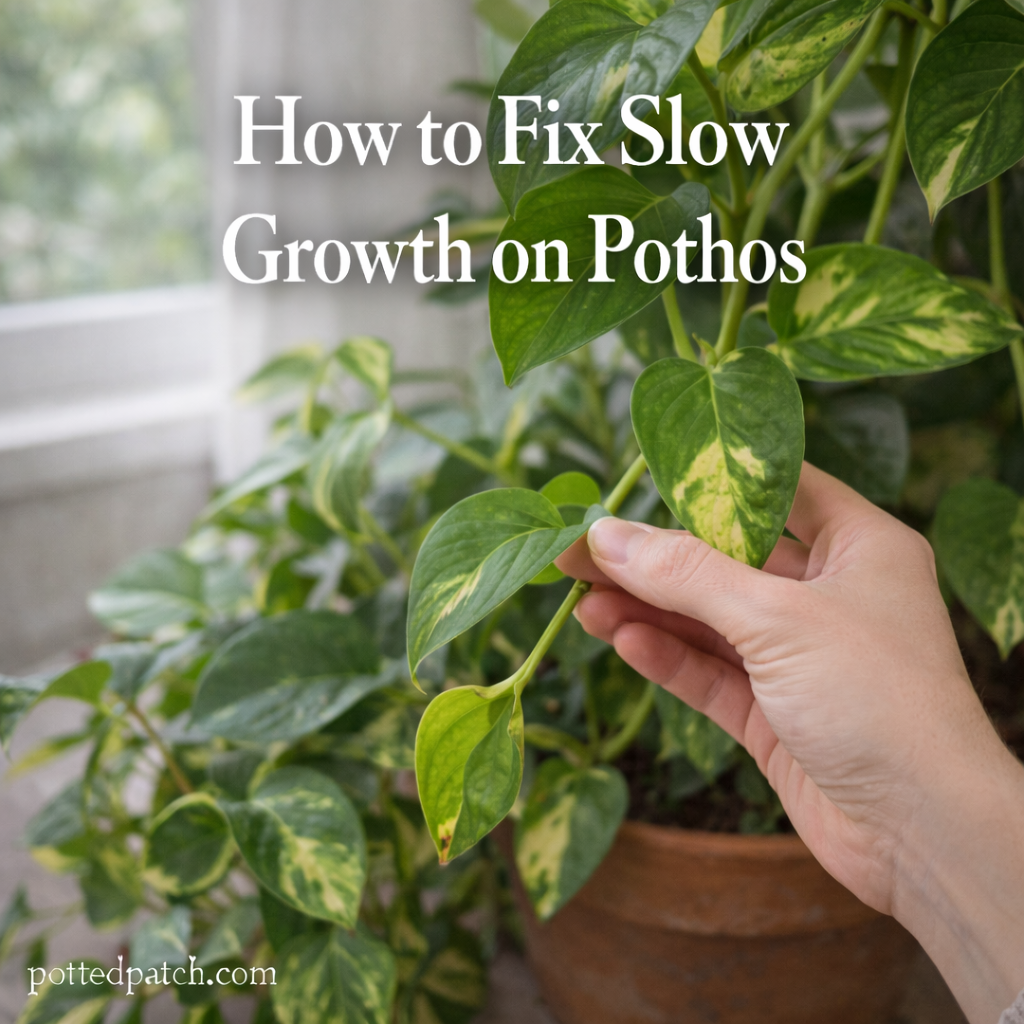
Pothos is known for fast, trailing vines and steady indoor growth. If your plant hasn’t produced new leaves in weeks—or months—it’s signaling that something needs adjusting.
Slow growth is usually tied to light, watering, nutrients, or root health. The good news? Once you identify the cause, pothos typically rebounds quickly.
Let’s walk through exactly how to fix slow growth step by step.
Step 1: Improve Lighting
The most common reason for slow growth is insufficient light.
Pothos tolerates low light, but it grows best in bright, indirect light.
Signs Light Is the Problem
- Smaller new leaves
- Long gaps between leaves (leggy growth)
- Pale or dull foliage
- Vines stretching toward a window
How to Fix It
- Move the plant closer to a bright window.
- Choose east- or south-facing exposure (filtered light).
- Avoid harsh, direct afternoon sun.
Brighter conditions often trigger visible growth within weeks.
Step 2: Adjust Your Watering Routine
Both overwatering and underwatering can stall growth.
If You’re Overwatering
- Soil stays wet for more than 7–10 days
- Yellowing leaves
- Mushy stems
Fix:
Allow the top 1–2 inches of soil to dry before watering again.
If You’re Underwatering
- Soil pulling away from pot edges
- Drooping leaves
- Dry, compacted soil
Fix:
Water thoroughly until excess drains from the bottom.
Consistency is key.
Step 3: Check for Root Bound Issues
If your pothos has been in the same pot for a long time, roots may be overcrowded.
Signs of Being Root Bound
- Roots circling the bottom
- Soil drying very quickly
- Stalled growth despite good care
Fix
Repot into a container 1–2 inches larger with fresh, well-draining soil.
More root space supports faster top growth.
Step 4: Fertilize During Growing Season
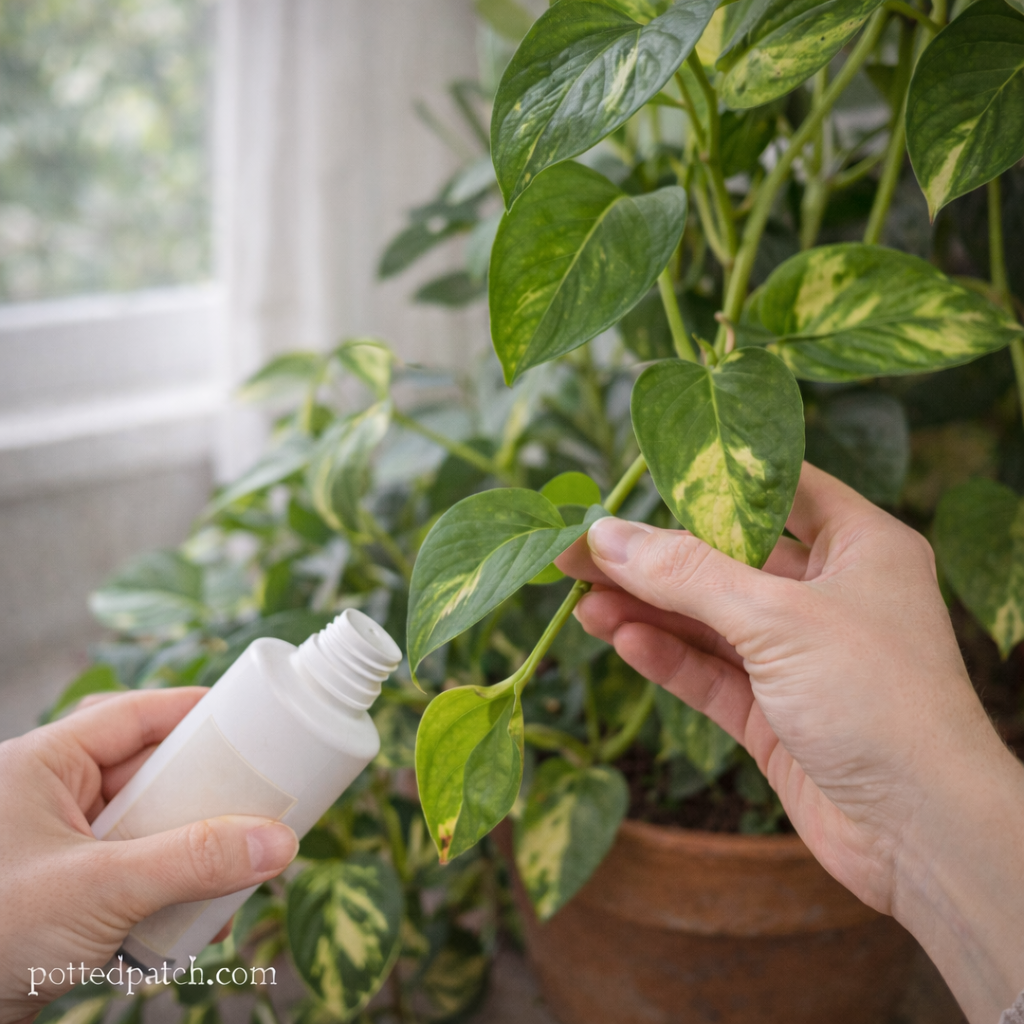
Pothos needs nutrients to grow.
If it hasn’t been fertilized during spring or summer, growth may slow.
How to Fertilize
- Use a balanced liquid houseplant fertilizer.
- Feed once per month in spring and summer.
- Skip fertilizing during fall and winter.
New growth often improves within a few weeks of proper feeding.
Step 5: Maintain Ideal Temperature
Pothos grows best between 65–85°F.
Growth slows when:
- Temperatures drop below 60°F
- The plant sits near drafts
- It’s placed under AC vents
Move your plant to a stable indoor location.
Step 6: Increase Humidity (If Needed)
While pothos tolerates average humidity, extremely dry air can slow growth.
You may notice:
- Slight leaf curl
- Smaller leaves
- Slower vine extension
Grouping plants together or using a small humidifier can help in dry environments.
Step 7: Prune to Stimulate Growth
Light pruning can actually encourage new growth.
To stimulate vines:
- Trim just above a leaf node.
- Remove leggy or sparse sections.
- Provide bright light afterward.
Pruning redirects energy into new shoots.
How Long Until Growth Improves?
If lighting or watering was the issue, improvement may appear within:
- 2–4 weeks
If root health was involved, recovery may take longer.
New leaves and longer vines are the best signs your plant is back on track.
Quick Growth-Boosting Checklist
To speed up pothos growth:
- Provide bright, indirect light.
- Water consistently.
- Repot every 1–2 years.
- Fertilize during active growth.
- Keep temperatures stable.
Most pothos plants respond quickly when conditions improve.
Final Thoughts
Slow growth on pothos is rarely permanent.
It’s usually caused by:
- Low light
- Watering inconsistencies
- Root crowding
- Nutrient deficiency
- Environmental stress
Once corrected, pothos often resumes steady vine production and healthy leaf growth.
With the right adjustments, your plant can go from stalled to thriving in just a few weeks.