Slow growth on a Monstera can be frustrating—especially when this plant is known for bold leaves and steady progress. The good news is that sluggish growth is usually a response to a few fixable care issues. Once you dial in the right conditions, most Monsteras bounce back and start producing new leaves again.
This guide walks through the most common causes of slow Monstera growth and exactly how to correct them.
What Normal Monstera Growth Looks Like
Before fixing anything, it helps to set realistic expectations.
Under good conditions, a healthy Monstera typically:
- Produces a new leaf every 4–6 weeks during spring and summer
- Slows down significantly in fall and winter
- Grows larger leaves over time, not just more leaves
If your plant hasn’t put out a new leaf in months during the growing season, something is likely holding it back.
Common Reasons Your Monstera Is Growing Slowly
Not Enough Light
Light is the most common growth limiter.
Monsteras prefer bright, indirect light. When light is too low:
- Growth slows dramatically
- Leaves stay small
- Internodes stretch or become sparse
How to fix it:
- Move your plant closer to a bright window
- Use filtered sunlight rather than direct midday sun
- Supplement with a grow light if natural light is limited
A Monstera in low light will survive—but it won’t thrive.
Improper Watering Habits
Both overwatering and underwatering can stall growth.
Signs of watering issues:
- Drooping or limp leaves
- Yellowing lower leaves
- Dry, compacted soil that repels water
How to fix it:
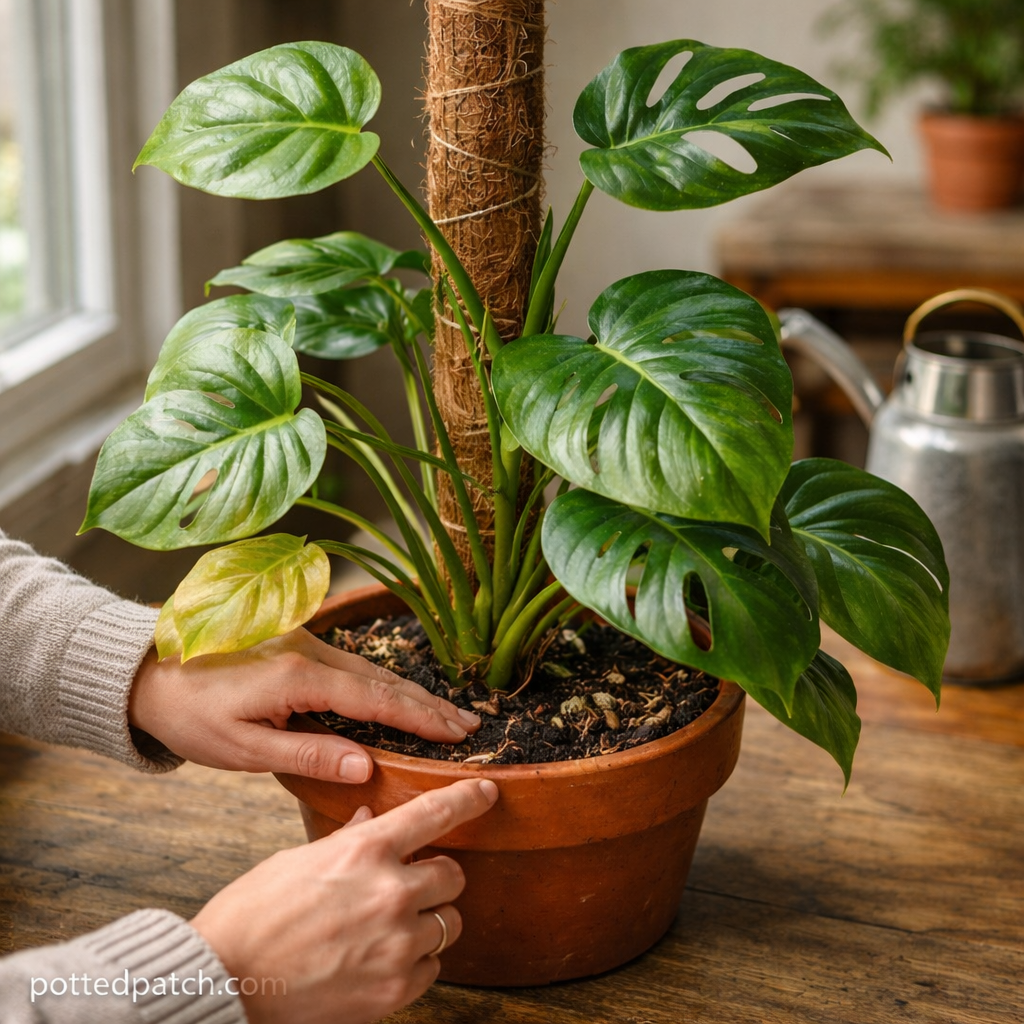
- Water only when the top 2 inches of soil feel dry
- Use pots with drainage holes
- Water thoroughly until excess drains out
Consistency matters more than frequency.
Poor Soil Quality or Compacted Roots
Monsteras need oxygen around their roots. Dense or old soil restricts airflow and nutrients.
Signs of soil problems:
- Water pools on the surface
- Roots circling the pot
- Stunted or stalled growth
How to fix it:
- Repot every 1–2 years
- Use a chunky, well-draining mix with bark, perlite, or pumice
- Gently loosen roots during repotting
Fresh soil alone can trigger a noticeable growth spurt.
Pot Size Is Limiting Growth
A Monstera that has outgrown its pot may pause growth until given space.
Signs your plant is root-bound:
- Roots growing out of drainage holes
- Soil drying out very quickly
- Top-heavy or unstable plant
How to fix it:
- Size up by 1–2 inches in diameter
- Avoid jumping to an oversized pot
- Repot during spring or early summer
Lack of Nutrients
Monsteras are moderate feeders and slow growth can signal nutrient depletion.
Signs of nutrient deficiency:
- Pale or yellowing leaves
- Thin stems
- No new growth despite good light
How to fix it:
- Fertilize monthly during spring and summer
- Use a balanced liquid fertilizer diluted to half strength
- Stop fertilizing in fall and winter
Overfertilizing won’t speed growth and can damage roots.
Environmental Factors That Affect Growth
Low Humidity
Monsteras are tropical plants and respond better to moderate humidity.
Low humidity can cause:
- Slower leaf development
- Brown leaf edges
- Delayed unfurling of new leaves
How to improve humidity:
- Group plants together
- Use a humidifier
- Place the pot on a pebble tray with water
Aim for humidity above 40% when possible.
Cool Temperatures
Cold conditions slow metabolism and growth.
Growth slows when temperatures drop below:
- 65°F (18°C)
How to fix it:
- Keep your plant in a warm, stable room
- Avoid cold drafts or windows in winter
- Maintain temperatures between 68–85°F
Seasonal Dormancy
Sometimes nothing is “wrong” at all.
Monsteras naturally:
- Grow actively in spring and summer
- Slow or stop growth in fall and winter
What to do:
- Reduce watering frequency
- Pause fertilizing
- Focus on maintaining light and warmth
Growth typically resumes when days get longer.
Why Your Monstera Isn’t Developing Fenestrations
Slow growth often goes hand-in-hand with a lack of leaf splits.
Fenestrations require:
- Bright indirect light
- Mature root system
- Vertical support
How to encourage leaf splits:
- Increase light gradually
- Add a moss pole or support
- Allow the plant to mature naturally
Fenestrations come with time and consistency—not force.
Step-by-Step Plan to Restart Growth
If your Monstera has stalled, follow this reset approach:
- Move it to brighter indirect light
- Check roots and soil condition
- Repot if compacted or root-bound
- Establish a consistent watering schedule
- Resume monthly feeding during the growing season
- Maintain warmth and moderate humidity
Most Monsteras show new growth within 4–8 weeks once conditions improve.
Common Mistakes That Slow Growth
Avoid these frequent issues:
- Keeping the plant in low light long-term
- Overwatering “just in case”
- Using dense, moisture-retentive soil
- Fertilizing during winter dormancy
- Expecting rapid growth year-round
Small adjustments often make the biggest difference.
Final Thoughts
Slow growth on a Monstera is usually a signal—not a failure. By improving light, soil, watering habits, and seasonal care, you can restore steady, healthy growth without drastic measures.
Monsteras reward patience. When their needs are met, they respond with larger leaves, stronger stems, and that unmistakable tropical presence.