Root rot is one of the most common problems pothos owners face. The frustrating part? It usually starts below the soil, where you can’t see it.
If your pothos has yellow leaves, drooping stems, or soil that smells sour, root rot may already be developing.
The good news is that pothos plants are resilient. If you act quickly, you can often save them.
What Causes Root Rot on Pothos?
Root rot happens when roots sit in overly wet soil for too long.
The main causes include:
- Overwatering
- Pots without drainage holes
- Dense, compacted soil
- Low light slowing evaporation
- Cold temperatures combined with wet soil
When roots stay saturated, they lose access to oxygen. Fungal pathogens then attack weakened roots, causing them to decay.
Signs Your Pothos Has Root Rot
Look for these warning signs:
- Yellowing leaves (especially lower leaves)
- Wilting despite wet soil
- Soft or mushy stems
- Foul smell from the pot
- Black, brown, or slimy roots
If you notice two or more of these symptoms, inspect the roots immediately.
Step 1: Remove the Plant From the Pot
Gently tip the pot sideways and slide the plant out.
If the soil is very wet, support the base of the plant and carefully loosen the root ball.
Shake off excess soil so you can clearly see the roots.
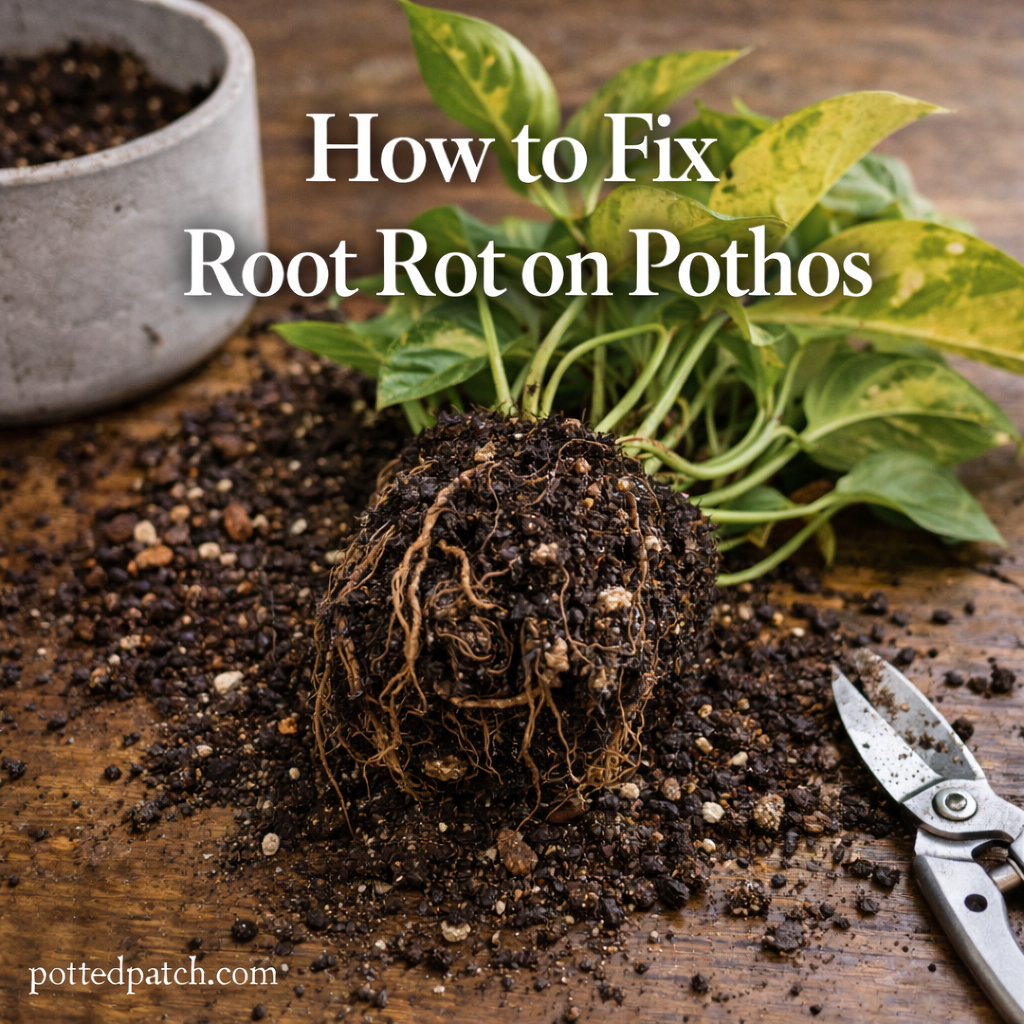
Healthy roots should be firm and light-colored. Rotting roots will be dark and mushy.
Step 2: Trim Away Rotting Roots
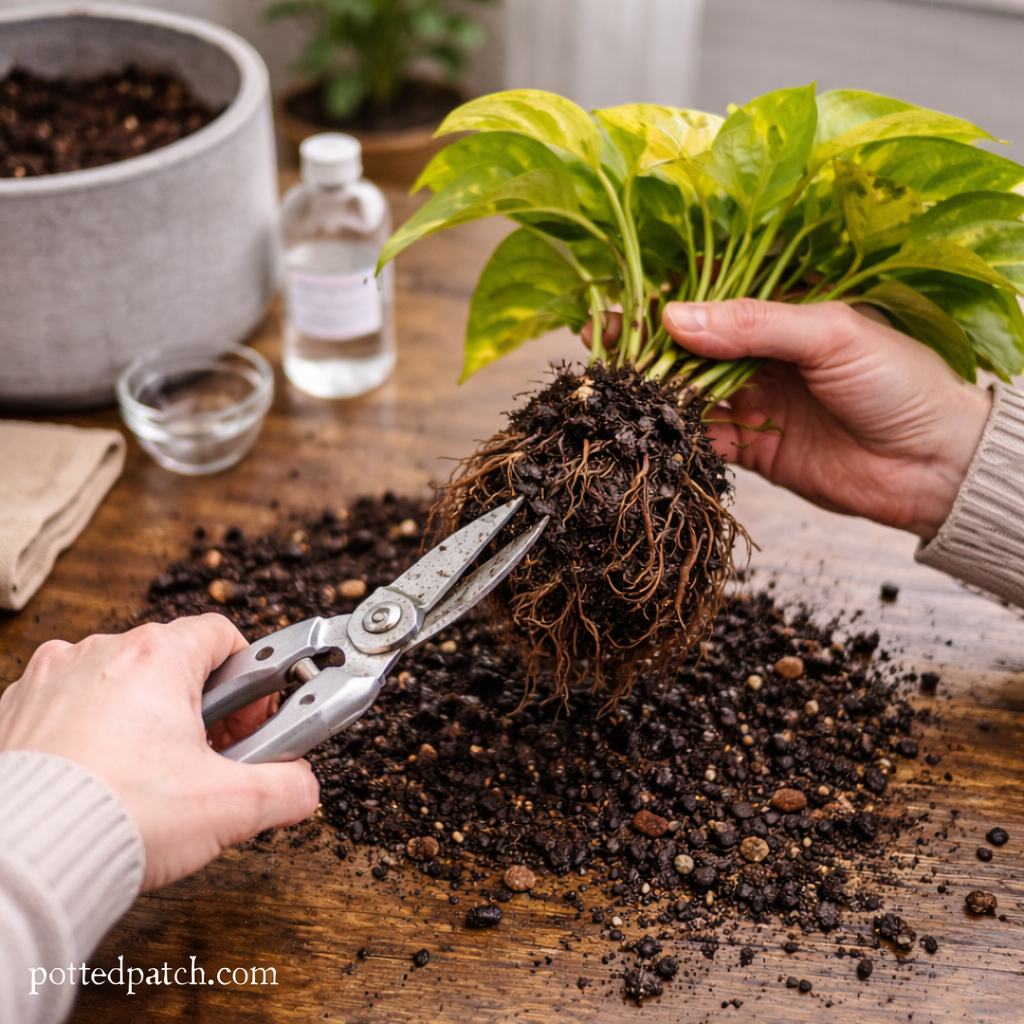
Using clean, sharp scissors or pruning shears:
- Cut away all black, brown, or slimy roots.
- Remove any mushy sections of stem.
- Keep only firm, light-colored roots.
Be thorough. Leaving infected roots behind can allow rot to continue spreading.
If most of the roots are gone, you may need to propagate healthy cuttings instead.
Step 3: Rinse and Sanitize
After trimming:
- Rinse the remaining roots gently with lukewarm water.
- Optional: Dip roots briefly in diluted hydrogen peroxide (1 part peroxide to 2 parts water) to kill lingering pathogens.
Do not soak for long—just a quick rinse.
Step 4: Repot in Fresh, Well-Draining Soil
Never reuse old soil after root rot.
Prepare a new pot with:
- Drainage holes
- Fresh potting mix
- Added perlite for better aeration
Place the plant at the same depth as before and gently fill in around the roots.
Do not compact the soil tightly.
Step 5: Adjust Your Watering Routine
After repotting:
- Wait until the top 1–2 inches of soil are dry before watering.
- Water thoroughly, then empty the saucer.
- Reduce watering frequency in low light or winter months.
Consistency is key.
What If the Roots Are Severely Damaged?
If most of the root system is gone:
- Cut healthy stems with at least 2–3 nodes.
- Remove lower leaves.
- Place cuttings in water or moist soil.
- Allow new roots to form before replanting.
Pothos propagates easily, making recovery possible even in severe cases.
How Long Does Recovery Take?
Recovery depends on severity.
- Mild cases may improve within 1–2 weeks.
- Moderate cases may take several weeks.
- Severe cases require propagation and regrowth.
New growth is the best sign your plant is healing.
How to Prevent Root Rot in the Future
Prevention is easier than treatment.
Follow these simple rules:
- Always use pots with drainage holes.
- Add perlite to improve airflow.
- Water only when soil is partially dry.
- Avoid oversized pots.
- Provide bright, indirect light.
Healthy roots need oxygen just as much as water.
Final Thoughts
Root rot on pothos is serious—but not hopeless.
By:
- Removing damaged roots
- Repotting in fresh soil
- Improving drainage
- Adjusting watering habits
You give your plant the best chance at recovery.
Pothos plants are resilient. With the right care, they can bounce back and grow stronger than before.