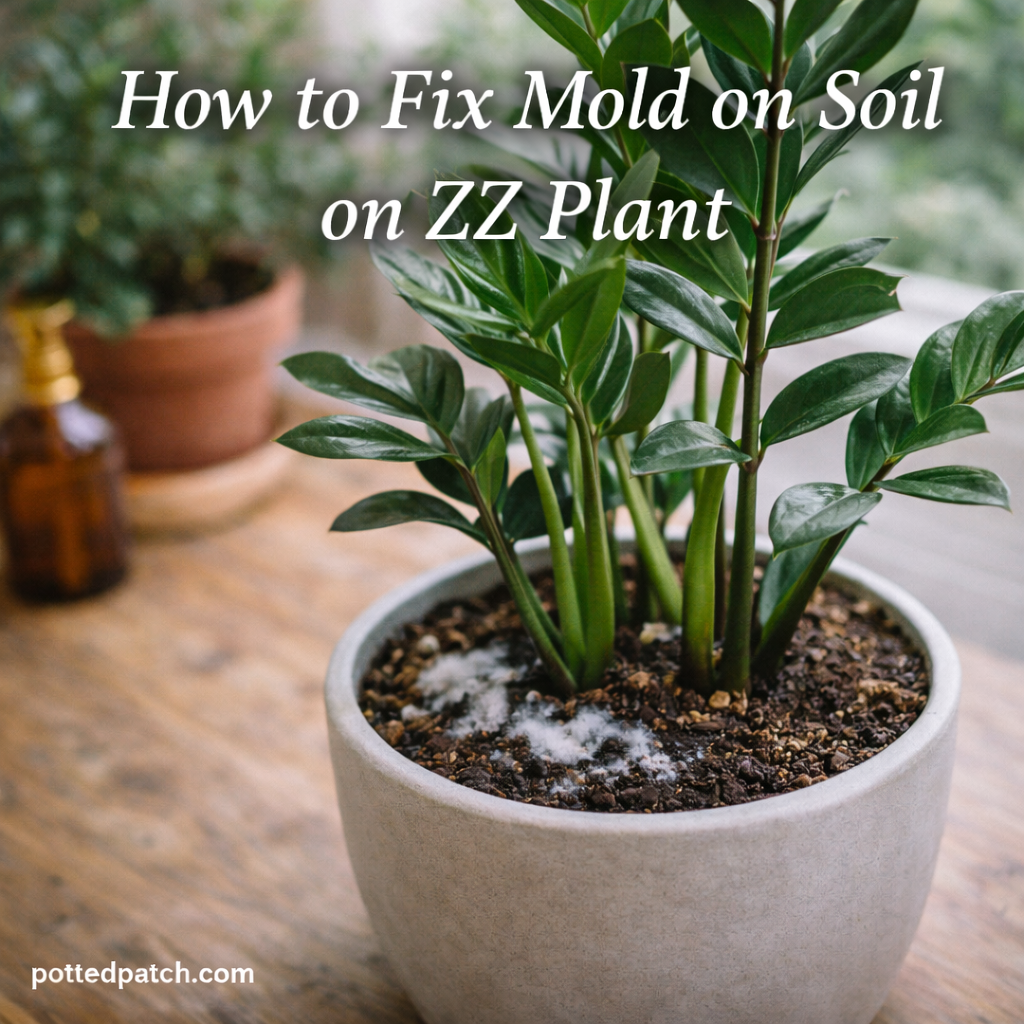
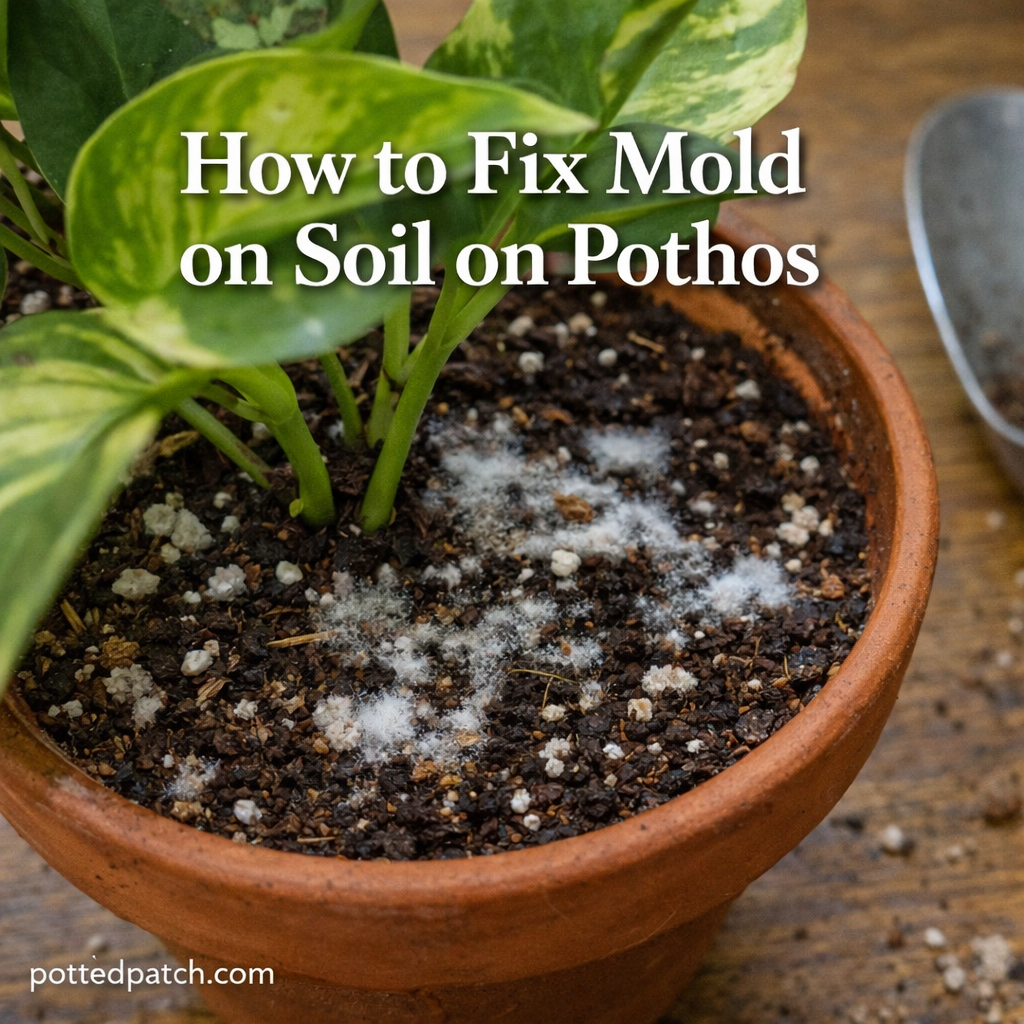
If you’ve noticed white or gray fuzzy growth on the soil of your pothos plant, don’t panic. Mold on soil is a common issue for indoor plants — especially moisture-loving varieties like pothos.
The good news? It’s usually easy to fix.
In this guide, you’ll learn why mold appears, how to remove it safely, and how to prevent it from coming back.
Why Is There Mold on My Pothos Soil?
Mold forms when conditions are consistently damp, stagnant, and low in airflow. Pothos plants tolerate moisture well, but their soil should never stay soggy.
Common causes include:
- Overwatering
- Poor drainage
- Low airflow
- High humidity
- Organic-rich soil that stays wet too long
- Pots without drainage holes
Mold itself typically feeds on decaying organic material in the soil — not your plant directly. However, the conditions that cause mold can lead to root rot if left untreated.
Is Mold on Soil Dangerous to Pothos?
In most cases, surface mold is more of a warning sign than a death sentence.
Light mold on top of the soil usually:
- Doesn’t immediately harm the plant
- Indicates overly wet conditions
- Can spread if not addressed
If the mold smell is strong or the soil is consistently soggy, root rot may already be developing. That’s when action becomes urgent.
Step-by-Step: How to Fix Mold on Pothos Soil
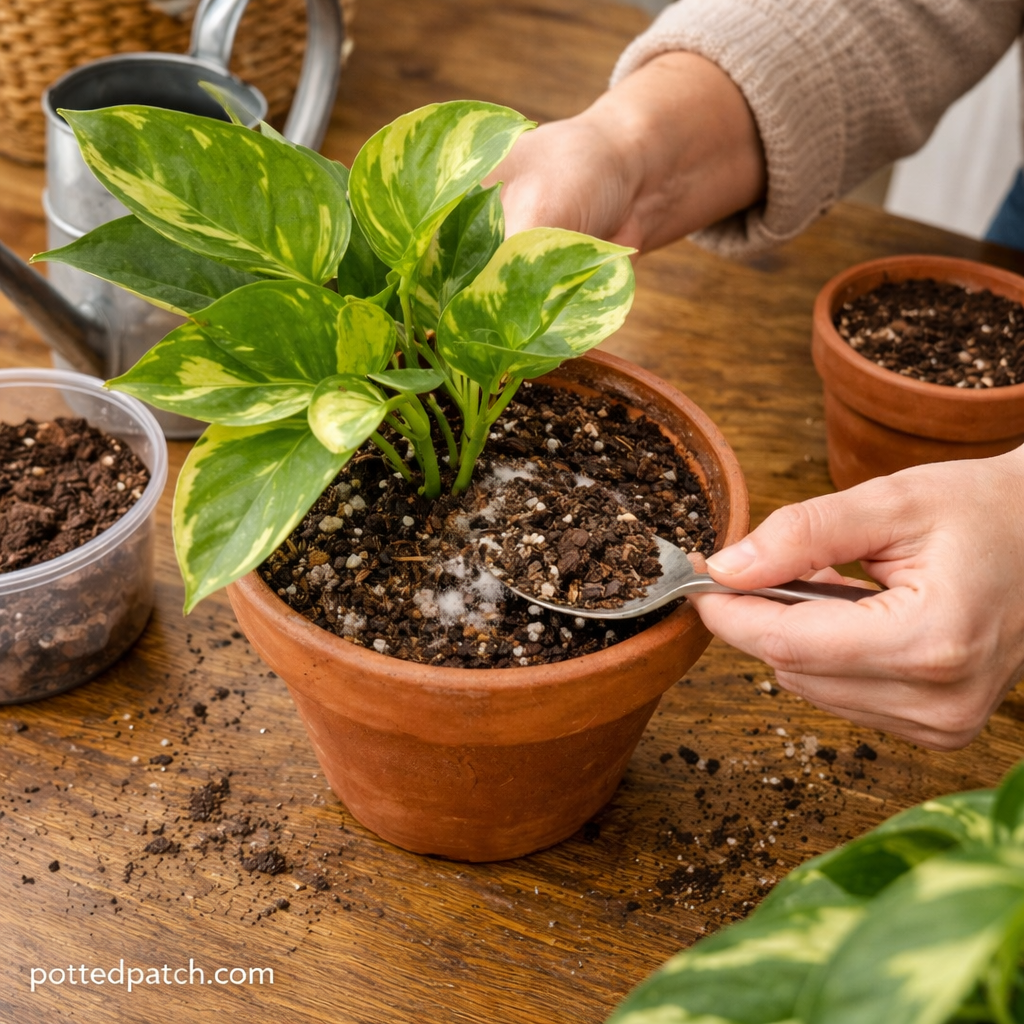
Follow these steps to safely remove mold and restore healthy growing conditions.
Step 1: Remove the Top Layer of Soil
Using a spoon or small scoop:
- Remove the top 1–2 inches of moldy soil
- Dispose of it (do not reuse)
This eliminates the majority of visible spores.
Step 2: Improve Air Circulation
Move your pothos to:
- A brighter area (indirect light)
- A room with better airflow
- Near a fan (gentle air movement)
Avoid dark, stagnant corners.
Step 3: Let the Soil Dry Properly
Before watering again:
- Allow the top 2 inches of soil to dry out
- Check moisture by inserting your finger
Pothos prefers slightly dry soil between waterings.
Step 4: Repot If Necessary
If mold returns quickly or the soil smells sour:
- Remove the plant from the pot
- Shake off old soil
- Trim any mushy or dark roots
- Repot in fresh, well-draining mix
Use a soil blend that includes:
- Potting mix
- Perlite
- Orchid bark
This improves drainage and prevents compaction.
Natural Remedies to Kill Surface Mold
After removing the top layer, you can lightly treat the soil surface with:
Cinnamon
Sprinkle a thin layer on top of the soil.
Cinnamon has natural antifungal properties.
Hydrogen Peroxide Solution
Mix:
- 1 part 3% hydrogen peroxide
- 4 parts water
Lightly water the soil once. This kills fungal spores and adds oxygen to the roots.
Do not overuse — one treatment is usually enough.
How to Prevent Mold from Coming Back
Prevention is about adjusting care habits.
1. Water Less Frequently
Only water when:
- The top 1–2 inches of soil are dry
- The pot feels lighter
Pothos tolerates slight dryness better than overwatering.
2. Upgrade Your Soil
Use a well-draining mix:
- 2 parts potting soil
- 1 part perlite
- 1 part bark
Avoid dense, peat-heavy mixes alone.
3. Ensure Proper Drainage
Always use pots with drainage holes.
Empty the saucer after watering.
4. Increase Airflow
Even cracking a window occasionally helps reduce mold-friendly humidity levels.
When Mold Is a Bigger Problem
Take stronger action if you notice:
- Persistent foul odor
- Yellowing leaves
- Drooping despite moist soil
- Black or mushy roots
These may indicate root rot rather than just surface mold.
In that case, a full repot is necessary.
Final Thoughts
Mold on pothos soil is usually a care issue — not a plant killer.
By removing the affected soil, improving drainage, and adjusting your watering routine, you can restore healthy growing conditions quickly.
The key is balance: moist but not soggy, bright but not harsh, and well-draining soil with good airflow.
Once you correct the environment, your pothos will bounce back and continue thriving.