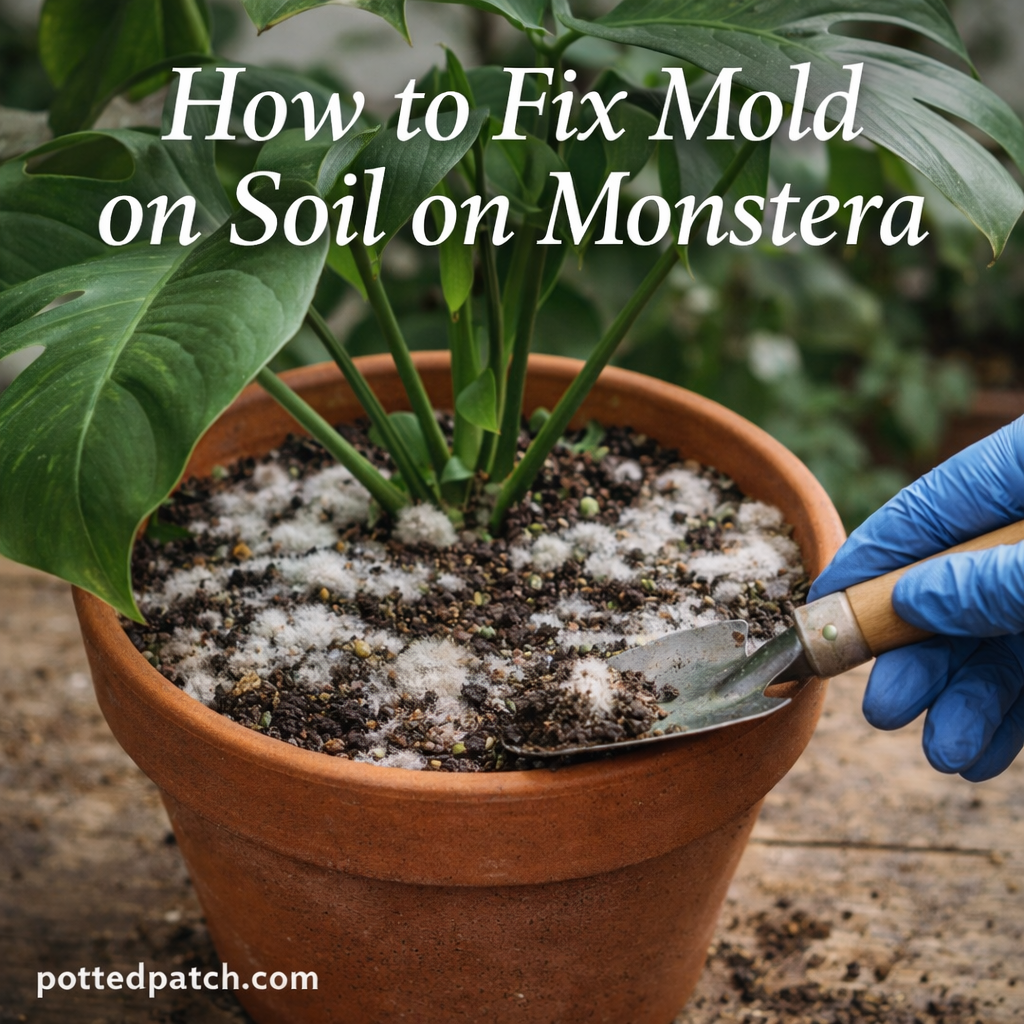
Seeing white, gray, or fuzzy mold on the surface of your Monstera’s soil can be alarming—but the good news is that it’s usually easy to fix. Soil mold is common in indoor plants and is almost always linked to moisture and airflow issues, not a serious disease in the plant itself.
This guide explains why mold appears on Monstera soil, how to remove it safely, and how to prevent it from coming back.
What Causes Mold on Monstera Soil?
Mold grows when moisture, organic matter, and poor airflow combine. Monsteras are tropical plants, but they still need their soil to dry out partially between waterings.
Common causes include:
• Overwatering
• Poor drainage
• Compact or water-retentive soil
• Low airflow or stagnant indoor air
• Organic matter breaking down on the soil surface
Mold typically affects the soil—not the plant—unless left untreated for long periods.
Is Mold on Monstera Soil Harmful?
In most cases, soil mold is not immediately harmful to your Monstera. However, it can signal conditions that may eventually cause bigger problems like:
• Root rot
• Fungus gnats
• Weak or stressed roots
• Slow growth
Fixing the mold early helps protect the plant long-term.
How to Identify the Type of Mold
Most Monstera soil mold looks like:
• White or light gray fuzz
• Powdery or web-like patches
• Thin film on the soil surface
Green or black growth is less common and usually indicates prolonged moisture issues that should be addressed quickly.
How to Fix Mold on Monstera Soil
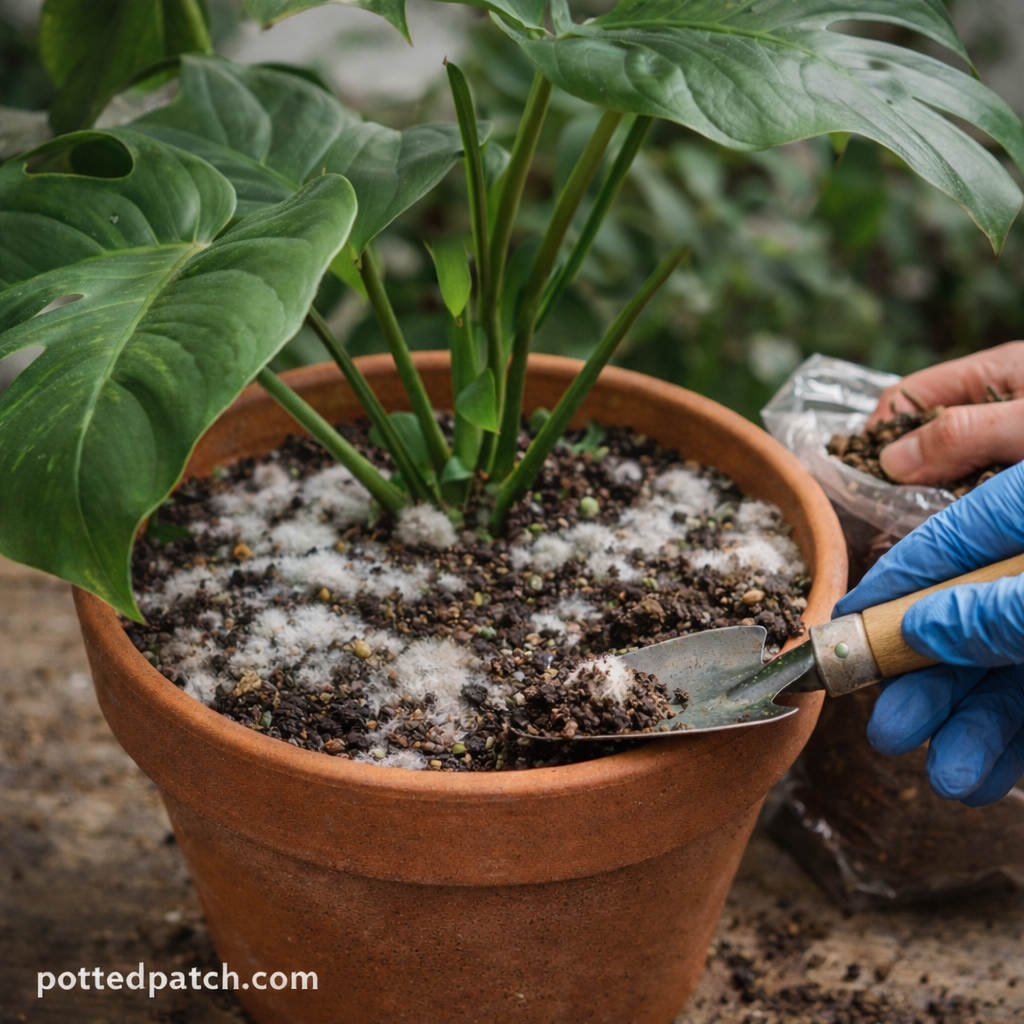
Step 1: Remove the Moldy Soil
Start by physically removing the affected area.
• Scoop out the top 1–2 inches of moldy soil
• Dispose of it—do not reuse it
• Avoid stirring mold deeper into the pot
This immediately removes the active mold spores.
Step 2: Let the Soil Dry Out
Mold thrives in constantly damp conditions.
• Pause watering until the top 2–3 inches of soil feel dry
• Move the plant to brighter indirect light if possible
• Ensure water drains freely from the pot
Drying the soil interrupts mold growth.
Step 3: Improve Airflow
Air circulation makes a huge difference.
• Open nearby windows when weather allows
• Use a small fan in the room (not directly on the plant)
• Avoid placing Monsteras in cramped, stagnant corners
Better airflow helps soil dry evenly.
Step 4: Use a Mild Anti-Fungal Treatment (Optional)
If mold returns quickly, a gentle treatment can help.
Safe options include:
• Cinnamon sprinkled lightly on the soil surface
• A diluted hydrogen peroxide solution (1 part 3% peroxide to 4 parts water)
• Neem oil soil drench (light and infrequent)
Use treatments sparingly—overuse can stress roots.
When to Repot Your Monstera
If mold keeps returning, the soil itself may be the problem.
Repot if:
• Soil stays wet for several days after watering
• The mix feels dense or compacted
• There’s a persistent musty smell
• Roots appear brown or mushy
Repotting into fresh, well-draining soil often solves recurring mold issues.
Best Soil to Prevent Mold on Monstera
Monstera soil should be loose and fast-draining.
An ideal mix includes:
• Indoor potting soil
• Perlite or pumice
• Orchid bark or chunky bark
Avoid heavy mixes designed to retain moisture.
Common Mistakes That Cause Mold to Return
Even after removal, mold can come back if habits don’t change.
Avoid these mistakes:
• Watering on a fixed schedule instead of checking soil moisture
• Using pots without drainage holes
• Letting water sit in saucers
• Keeping plants in low-light, low-airflow rooms
Can You Save a Monstera With Moldy Soil?
Yes—almost always. Mold on soil is a care issue, not a death sentence. Once moisture levels, soil quality, and airflow improve, Monsteras typically recover quickly and resume normal growth.
Final Thoughts
Mold on Monstera soil is a sign that the environment needs adjustment, not a reason to panic. By removing affected soil, improving drainage and airflow, and adjusting watering habits, you can eliminate mold and prevent it from returning.
Healthy soil leads to healthier roots—and a happier Monstera overall.