

ZZ plants are known for being durable and low-maintenance. So when leaves start falling off, it can feel surprising — and a little stressful.
The good news?
Leaf drop on a ZZ plant is usually reversible once you identify the cause.
In this guide, you’ll learn the most common reasons ZZ plants drop leaves and exactly how to fix each one.
Step 1: Check the Soil Moisture First
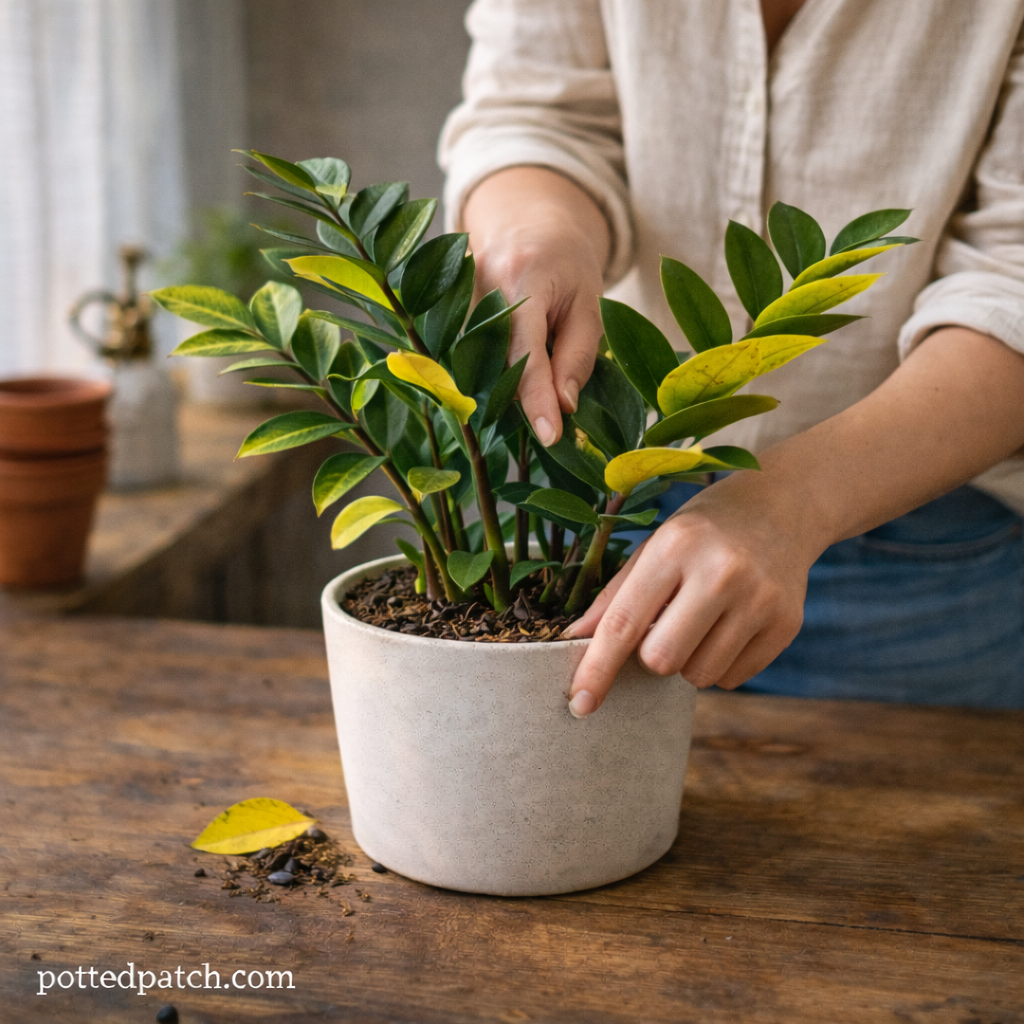
Before doing anything else, check the soil.
Overwatering and underwatering are the two most common causes of leaf drop.
Stick your finger 2–3 inches into the soil:
- If it feels wet or soggy → likely overwatering
- If it feels bone dry and compacted → likely underwatering
Correct diagnosis is key before making changes.
Fixing Overwatering
Overwatering is the #1 cause of ZZ leaf drop.
ZZ plants store water in thick underground rhizomes. If soil stays wet too long, roots begin to rot. Once roots are damaged, leaves fall off because the plant cannot support them.
Signs of Overwatering
- Yellow leaves before dropping
- Soft or mushy stems
- Soil staying wet for more than 1–2 weeks
- Musty smell from the pot
How to Fix It
- Stop watering immediately.
- Allow soil to dry completely.
- If severe, remove plant from pot and inspect roots.
- Trim any soft, brown roots.
- Repot in fresh, well-draining soil.
Use a pot with drainage holes moving forward.
Fixing Underwatering
While ZZ plants tolerate drought, extreme dryness can cause stress and leaf drop.
Signs of Underwatering
- Leaves dropping without yellowing first
- Wrinkled or shriveled stems
- Soil pulling away from pot edges
How to Fix It
- Water thoroughly until excess drains out.
- Allow soil to fully dry before watering again.
- Maintain a consistent watering rhythm.
In most homes, watering every 2–3 weeks works well.
Step 2: Improve Light Conditions
ZZ plants tolerate low light, but they grow best in bright, indirect light.
If your plant sits in a very dark corner, it may weaken and shed leaves.
Ideal Light Setup
- Near an east-facing window
- A few feet from a south-facing window with filtered light
- Bright room without direct harsh sun
Avoid placing it directly in strong afternoon sunlight.
Step 3: Stabilize Temperature
ZZ plants prefer stable indoor temperatures between 65–85°F.
Leaf drop can occur if the plant is exposed to:
- Cold drafts
- Air conditioning vents
- Sudden temperature drops
- Outdoor exposure below 50°F
Move the plant to a consistent indoor location away from vents and exterior doors.
Step 4: Check for Rootbound Stress
If your ZZ plant has been in the same pot for years, roots may be overcrowded.
Signs include:
- Soil drying extremely fast
- Roots visible at drainage holes
- Stunted growth
Repot in spring into a container 1–2 inches larger.
Step 5: Inspect for Pests
Although uncommon, pests can weaken the plant and trigger leaf drop.
Check for:
- Spider mites
- Mealybugs
- Scale
Inspect under leaves and along stems. Treat promptly if detected.
Step 6: Be Patient After Adjustments
ZZ plants recover slowly.
After correcting care:
- Leaf drop should stop within 2–4 weeks
- New growth appears during spring or summer
- Damaged leaves will not recover, but new shoots will replace them
Patience is essential.
What Not to Do
Avoid these common mistakes:
- Watering more frequently to “help”
- Moving the plant repeatedly
- Fertilizing while stressed
- Using pots without drainage
Stability and proper drainage are more important than quick fixes.
When Leaf Drop Is Severe
If entire stems collapse or rhizomes feel soft and mushy, root rot may be advanced.
In this case:
- Remove plant from pot immediately.
- Trim away all rotten roots.
- Let healthy roots air dry briefly.
- Repot in fresh, dry, well-draining soil.
If rhizomes are firm, recovery is still possible.
Final Thoughts
Leaf drop on a ZZ plant is usually caused by watering imbalance, lighting issues, or environmental stress.
Start by checking the soil. Adjust gradually. Keep conditions stable.
With the right corrections, your ZZ plant can return to strong, glossy growth and resume its naturally resilient behavior.