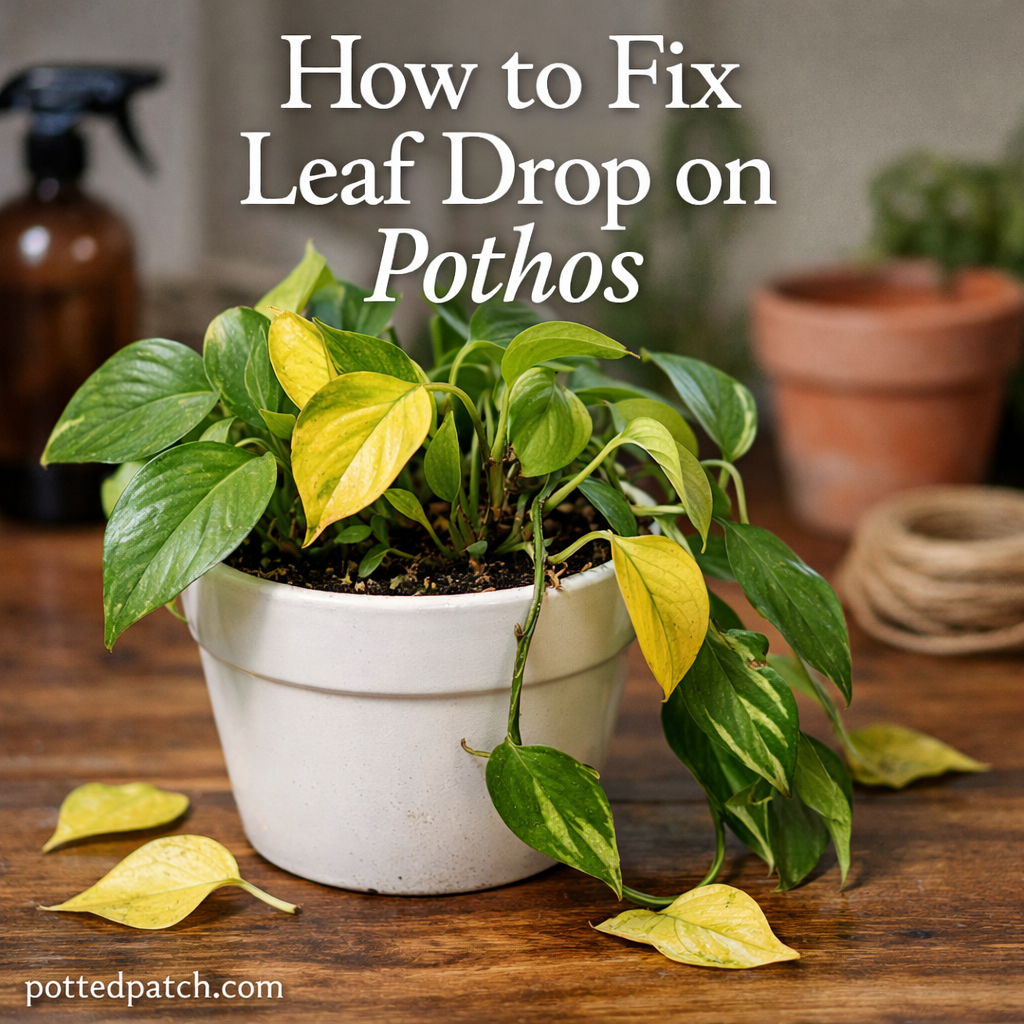
Pothos is one of the easiest houseplants to grow — which is why sudden leaf drop can feel alarming. If your once-full vine is shedding leaves, don’t panic. In most cases, leaf drop on pothos is completely fixable once you identify the cause.
This guide will walk you through the most common reasons your pothos is losing leaves and exactly how to fix each one.
Why Is My Pothos Dropping Leaves?
Leaf drop usually happens when your plant is stressed. The key is narrowing down the specific trigger. Common causes include:
- Overwatering
- Underwatering
- Sudden temperature changes
- Low light
- Root problems
- Transplant shock
- Natural aging
Let’s break each one down.
1. Overwatering (Most Common Cause)
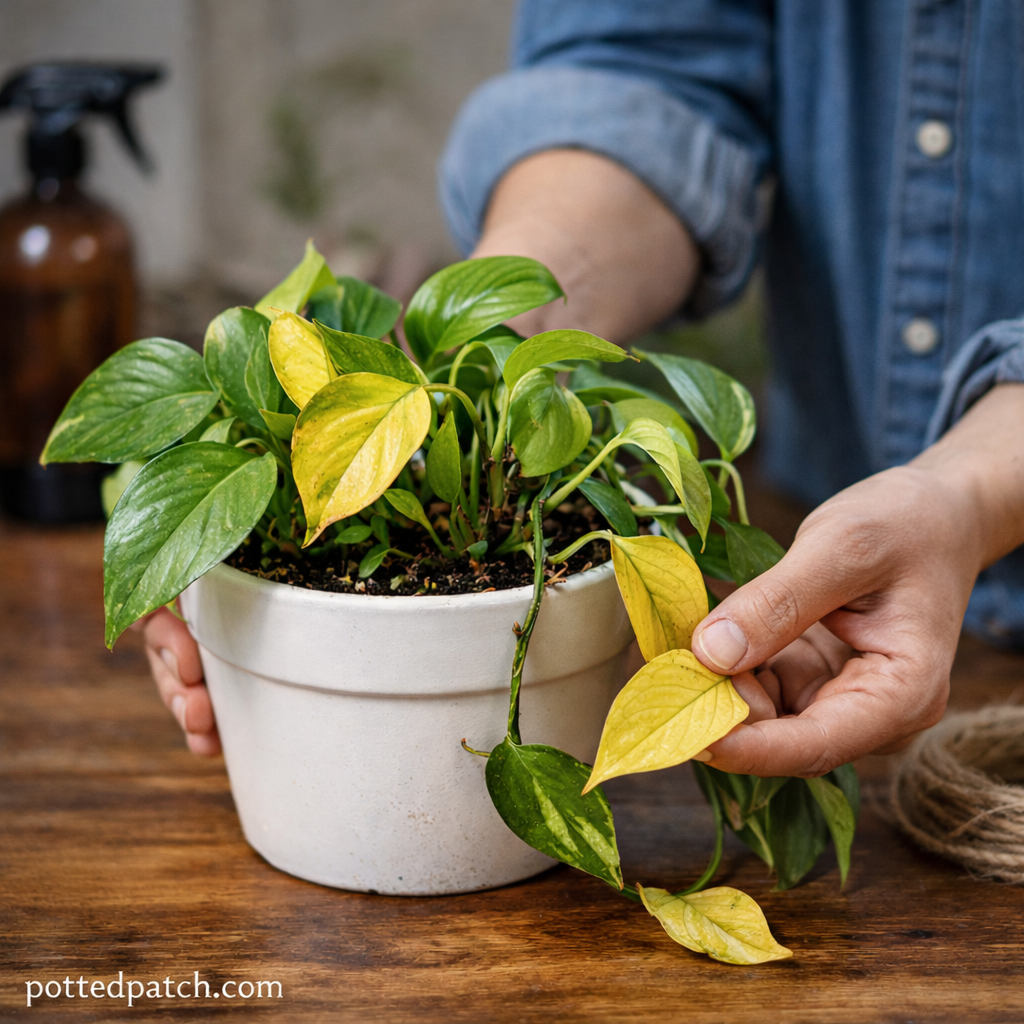
Overwatering is the #1 reason pothos plants drop leaves.
Signs of Overwatering
- Yellowing leaves before they fall
- Mushy stems
- Wet soil that stays damp for days
- Foul smell from the pot
When roots sit in soggy soil, they begin to suffocate and rot. Damaged roots can’t support foliage — so the plant sheds leaves.
How to Fix It
- Check the soil. If it’s very wet, let it dry out completely before watering again.
- Make sure your pot has drainage holes.
- If root rot is suspected:
- Remove the plant from the pot.
- Trim black or mushy roots.
- Repot in fresh, well-draining soil.
After correcting watering habits, new growth should appear within a few weeks.
2. Underwatering
While pothos tolerates occasional dryness, prolonged underwatering will cause leaf drop.
Signs of Underwatering
- Droopy vines
- Dry, compact soil
- Crispy or brown leaf edges
- Leaves dropping suddenly after wilting
How to Fix It
- Water thoroughly until excess drains out the bottom.
- Allow the top 1–2 inches of soil to dry before watering again.
- Maintain a consistent schedule rather than waiting for extreme wilting.
Consistency is more important than frequency.
3. Sudden Temperature Changes
Pothos prefers stable indoor conditions. Sudden changes can shock the plant.
Watch Out For:
- Cold drafts near windows or doors
- Air conditioning vents
- Heat sources like radiators
- Moving the plant outdoors abruptly
Temperatures below 55°F can cause stress-related leaf drop.
How to Fix It
- Keep your pothos in a room between 65–85°F.
- Avoid drafty areas.
- If moving locations, do it gradually over several days.
4. Low Light Conditions
Pothos is tolerant of low light — but not no light.
In very dim areas, older leaves may drop as the plant tries to conserve energy.
How to Fix It
- Move your plant closer to a bright window with indirect light.
- Avoid harsh direct sun, which can scorch leaves.
- Rotate the plant every few weeks for even growth.
Brighter light often results in fuller, healthier vines.
5. Root Bound or Compacted Soil
If your pothos has been in the same pot for years, root crowding can cause stress.
Signs It’s Root Bound
- Roots circling the bottom of the pot
- Water running straight through the container
- Stunted growth
- Increased leaf drop
How to Fix It
- Choose a pot 1–2 inches larger in diameter.
- Gently loosen the root ball.
- Repot with fresh, airy potting mix.
Repotting during spring or summer gives the best recovery results.
6. Transplant Shock
If your pothos recently moved homes or was repotted, temporary leaf drop can happen.
This is normal stress while the plant adjusts.
What to Do
- Keep watering consistent.
- Avoid fertilizing for 3–4 weeks.
- Provide stable lighting and temperature.
Most plants rebound within a month.
7. Natural Leaf Aging
Older leaves near the base of long vines will occasionally yellow and fall. This is completely normal.
If only one or two older leaves drop occasionally, there’s no need to worry.
Step-by-Step Recovery Plan
If you’re unsure what’s causing the issue, follow this quick checklist:
- Check soil moisture.
- Inspect roots if overwatering is suspected.
- Confirm lighting is bright and indirect.
- Ensure stable indoor temperatures.
- Repot if roots are crowded.
Make one adjustment at a time and monitor changes over 2–3 weeks.
How to Prevent Leaf Drop in the Future
Prevention comes down to consistency.
- Water only when the top 1–2 inches of soil is dry.
- Use pots with proper drainage.
- Keep in bright, indirect light.
- Maintain indoor temperatures above 60°F.
- Repot every 1–2 years.
Healthy pothos plants are resilient. Once stress is corrected, they usually bounce back quickly.
When Leaf Drop Is a Serious Problem
Seek immediate action if you notice:
- Rapid leaf loss across the entire plant
- Black, mushy stems
- Strong odor from the soil
- No new growth after correcting care
These may indicate advanced root rot and require pruning and repotting.
Final Thoughts
Leaf drop on pothos is rarely permanent. In most cases, it’s a signal that something in the environment needs adjusting.
Start by checking watering habits — that solves the majority of problems. With consistent care, your pothos should return to producing lush, trailing vines in no time.
Patience, observation, and small adjustments make all the difference.