
Monstera plants are known for their bold, tropical leaves, so when those leaves start dropping, it’s usually a sign that something is off. Leaf drop doesn’t happen randomly—your monstera is responding to stress related to water, light, temperature, or root health.
This guide breaks down the most common causes of monstera leaf drop and explains exactly how to fix each one, step by step.
What Leaf Drop Looks Like on Monstera
Leaf drop can show up in a few different ways:
- Lower leaves yellowing and falling off
- Leaves drooping, then detaching
- Sudden leaf loss after a change in environment
- Stems weakening or bending under leaf weight
Some leaf loss—especially older, lower leaves—is normal. Consistent or rapid leaf drop, however, means the plant needs attention.
Overwatering (Most Common Cause)
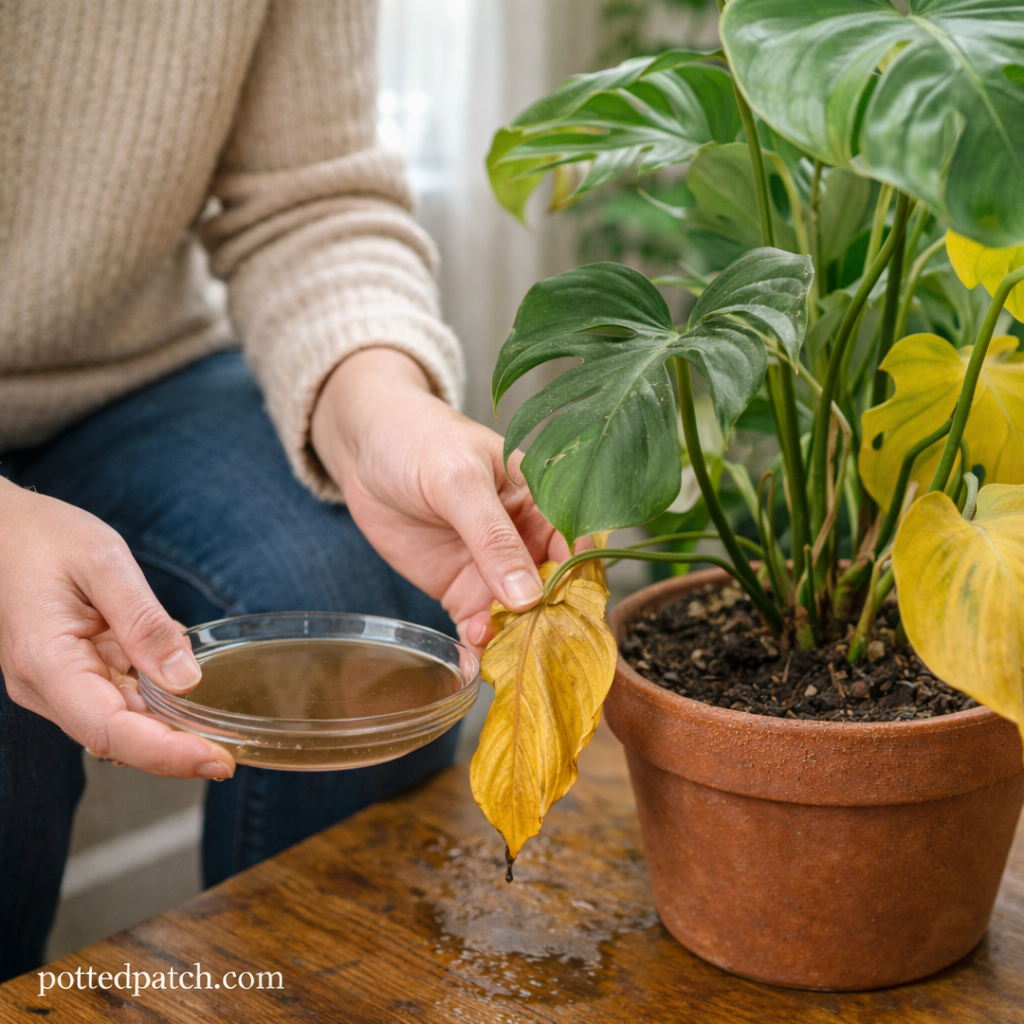
Too much water is the leading reason monstera leaves drop. Excess moisture suffocates roots, leading to rot and nutrient loss.
Signs of Overwatering
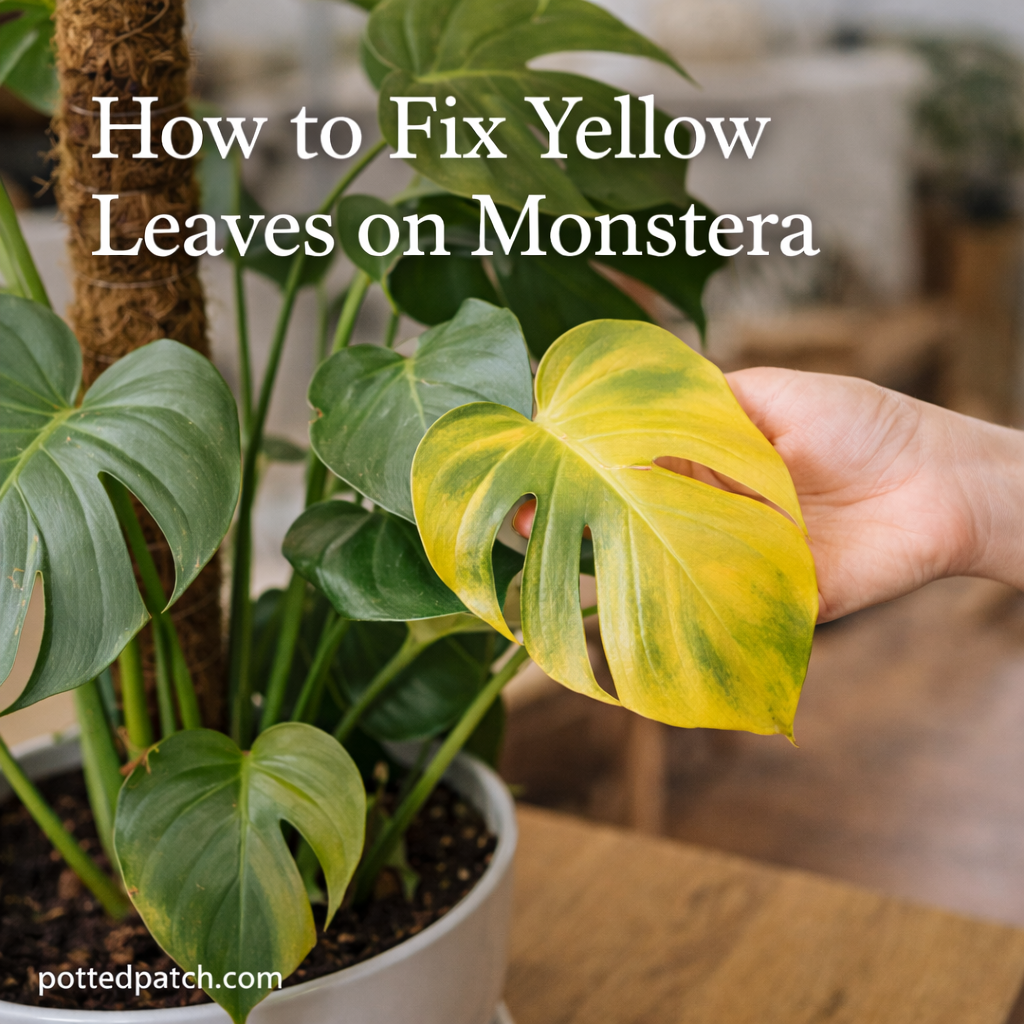
- Yellowing leaves with soft texture
- Soil staying wet for several days
- Mushy stems near the base
- A sour or musty soil smell
How to Fix It
- Stop watering immediately
- Allow the soil to dry at least halfway down
- Check that the pot has drainage holes
- If rot is suspected, remove the plant and trim damaged roots
- Repot in fresh, well-draining soil
Going forward, always water only when the top 2–3 inches of soil are dry.
Underwatering and Inconsistent Watering
While monsteras are tolerant, long dry periods followed by heavy watering can cause shock and leaf drop.
Signs of Underwatering
- Leaves drooping or curling
- Dry, compacted soil pulling away from the pot
- Crispy leaf edges
How to Fix It
- Water thoroughly until excess drains out
- Resume a consistent watering rhythm
- Avoid letting the soil dry out completely for extended periods
Consistency matters more than frequency.
Insufficient or Excess Light
Light plays a major role in leaf retention.
Low Light Issues
Monsteras in low light may drop leaves to conserve energy.
Signs include:
- Slow growth
- Smaller new leaves
- Yellowing lower leaves
Move the plant closer to bright, indirect light.
Too Much Direct Sun
Harsh sunlight can scorch leaves, leading to stress-related drop.
Signs include:
- Brown patches
- Faded or bleached areas
Filter direct sun with a sheer curtain or move the plant slightly away from the window.
Temperature Stress and Drafts
Monsteras prefer stable indoor temperatures and react poorly to sudden changes.
Problem Areas to Avoid
- Cold drafts from windows or doors
- Heat vents and radiators
- Air conditioning airflow
Ideal Conditions
- Temperature range: 65–85°F (18–29°C)
- Avoid drops below 55°F
Relocating the plant to a stable environment often stops leaf drop within weeks.
Low Humidity
As tropical plants, monsteras appreciate higher humidity. Dry indoor air can contribute to leaf stress.
Signs of Low Humidity
- Browning leaf edges
- Leaves dropping without yellowing
- Slow unfurling of new leaves
How to Improve Humidity
- Group plants together
- Use a humidifier nearby
- Place the pot on a pebble tray with water
Aim for moderate humidity rather than extreme moisture.
Root Bound or Compacted Soil
If roots have outgrown the pot or soil has broken down, the plant may drop leaves due to limited nutrient uptake.
Signs It’s Time to Repot
- Roots circling the pot or growing out of drainage holes
- Water running straight through the soil
- Stunted growth
Repotting Fix
- Choose a pot one size larger
- Use fresh, airy soil with perlite or bark
- Water lightly after repotting and allow recovery time
Repotting is best done during spring or early summer.
Natural Aging of Lower Leaves
Monsteras naturally shed older leaves as they grow upward.
This is normal if:
- Only one or two lower leaves drop occasionally
- New growth continues at the top
- The plant otherwise looks healthy
No action is needed in this case.
Pests Causing Leaf Drop
While less common, pests can weaken leaves enough to cause drop.
Common Culprits
- Spider mites
- Thrips
- Mealybugs
What to Do
- Inspect leaf undersides regularly
- Wipe leaves with diluted insecticidal soap
- Isolate affected plants until pests are controlled
Early detection prevents serious damage.
How Long It Takes for Recovery
Once the underlying issue is corrected:
- Leaf drop usually stops within 2–4 weeks
- New growth appears in 4–8 weeks
- Dropped leaves will not regrow, but new leaves will replace them
Patience is key—monsteras recover steadily when conditions improve.
Final Thoughts
Leaf drop on a monstera is almost always fixable. By checking watering habits, light exposure, temperature stability, and root health, you can identify the stressor quickly and correct it before further damage occurs.
With consistent care and a stable environment, your monstera will return to producing strong stems and large, healthy leaves.