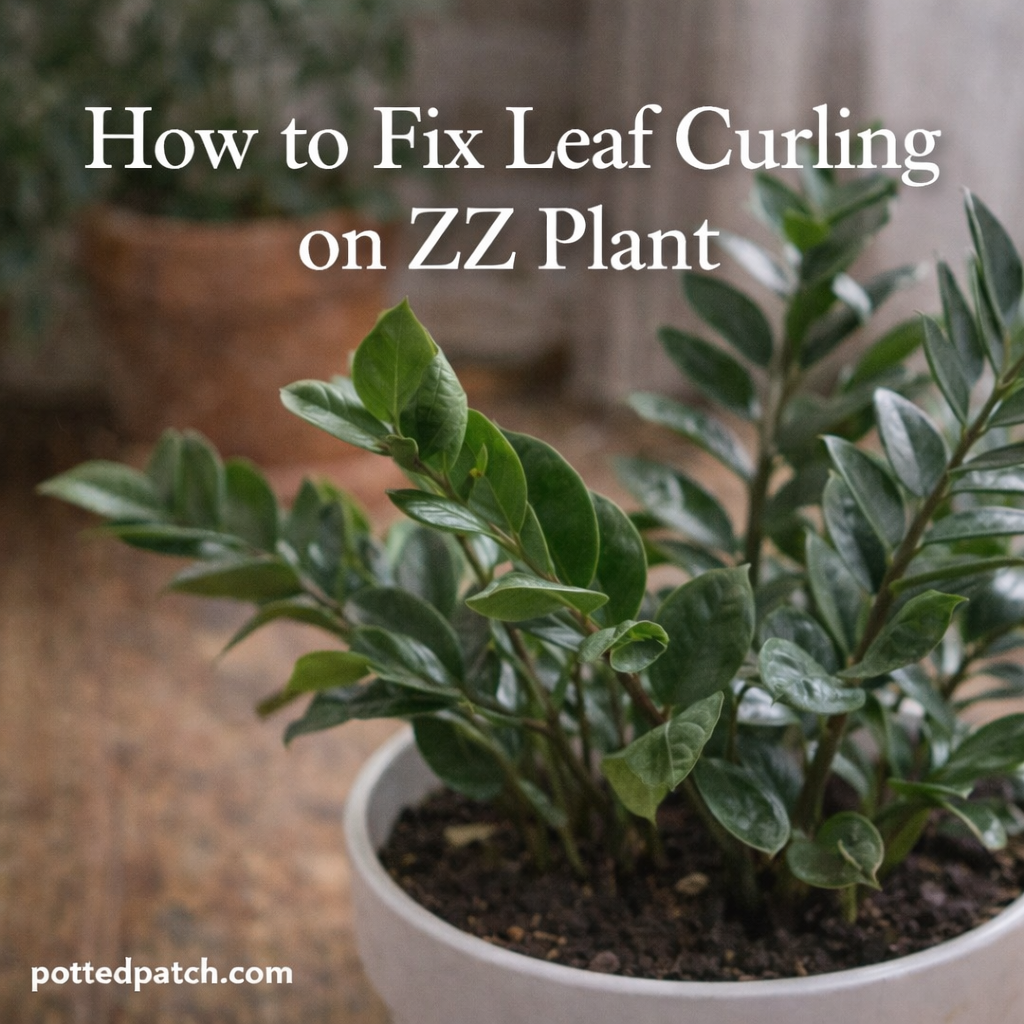
Leaf curling on a ZZ plant is a clear signal that something isn’t quite right. While ZZ plants are famously resilient, stress from watering, lighting, or environmental changes can cause leaves to curl, fold, or wrinkle.
The good news? Most cases are easy to fix once you identify the cause.
This guide walks you through exactly how to diagnose and correct leaf curling so your ZZ plant can return to its healthy, glossy state.
Step 1: Check the Soil Moisture First
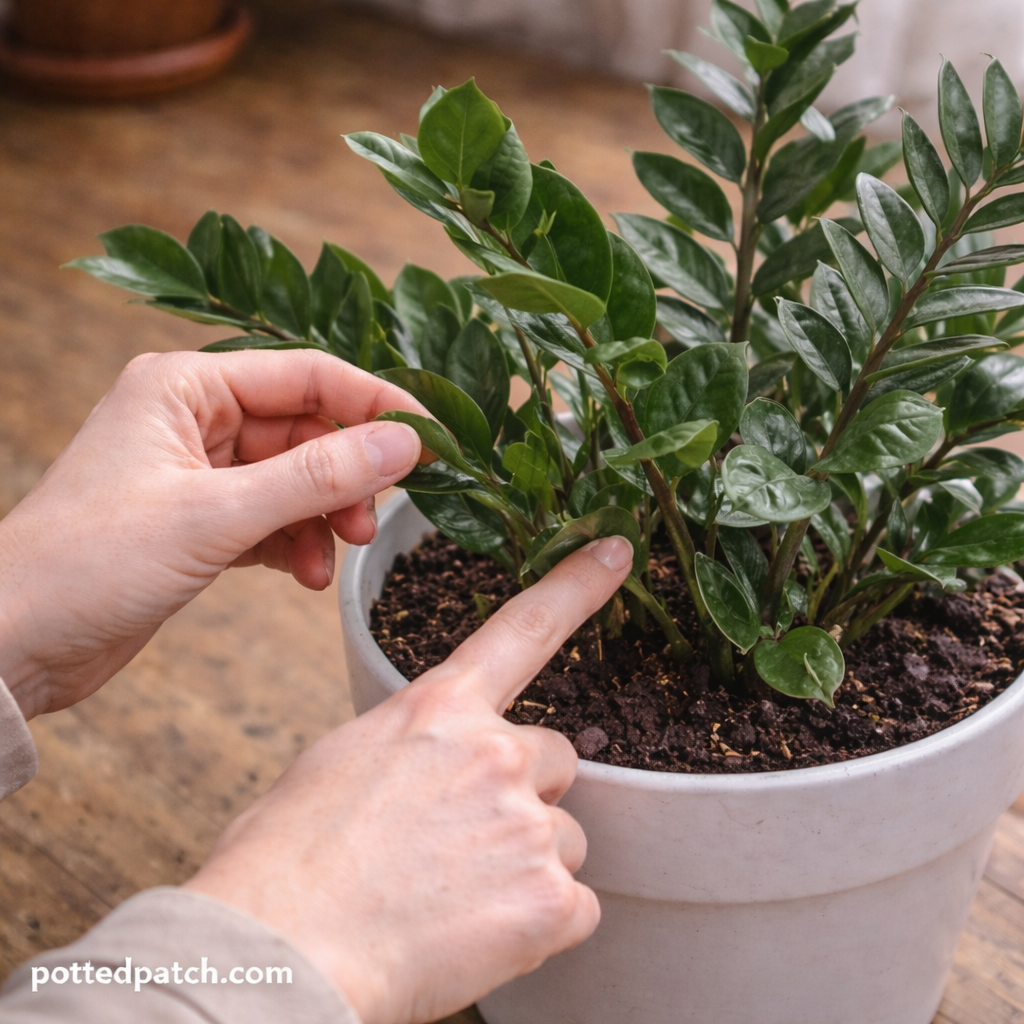
Watering issues are the most common cause of curling leaves.
If the Soil Is Bone Dry
Your plant may be underwatered.
Fix:
- Water thoroughly until excess drains from the bottom.
- Let all extra water drain away.
- Resume watering only when the top 1–2 inches dry out.
ZZ plants prefer drying slightly between waterings but not staying dry for weeks.
If the Soil Is Wet or Soggy
Overwatering may be stressing the roots.
Fix:
- Stop watering immediately.
- Allow soil to dry completely.
- Improve drainage if needed.
- Repot if roots appear mushy or smell sour.
ZZ plants store water in their rhizomes and are very sensitive to excess moisture.
Step 2: Evaluate Light Conditions
ZZ plants thrive in bright, indirect light.
Too much direct sunlight can cause leaves to curl and edges to brown.
Signs of Light Stress
- Faded or bleached leaves
- Crispy brown patches
- Curling combined with discoloration
Fix:
- Move the plant away from direct afternoon sun.
- Use sheer curtains for filtering.
- Position 3–6 feet from a bright window.
Low light rarely causes curling but can slow recovery.
Step 3: Check for Temperature Stress
Sudden temperature changes can trigger curling.
Ideal temperature range:
65–85°F
Avoid placing your plant near:
- Heating vents
- Air conditioners
- Drafty doors
- Cold window panes
Stable indoor temperatures encourage steady recovery.
Step 4: Inspect for Pests
Though ZZ plants are resistant, spider mites and aphids can occasionally cause leaf distortion.
What to Look For
- Fine webbing
- Sticky residue
- Tiny moving insects
- Speckled leaf surfaces
Fix:
- Isolate the plant.
- Wipe leaves with a damp cloth.
- Use insecticidal soap weekly if needed.
Early treatment prevents severe damage.
Step 5: Flush Out Fertilizer Buildup
Excess fertilizer can burn roots and cause curling with brown tips.
Signs of Fertilizer Stress
- White crust on soil
- Leaf edge browning
- Curling after feeding
Fix:
- Flush soil thoroughly with distilled water.
- Reduce feeding to once every 6–8 weeks in growing season.
- Avoid fertilizing in winter.
ZZ plants require minimal fertilizer.
Step 6: Improve Humidity (If Air Is Extremely Dry)
ZZ plants tolerate average indoor humidity, but extremely dry air can cause mild curling.
If your home has dry winter air:
- Move plant away from heat vents.
- Use a humidifier nearby.
- Group plants together.
Humidity adjustments usually improve leaf appearance gradually.
Step 7: Remove Severely Damaged Leaves
Leaves that are fully brown or severely curled may not recover.
Use clean scissors to:
- Cut at the base of the stem.
- Remove only damaged growth.
- Avoid cutting healthy leaves.
Pruning encourages energy to redirect to healthy growth.
How Long Does Recovery Take?
After correcting the issue:
- Minor curling improves in 2–3 weeks.
- New growth should appear firm and upright.
- Damaged leaves may not uncurl fully but won’t worsen.
Consistency is key — avoid overcorrecting.
Quick Troubleshooting Summary
If your ZZ plant leaves are curling:
- Check soil moisture first.
- Adjust watering habits.
- Evaluate light exposure.
- Stabilize temperature.
- Inspect for pests.
- Reduce fertilizer.
One small change often solves the issue.
Final Thoughts
Leaf curling on a ZZ plant is usually a response to environmental stress — most commonly watering problems.
By identifying the root cause and making gradual adjustments, your plant can recover quickly. ZZ plants are resilient, and with consistent care, they bounce back well.
Observe, adjust, and give your plant time. Healthy, glossy leaves should follow.