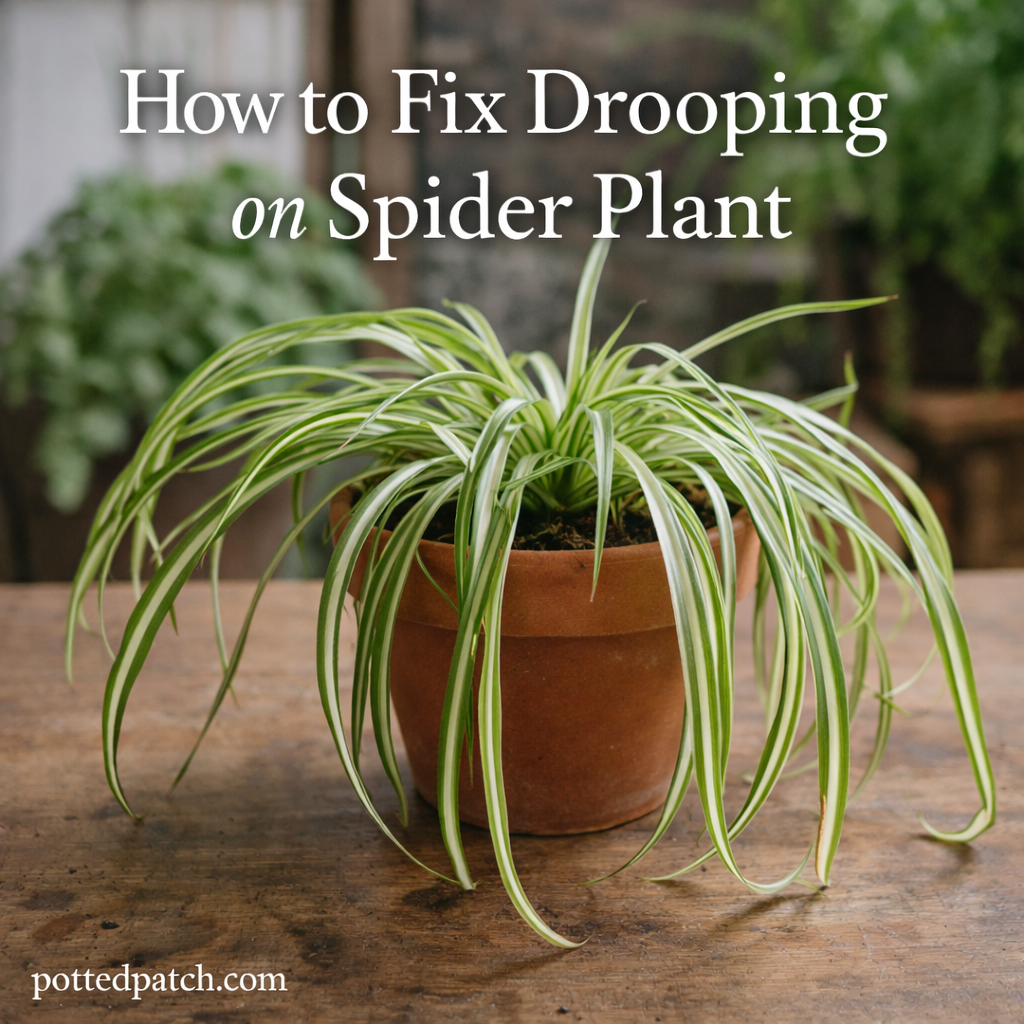
Spider plants are known for their arching, lively leaves and easygoing nature. So when those long green blades start sagging or collapsing, it can feel alarming.
The good news? Drooping on a spider plant is almost always fixable.
In this guide, you’ll learn the most common causes of drooping, how to diagnose the issue quickly, and exactly how to restore your plant to its upright, healthy shape.
Why Is My Spider Plant Drooping?
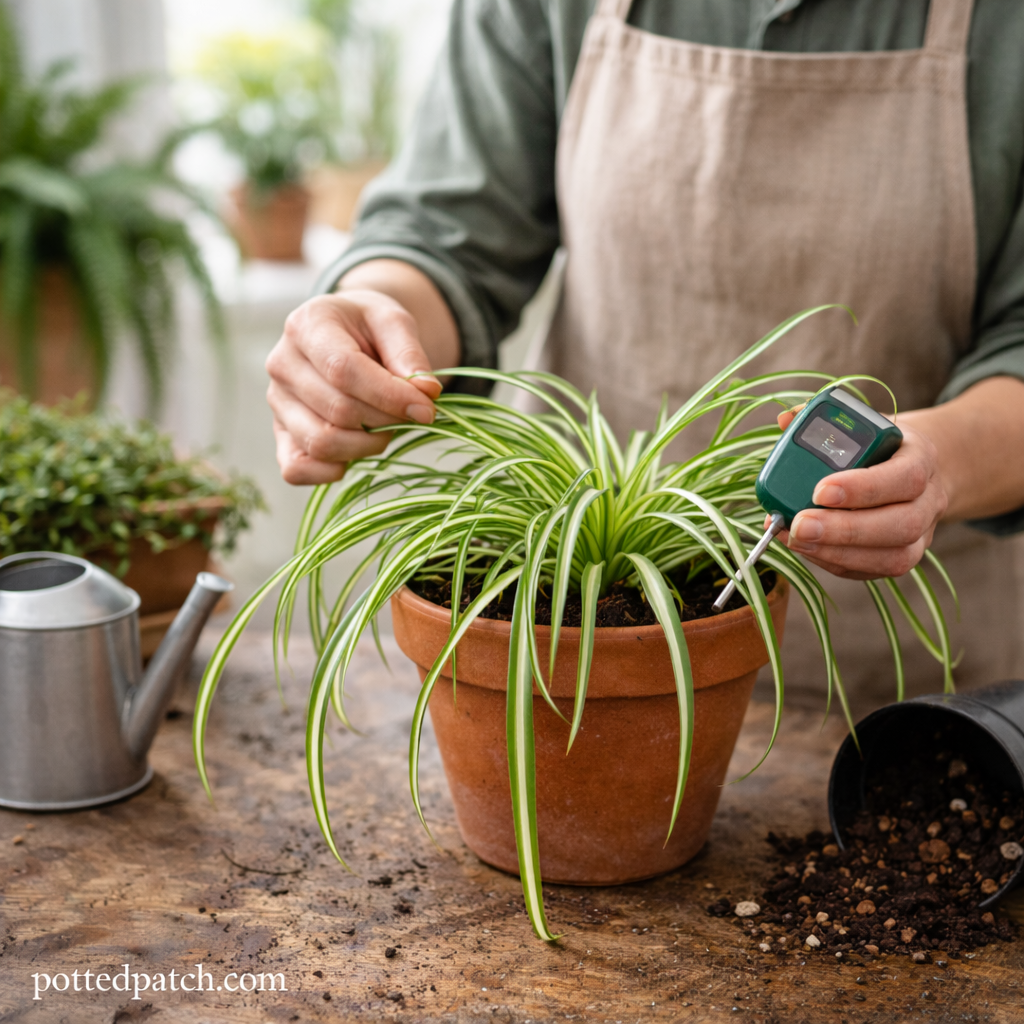
Drooping usually signals stress. The key is figuring out what kind of stress.
The most common causes are:
- Underwatering
- Overwatering
- Poor drainage
- Root crowding
- Lighting issues
- Temperature shock
Let’s break each one down.
1. Underwatering
This is the most common cause.
Spider plants prefer evenly moist soil. If the soil becomes completely dry for too long, the leaves lose firmness and droop.
Signs of Underwatering
- Soil pulling away from the pot edges
- Lightweight pot
- Dry soil several inches down
- Slight leaf curling
How to Fix It
- Water thoroughly until water drains from the bottom.
- Let excess water fully drain.
- Resume a consistent watering schedule.
Going forward, water when the top 1–2 inches of soil feel dry — not bone dry.
2. Overwatering
Too much water can also cause drooping. When roots sit in soggy soil, they struggle to absorb oxygen.
Signs of Overwatering
- Soft, mushy leaves
- Yellowing foliage
- Wet soil that stays damp for days
- Foul smell from soil
How to Fix It
- Allow soil to dry partially before watering again.
- Ensure your pot has drainage holes.
- If soil is heavy and compacted, repot into fresh, well-draining mix.
If root rot is present, trim affected roots before repotting.
3. Poor Drainage
Even if you water correctly, dense soil can trap moisture.
Spider plants need:
- Loose potting mix
- Added perlite or bark
- Proper drainage holes
If your plant sits in decorative cache pots, always empty excess water from the outer container.
4. Rootbound Stress
Spider plants grow quickly. When roots run out of room, they can’t absorb water efficiently — leading to drooping.
Signs of a Rootbound Plant
- Roots circling the bottom of the pot
- Water running straight through
- Slowed growth
- Frequent drying
Fix
Repot into a container 1–2 inches larger in diameter using fresh indoor potting mix with added perlite.
Spider plants actually prefer being slightly snug, so don’t oversize the pot.
5. Lighting Problems
Spider plants like bright, indirect light.
Too little light can cause weak, floppy growth. Too much direct sun can scorch leaves and cause droop.
Ideal Placement
- Near an east-facing window
- A few feet from a south or west window
- Bright room with filtered light
If moving locations, do it gradually to avoid shock.
6. Temperature or Environmental Shock
Spider plants dislike:
- Cold drafts
- Sudden temperature changes
- Air conditioning vents
- Heating vents
Keep them in stable temperatures between 60–80°F.
Quick Recovery Checklist
If your spider plant is drooping right now, follow this order:
- Check soil moisture.
- Inspect drainage.
- Look at roots if needed.
- Assess lighting.
- Adjust environment.
In most cases, improvement is visible within a few days after correcting the issue.
When Drooping Is Normal
A slight arching or soft curve is natural for spider plants. Their leaves are meant to cascade.
True problem drooping looks limp, collapsed, or weak — not gracefully curved.
Preventing Future Drooping
To keep your spider plant upright and vibrant:
- Water consistently but not excessively
- Use well-draining soil
- Repot every 1–2 years
- Provide bright, indirect light
- Avoid temperature extremes
Healthy spider plants are resilient. Once conditions improve, they bounce back quickly.
Final Thoughts
Drooping on a spider plant is rarely permanent. In most cases, it’s simply a watering or drainage issue that can be corrected with small adjustments.
Check the soil first, correct the environment second, and your spider plant should return to its lively, arching form in no time.