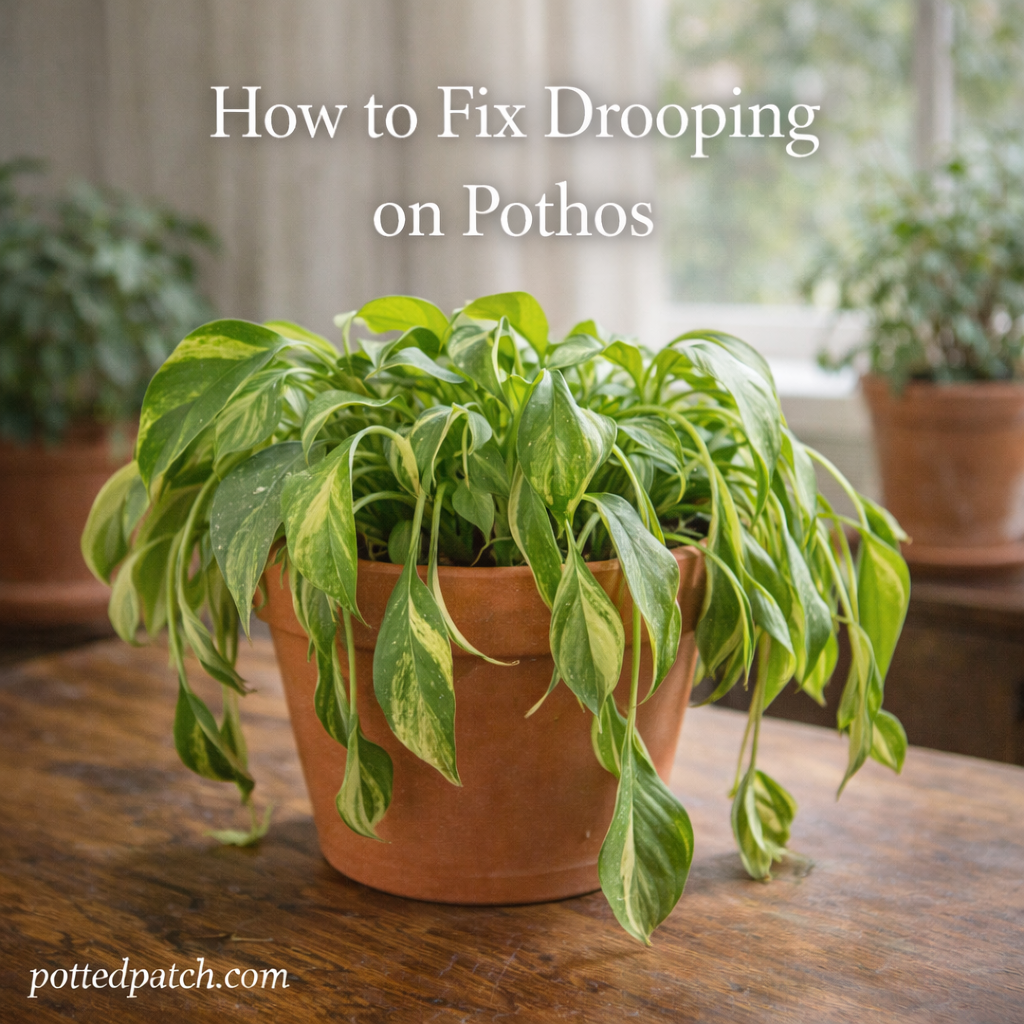
Drooping leaves on a pothos plant can look dramatic — but in most cases, the issue is completely reversible.
Pothos are resilient, adaptable plants. When they droop, they’re simply signaling stress. The key is identifying the cause quickly and correcting it before root damage occurs.
Here’s exactly how to fix drooping on pothos and restore firm, healthy leaves.
Step 1: Check the Soil Moisture Immediately
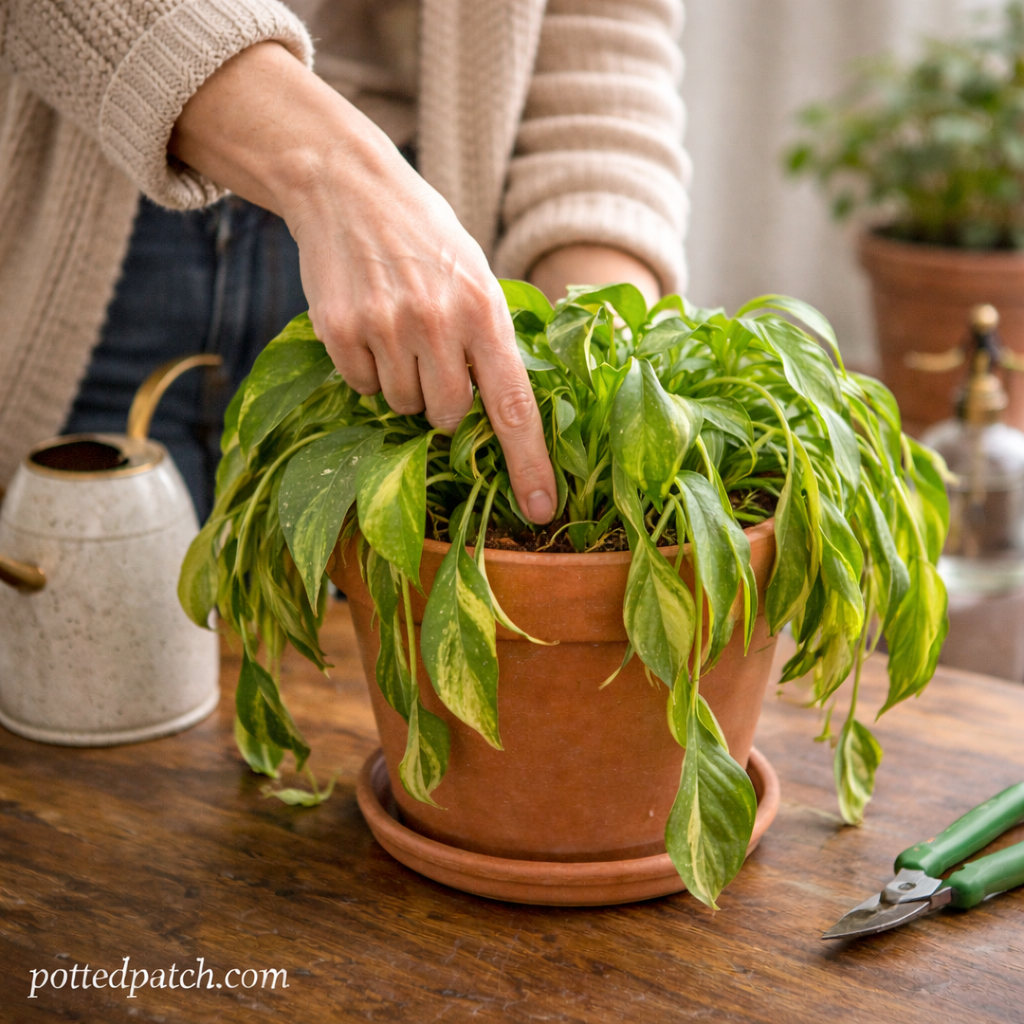
Before doing anything else, check the soil.
Insert your finger 1–2 inches into the potting mix.
- Bone dry soil → Underwatering
- Soggy, heavy soil → Overwatering
- Slightly moist → Look for other causes
Soil condition usually reveals the problem within seconds.
Fix #1: Correct Underwatering
If the soil is dry, your pothos is likely dehydrated.
How to fix it
- Water thoroughly until excess drains from the bottom.
- Let the soil absorb moisture evenly.
- Empty the saucer so roots aren’t sitting in water.
Leaves often perk up within a few hours once hydration returns.
Prevent it from happening again
- Check soil weekly
- Don’t rely on a fixed schedule
- Water when the top layer feels dry
Consistency prevents stress cycles.
Fix #2: Address Overwatering
If the soil feels soggy and leaves are drooping, root stress may be the issue.
Overwatering deprives roots of oxygen, leading to weak stems and limp foliage.
How to fix mild overwatering
- Stop watering immediately
- Allow soil to dry out partially
- Improve airflow around the plant
How to fix severe overwatering
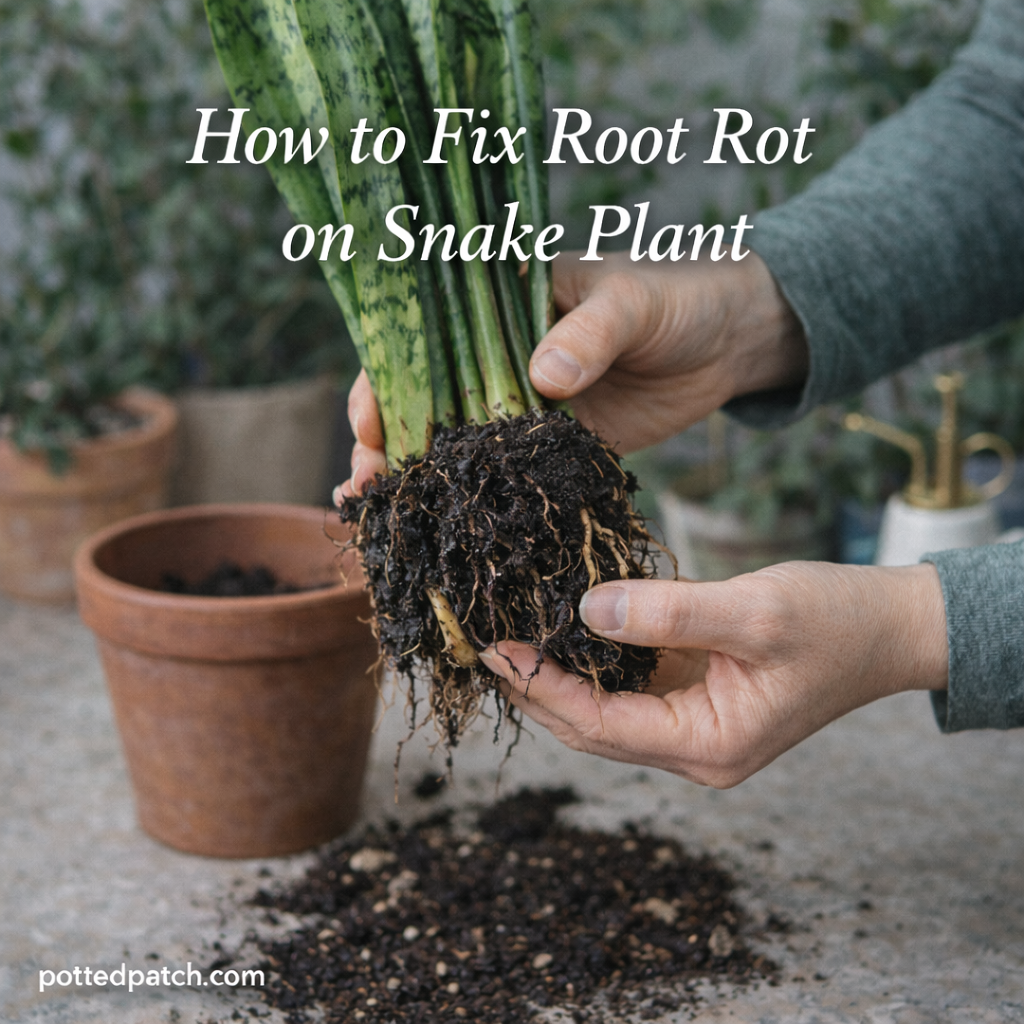
- Remove the plant from the pot.
- Inspect roots.
- Trim any brown, mushy roots.
- Repot in fresh, well-draining soil.
Healthy roots are white and firm.
Fix #3: Improve Lighting
Low light weakens stems and reduces overall plant strength.
Pothos prefer:
- Bright, indirect light
- Filtered natural light near a window
- Consistent daily exposure
If your plant is in a dark corner, move it gradually to a brighter location. Avoid direct midday sun, which can scorch leaves.
Improved lighting can restore firmness within a couple of weeks.
Fix #4: Stabilize Temperature
Sudden temperature changes can cause drooping.
Keep your pothos away from:
- Air conditioning vents
- Heating units
- Cold drafts
- Exterior doors
Ideal temperature range: 65–85°F.
Stable conditions reduce stress and support recovery.
Fix #5: Refresh Compacted Soil
Old or dense soil restricts airflow and root function.
Signs soil needs replacing:
- Water pools on top
- Soil stays wet too long
- Plant hasn’t been repotted in 2+ years
Repot into a loose, well-draining mix to restore root health.
How Long Until Pothos Recovers?
Recovery time depends on the cause:
- Underwatering: Often within hours
- Mild overwatering: 3–7 days
- Root rot recovery: 1–3 weeks
- Lighting adjustments: 2–4 weeks
Pothos bounce back quickly when conditions improve.
Preventing Future Drooping
Use this simple care routine:
- Check soil moisture before watering
- Ensure the pot has drainage holes
- Provide bright, indirect light
- Repot every 1–2 years
- Avoid extreme temperature shifts
Preventative care is easier than recovery.
When Drooping Is Not a Concern
Sometimes minor drooping is temporary.
For example:
- After repotting (transplant shock)
- After moving to a new location
- Following heavy pruning
If the soil and lighting are correct, give the plant time to adjust.
Final Thoughts
Drooping on pothos isn’t permanent damage — it’s a warning sign.
By checking soil moisture first, correcting watering habits, improving light, and ensuring proper drainage, you can restore your plant’s strength quickly.
Pothos are tough. With the right adjustments, they return to their lush, trailing form and continue growing beautifully indoors.