
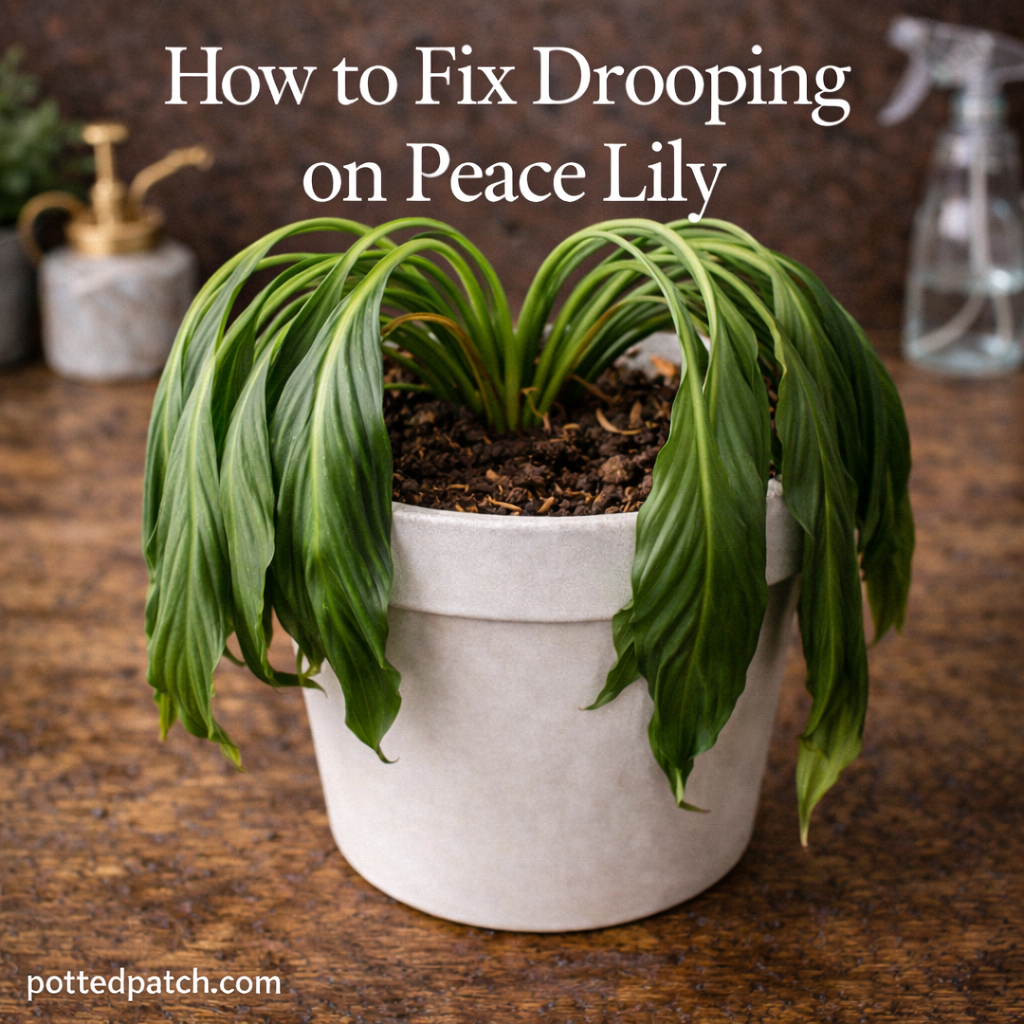
Few houseplants react as dramatically as a peace lily. One day it looks lush and upright — the next, the leaves are limp and hanging over the pot.
The good news? Drooping on a peace lily is usually easy to fix once you identify the cause.
In this guide, you’ll learn exactly how to diagnose the issue and bring your plant back to its healthy, upright form.
Step 1: Check the Soil Moisture First
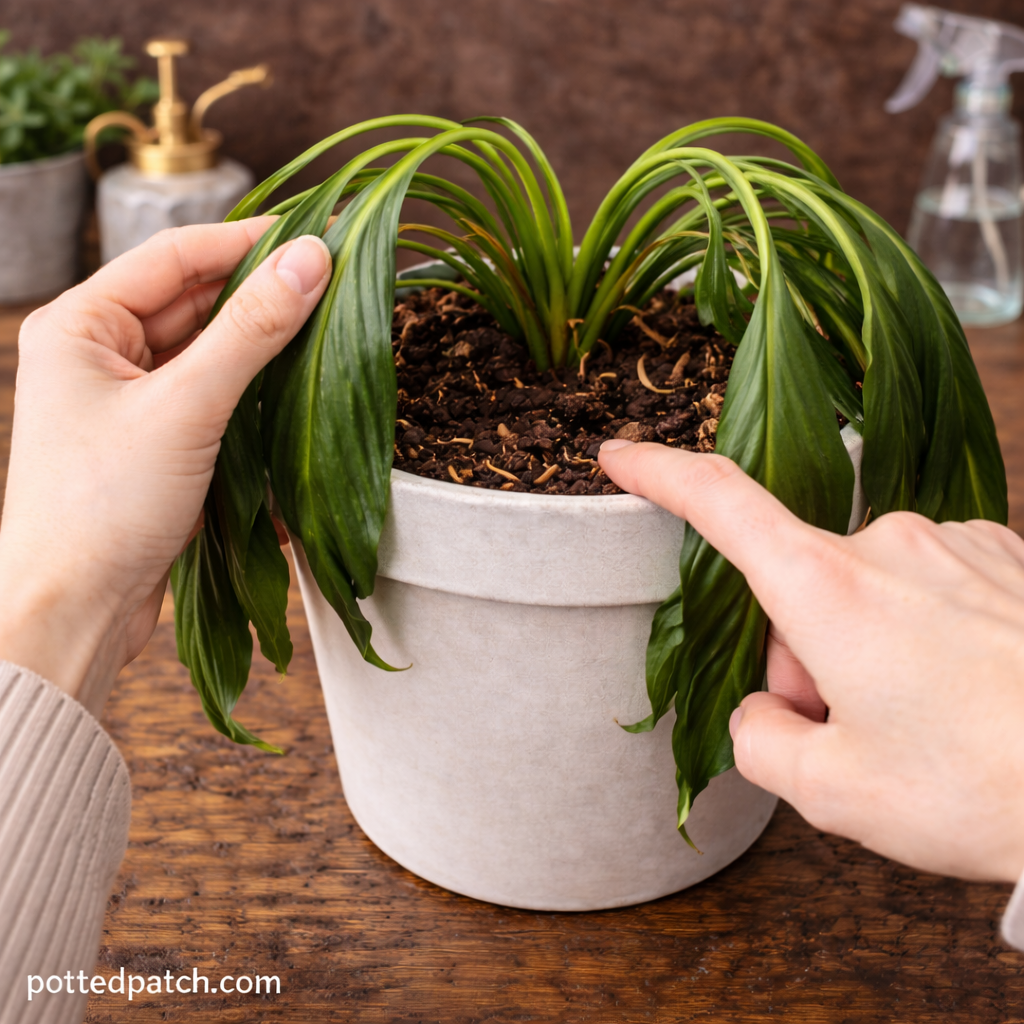
Before doing anything else, feel the soil.
This single step solves most peace lily problems.
If the Soil Is Dry
Underwatering is the most common reason for drooping.
How to Fix It
- Water thoroughly until water drains from the bottom.
- Allow excess water to drain fully.
- Empty the saucer.
In most cases, leaves will perk up within a few hours.
If the Soil Is Wet or Soggy
Overwatering may be the issue.
Roots need oxygen. When soil stays wet too long, roots suffocate and can rot — leading to drooping leaves even though the soil is moist.
How to Fix It
- Stop watering immediately.
- Ensure the pot has drainage holes.
- Allow the top few inches of soil to dry.
- If drooping continues, inspect roots for rot.
Black, mushy roots should be trimmed before repotting in fresh soil.
Step 2: Check Drainage
Even proper watering won’t help if the pot traps moisture.
Make Sure:
- The pot has drainage holes.
- Water doesn’t sit in the saucer.
- Soil isn’t compacted or heavy.
If needed, repot into a well-draining indoor mix and use a container that allows excess water to escape.
Step 3: Evaluate Temperature and Placement
Peace lilies prefer stable indoor conditions.
Ideal Environment
- 65–80°F
- No cold drafts
- No direct blasts from heating or AC vents
If your plant sits near a drafty window or door, move it to a more stable spot.
Temperature stress can cause temporary drooping.
Step 4: Check for Root Bound Stress
If your peace lily hasn’t been repotted in years, tight roots may limit water absorption.
Signs It’s Root Bound
- Roots growing out of drainage holes
- Soil drying extremely fast
- Water running straight through the pot
Repot into a container 1–2 inches larger to restore balance.
Step 5: Assess Humidity Levels
Peace lilies enjoy moderate humidity.
If indoor air is very dry, especially during winter, leaves may droop or curl slightly.
How to Improve Humidity
- Group plants together
- Use a humidifier
- Place the pot on a pebble tray (without water touching the roots)
Humidity adjustments often improve overall leaf posture.
How Long Does Recovery Take?
Recovery time depends on the cause:
- Underwatering: A few hours
- Mild overwatering: Several days
- Root rot recovery: 1–3 weeks
Avoid overcorrecting. Making too many changes at once can add stress.
Quick Peace Lily Fix Checklist
If your plant is drooping, go through this list:
- Check soil moisture.
- Confirm drainage holes exist.
- Adjust watering habits.
- Inspect roots if necessary.
- Stabilize temperature and humidity.
Work step-by-step rather than guessing.
When Drooping Is Normal
Peace lilies often droop slightly right before watering time. If the plant perks up after watering, that’s simply its natural signal.
Consistent drooping combined with yellow leaves or foul-smelling soil, however, requires immediate attention.
Final Thoughts
Fixing drooping on a peace lily starts with understanding moisture levels. Most issues trace back to either too little water or too much.
Check the soil first, make targeted adjustments, and give the plant time to respond. With proper drainage, balanced watering, and stable indoor conditions, your peace lily should return to its upright, glossy appearance quickly.
Peace lilies may look dramatic when stressed — but they’re surprisingly resilient once you correct the root cause.