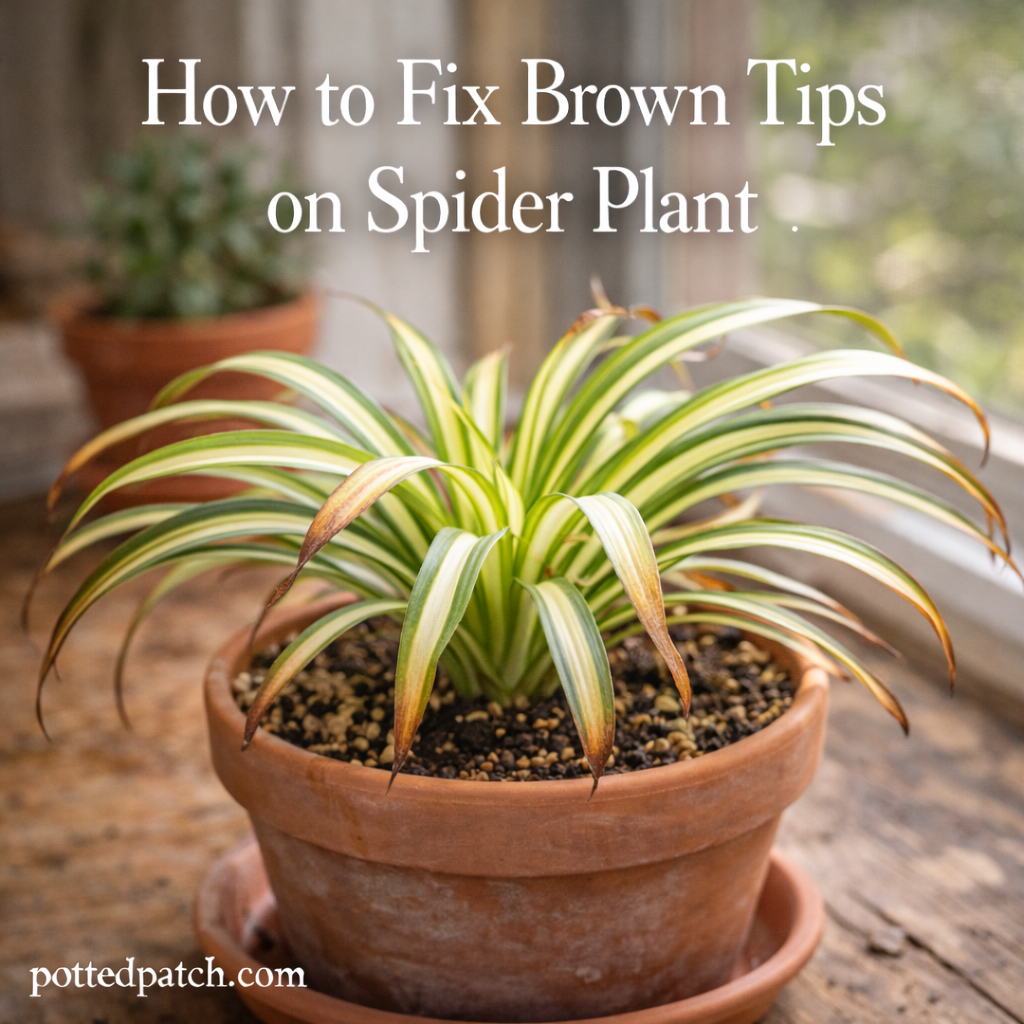
Brown tips on a spider plant are frustrating — especially when the rest of the plant looks healthy.
The good news?
Brown tips are usually cosmetic and easy to fix once you address the underlying cause.
In this guide, you’ll learn exactly how to fix brown tips on a spider plant and prevent them from coming back.
Step 1: Identify the Cause First
Before trimming anything, determine what’s causing the browning.
The most common causes are:
- Tap water chemicals
- Low humidity
- Fertilizer salt buildup
- Inconsistent watering
- Direct sunlight
Fixing the root issue prevents new tips from turning brown.
Step 2: Switch to Better Water
Spider plants are sensitive to fluoride and chlorine found in tap water.
Over time, minerals build up in the soil and cause leaf tip burn.
What to Do
- Use distilled water
- Collect rainwater if possible
- Let tap water sit out 24 hours before using
- Flush the soil monthly with distilled water
This simple change fixes many cases of brown tips.
Step 3: Improve Humidity
Dry indoor air — especially in winter — often causes crispy tips.
How to Increase Humidity
- Place plants close together
- Use a small humidifier
- Move away from heating vents
- Keep away from direct airflow
Spider plants prefer moderate humidity, not desert-level dryness.
Step 4: Adjust Your Watering Routine
Both overwatering and underwatering can stress the plant and cause browning.
Ideal Watering Method
- Water when the top inch of soil is dry
- Water thoroughly until excess drains out
- Empty the saucer
- Avoid letting soil stay soggy
Consistency prevents stress.
Step 5: Reduce Fertilizer Use
Over-fertilizing causes salt buildup, which damages leaf tips.
Signs of Fertilizer Burn
- Brown tips spreading inward
- White crust on soil
- Recent feeding before symptoms
Fix
- Flush soil thoroughly with distilled water
- Reduce fertilizing to once per month in spring and summer
- Skip feeding in winter
Less fertilizer often leads to healthier foliage.
Step 6: Repot if Necessary
If the plant is root bound or soil is compacted, stress can show as brown tips.
Signs It’s Time to Repot
- Roots circling the pot
- Water draining too quickly
- Stunted growth
Repot into a container 1–2 inches larger with fresh, well-draining soil.
Step 7: Trim the Brown Tips Properly
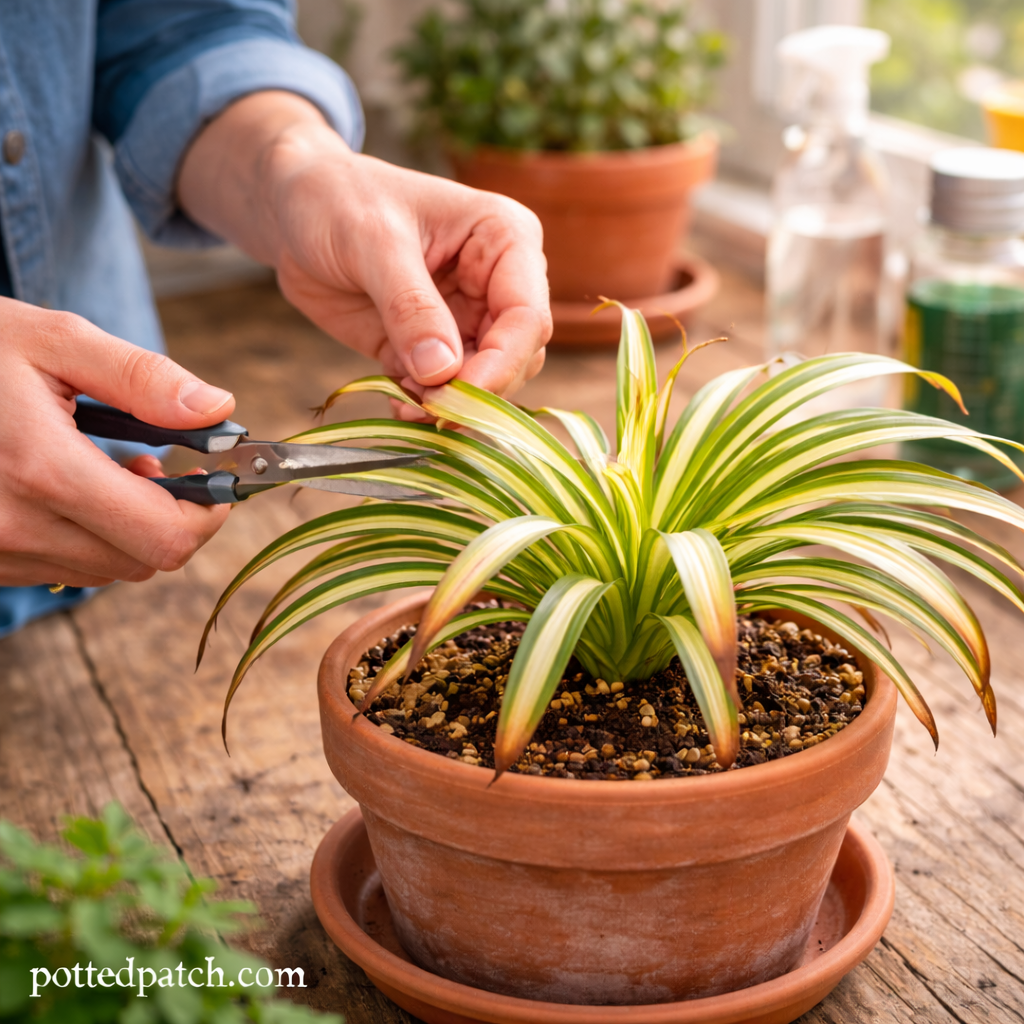
Brown tips won’t turn green again.
To trim:
- Use clean, sharp scissors
- Cut at an angle following the natural leaf shape
- Avoid cutting into healthy green tissue
Trimming improves appearance while you correct the cause.
How Long Until You See Improvement?
Once the cause is corrected:
- New growth should emerge healthy
- Browning should stop spreading
- Overall color should improve
This usually takes 2–4 weeks.
Old damaged tips won’t recover, but new leaves will look fresh.
Quick Fix Checklist
To fix and prevent brown tips:
- Use filtered or distilled water
- Maintain moderate humidity
- Water consistently
- Fertilize lightly
- Provide bright, indirect light
- Repot if root bound
Small changes make a big difference.
Final Thoughts
Brown tips on spider plants are common — and usually preventable.
Start with water quality. That alone solves many cases.
With consistent care and a few adjustments, your spider plant can return to lush, vibrant growth without those crispy edges.