
Brown tips on a snake plant are frustrating—but the good news is they’re usually easy to fix. Snake plants are famously tough, so when the tips turn brown, it’s almost always a care mismatch rather than a serious disease.
This guide walks you through the most common causes, how to confirm what’s happening, and exactly how to fix it so new growth stays clean and healthy.
Why Snake Plant Tips Turn Brown
Brown tips don’t appear randomly. They’re the plant’s way of reacting to stress, most often related to water, minerals, or environment.
Here are the most common culprits.
Overwatering or Poor Drainage
Overwatering is the number one cause of snake plant problems—and brown tips are often an early warning sign.
Snake plants store water in their thick leaves and roots. When soil stays wet too long, roots struggle to breathe, and damage shows up at the leaf tips first.
Signs this is the issue
- Soil feels damp days after watering
- Leaves feel soft or slightly mushy near the base
- Tips turn dark brown or black rather than crispy
How to fix it
- Let the soil dry out completely before watering again
- Check that the pot has a drainage hole
- Switch to a fast-draining soil (cactus or succulent mix works well)
- Empty saucers after watering—never let the pot sit in water
Underwatering or Inconsistent Watering
While snake plants tolerate drought, extreme dryness or long gaps between watering can also cause brown tips.
This usually creates dry, crispy browning rather than dark or mushy damage.
Signs this is the issue
- Soil pulls away from the sides of the pot
- Leaves feel thinner or slightly wrinkled
- Brown tips are light brown and papery
How to fix it
- Water thoroughly when the top 2–3 inches of soil are dry
- Make sure water reaches the full root zone
- Avoid frequent tiny waterings—deep, infrequent watering is better
Mineral Buildup From Tap Water or Fertilizer
Snake plants are sensitive to salts and minerals found in tap water and fertilizer. Over time, these accumulate in the soil and burn the leaf tips.
This is one of the most common causes when watering habits seem correct.
Signs this is the issue
- White crust on soil surface or pot rim
- Brown tips appearing slowly over time
- Otherwise healthy-looking leaves
How to fix it
- Use filtered, distilled, or rainwater when possible
- Flush the soil every 2–3 months by watering heavily and letting excess drain out
- Reduce fertilizer strength and frequency
Too Much Fertilizer
Snake plants don’t need much feeding. Overfertilizing pushes excess salts into the soil, which damages roots and leaf tips.
Signs this is the issue
- Brown tips shortly after fertilizing
- Rapid salt buildup on soil surface
- No improvement despite proper watering
How to fix it
- Stop fertilizing for at least 2–3 months
- Flush the soil thoroughly
- Resume feeding only during spring and summer, using diluted fertilizer
Low Humidity or Dry Indoor Air
While snake plants tolerate dry air better than most houseplants, extremely dry conditions can still cause tip browning—especially in winter.
Signs this is the issue
- Brown tips during heating season
- Leaves otherwise firm and upright
- No signs of watering issues
How to fix it
- Move the plant away from heaters or vents
- Increase humidity slightly with a nearby humidifier
- Group plants together to create a more humid microclimate
Light Stress
Snake plants handle low light well, but extreme lighting conditions can still cause stress.
- Too much direct sunlight can scorch tips
- Very low light slows growth and weakens leaf structure
How to fix it
- Place the plant in bright, indirect light
- Avoid harsh afternoon sun
- Rotate the pot occasionally for even exposure
How to Trim Brown Tips Safely
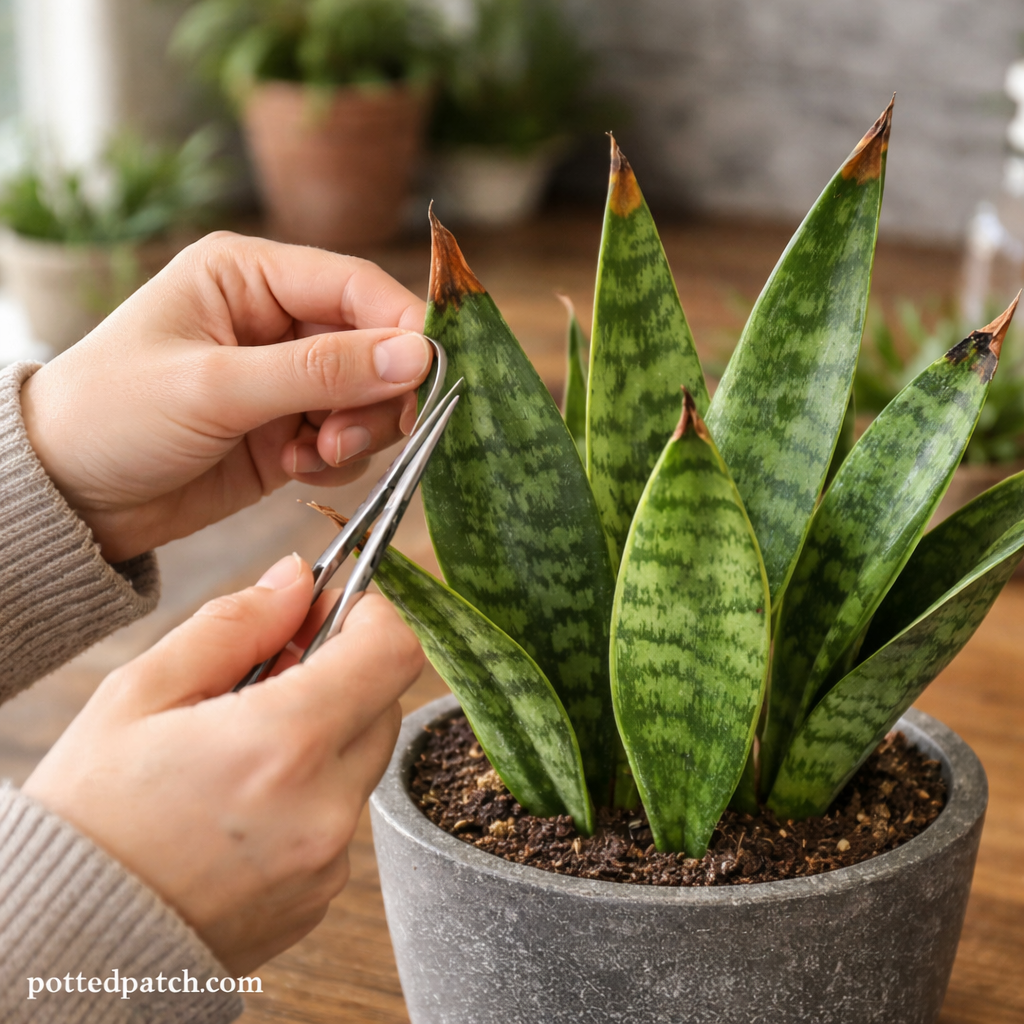
Once a leaf tip turns brown, it won’t turn green again—but trimming improves appearance and prevents further drying.
How to do it properly
- Use clean, sharp scissors or pruning shears
- Trim just above the brown area, following the natural leaf shape
- Leave a thin brown edge rather than cutting into healthy tissue
- Avoid cutting the entire leaf unless damage is severe
Trimming is cosmetic—it won’t fix the underlying problem unless care issues are corrected.
Step-by-Step Reset for a Healthier Snake Plant
If you’re unsure which issue is causing the browning, this reset approach works for most situations.
- Check drainage and pot condition
- Let soil dry completely before the next watering
- Flush soil to remove mineral buildup
- Pause fertilizing temporarily
- Adjust light to bright, indirect conditions
- Trim damaged tips for appearance
New growth should emerge clean within a few weeks to a couple of months.
Common Mistakes That Keep Brown Tips Coming Back
Avoid these habits to prevent repeat issues.
- Watering on a fixed schedule instead of checking soil
- Using softened tap water regularly
- Fertilizing during fall and winter
- Letting pots sit in standing water
- Expecting damaged tips to heal on their own
What Healthy Snake Plant Growth Looks Like
After fixing the issue, watch for these signs of recovery.
- New leaves with clean, green tips
- Firm, upright foliage
- No new browning spreading upward
- Slow but steady growth
Snake plants are slow growers, so patience is key—but once conditions are right, they stay healthy with minimal effort.
Final Thoughts
Brown tips on snake plants are common and almost always fixable. By adjusting watering habits, improving drainage, reducing mineral buildup, and fine-tuning light and humidity, you can stop the damage and keep future growth looking crisp.
Snake plants thrive on neglect—but the right kind of neglect.