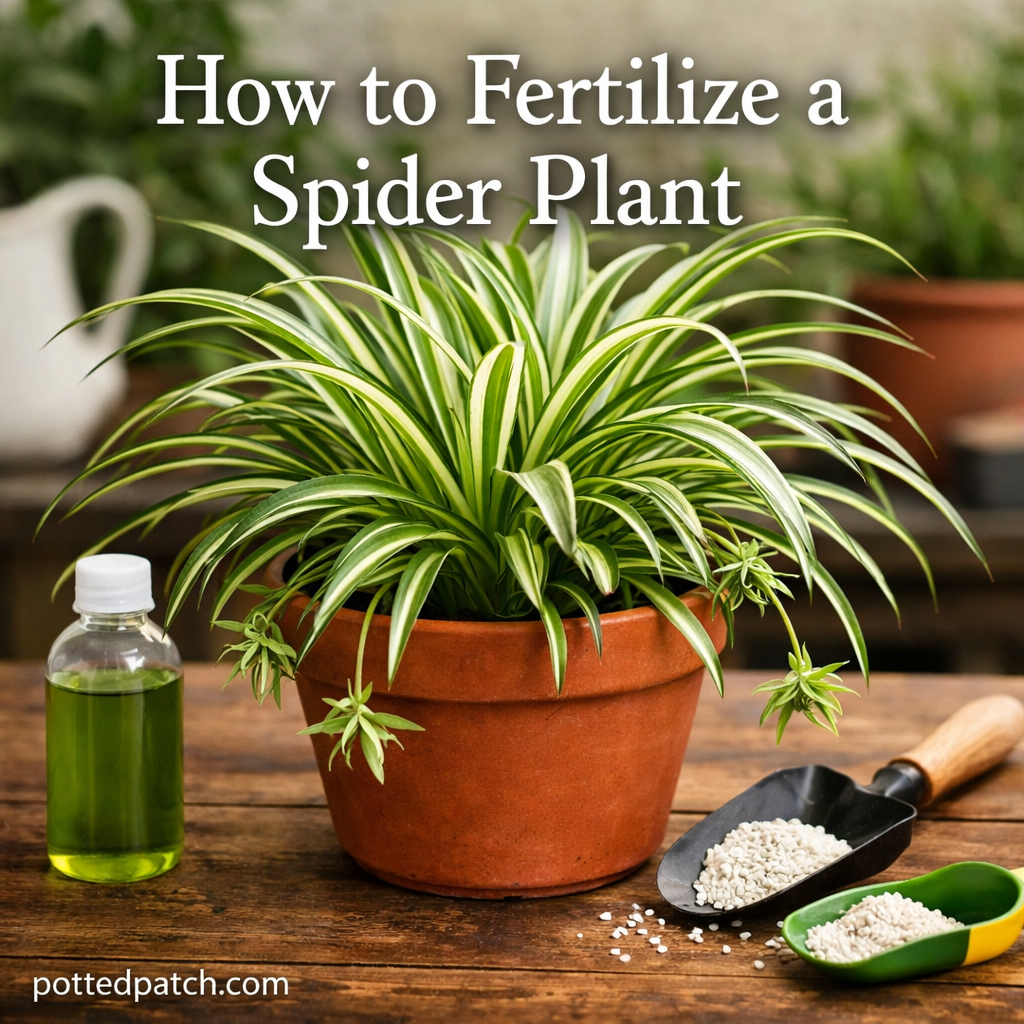
Spider plants are famous for being low-maintenance, adaptable, and beginner-friendly. But even hardy houseplants need nutrients to stay vibrant. If your plant looks pale, slow-growing, or less full than usual, it may simply need feeding.
In this guide, you’ll learn exactly how to fertilize a spider plant, when to do it, and how to avoid common mistakes that can damage the roots.
Why Spider Plants Need Fertilizer
Spider plants (Chlorophytum comosum) grow quickly during spring and summer. Over time, nutrients in potting soil get depleted—especially in containers where roots can’t access fresh soil.
Fertilizing helps:
- Encourage healthy, arching green leaves
- Boost baby plantlet (spiderette) production
- Strengthen root systems
- Prevent pale or yellowish foliage caused by nutrient deficiency
While they don’t need heavy feeding, consistent light fertilization keeps them thriving.
Best Fertilizer for Spider Plants
Spider plants prefer balanced, gentle feeding.
Option 1: Balanced Liquid Fertilizer (Best Overall)
Use a balanced houseplant fertilizer such as:
- 10-10-10
- 20-20-20
- 5-5-5
Dilute to half strength to prevent salt buildup.
Liquid fertilizer is ideal because:
- It’s easy to control dosage
- It absorbs quickly
- It reduces the risk of overfeeding
Option 2: Slow-Release Fertilizer
Slow-release pellets work well if you prefer low-maintenance care.
Apply once in early spring and let nutrients release gradually over 2–3 months.
Be cautious not to double-feed with additional liquid fertilizer unless the plant clearly needs it.
Option 3: Organic Fertilizer
If you prefer natural options, consider:
- Fish emulsion (diluted well)
- Compost tea
- Worm castings (light top dressing)
Organic fertilizers feed slowly and are less likely to burn roots.
How Often to Fertilize a Spider Plant
Spider plants don’t require frequent feeding.
During Growing Season (Spring & Summer)
Fertilize:
- Every 2–4 weeks with diluted liquid fertilizer
OR - Once per season with slow-release fertilizer
During Fall & Winter
Reduce feeding significantly.
- Fertilize once every 6–8 weeks at most
- Skip entirely if growth slows
Plants naturally rest during colder months and won’t use extra nutrients.
Step-by-Step: How to Fertilize a Spider Plant
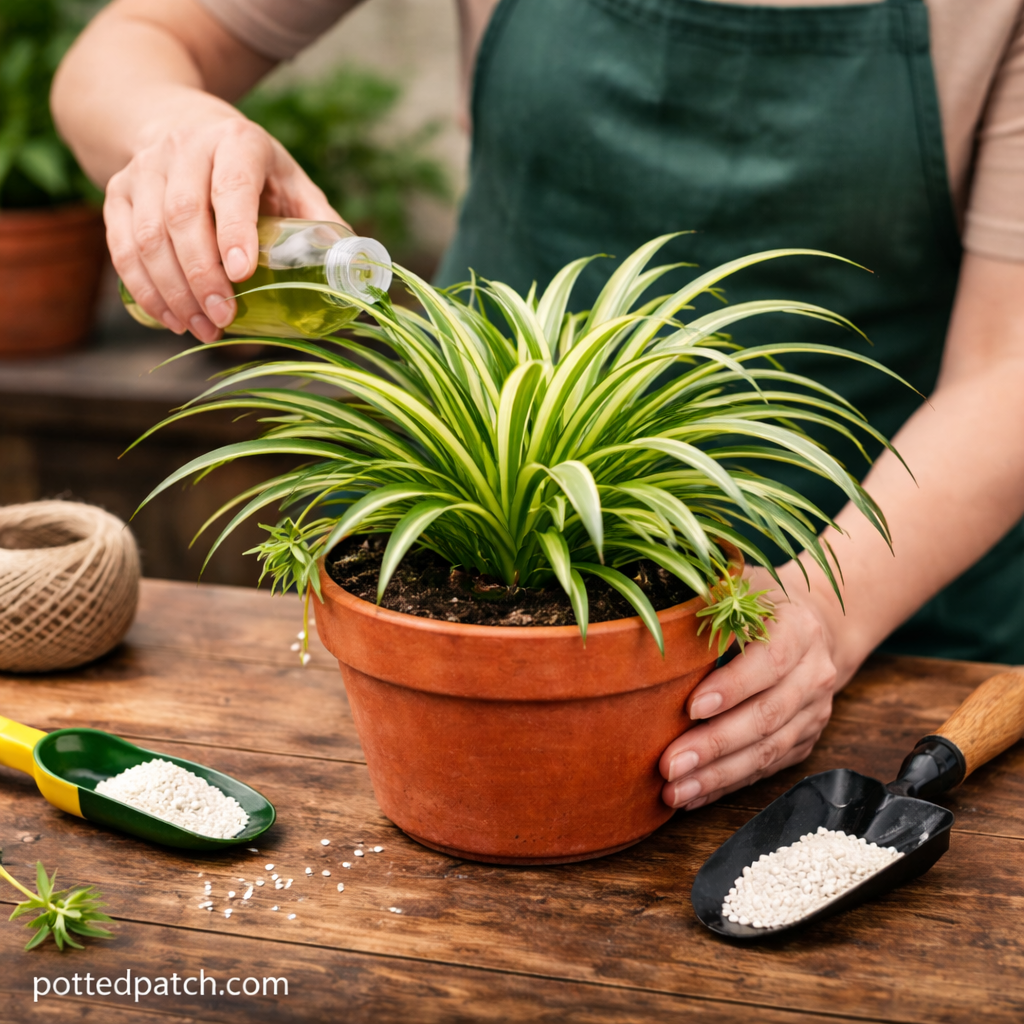
Follow this simple process to avoid overfeeding.
Step 1: Water First
Always water your spider plant before applying fertilizer.
This protects roots from fertilizer burn.
Step 2: Dilute Properly
Mix fertilizer at half the recommended strength unless the label specifically says otherwise.
More fertilizer does NOT mean faster growth.
Step 3: Apply Evenly
Pour diluted fertilizer slowly around the base of the plant.
Avoid pouring directly onto leaves.
Step 4: Drain Excess Water
Make sure your pot has drainage holes.
Discard any runoff collected in saucers.
Standing fertilizer water can damage roots.
Signs Your Spider Plant Needs Fertilizer
Look for:
- Pale or faded green leaves
- Slow or stalled growth
- Few or no baby plantlets
- Thin, weak-looking foliage
If your plant hasn’t been fertilized in months and shows these signs, a light feeding can help.
Signs of Over-Fertilizing
Too much fertilizer is more dangerous than too little.
Watch for:
- Brown leaf tips
- Crusty white buildup on soil
- Wilting despite moist soil
- Sudden yellowing
If you suspect overfeeding:
- Flush the soil thoroughly with distilled or filtered water.
- Let the pot drain completely.
- Pause fertilizing for at least 4–6 weeks.
Spider plants are sensitive to fluoride and salt buildup, so using filtered water when possible helps prevent tip burn.
Should You Fertilize Newly Repotted Spider Plants?
Not immediately.
Fresh potting mix already contains nutrients. Wait:
- 4–6 weeks after repotting before fertilizing
This prevents root stress and overfeeding.
Do Spider Plant Babies Need Fertilizer?
If plantlets are still attached to the mother plant, they receive nutrients through it.
Once rooted in their own pot:
- Wait 3–4 weeks
- Begin light, diluted feeding
Young roots are delicate, so less is more.
Final Thoughts
Fertilizing a spider plant is simple when done lightly and consistently. Stick to diluted, balanced fertilizer during the growing season, reduce feeding in winter, and always avoid overdoing it.
Healthy spider plants reward you with vibrant leaves and plenty of cascading babies—proof that a little nourishment goes a long way.