

Snake plants (Sansevieria, also known as Dracaena trifasciata) are famously low-maintenance, but that doesn’t mean they never need feeding. When fertilized correctly, a snake plant grows stronger leaves, maintains better color, and recovers faster from stress. The key is knowing when to fertilize, what to use, and—just as important—when to stop.
This guide walks you through exactly how to fertilize a snake plant without risking root damage or stunted growth.
Do Snake Plants Really Need Fertilizer?
Snake plants can survive for long periods without fertilizer, especially when grown indoors. However, occasional feeding helps support:
- New leaf growth during the active season
- Stronger root development
- Improved resilience against pests and environmental stress
Fertilizer is optional for survival, but beneficial for healthy, steady growth when used sparingly.
When to Fertilize a Snake Plant
Timing matters more than frequency.
Best Time of Year
Fertilize only during the plant’s active growing season:
- Spring
- Summer
- Early fall
This is when snake plants naturally produce new roots and leaves.
When Not to Fertilize
Avoid fertilizing when:
- It’s late fall or winter
- The plant is dormant or not growing
- The plant is stressed from repotting, cold exposure, or overwatering
Feeding during dormancy can lead to salt buildup and root damage.
How Often to Fertilize
Snake plants prefer less, not more.
Recommended schedule:
- Every 6–8 weeks during spring and summer
- No more than 3–4 times per year total
If your plant is growing slowly but looks healthy, fertilizing even less often is perfectly fine.
Best Fertilizer for Snake Plants
Ideal Nutrient Ratio
Choose a balanced, gentle fertilizer such as:
- 10-10-10
- 20-20-20 (diluted)
- 3-1-2 houseplant blends
Avoid fertilizers designed for fast-growing or flowering plants, which are often too strong.
Liquid vs. Granular Fertilizer
Liquid fertilizer is usually the safest option.
Liquid fertilizer:
- Easier to dilute
- Faster absorption
- Lower risk of buildup
Granular or slow-release fertilizers can work but increase the risk of overfeeding, especially indoors.
How to Dilute Fertilizer Properly
Snake plants are sensitive to excess nutrients.
General rule:
- Dilute to half strength or less than what the label recommends
For example:
- If the label says 1 teaspoon per gallon, use ½ teaspoon per gallon
More diluted feedings are safer than fewer strong ones.
Step-by-Step: How to Fertilize a Snake Plant
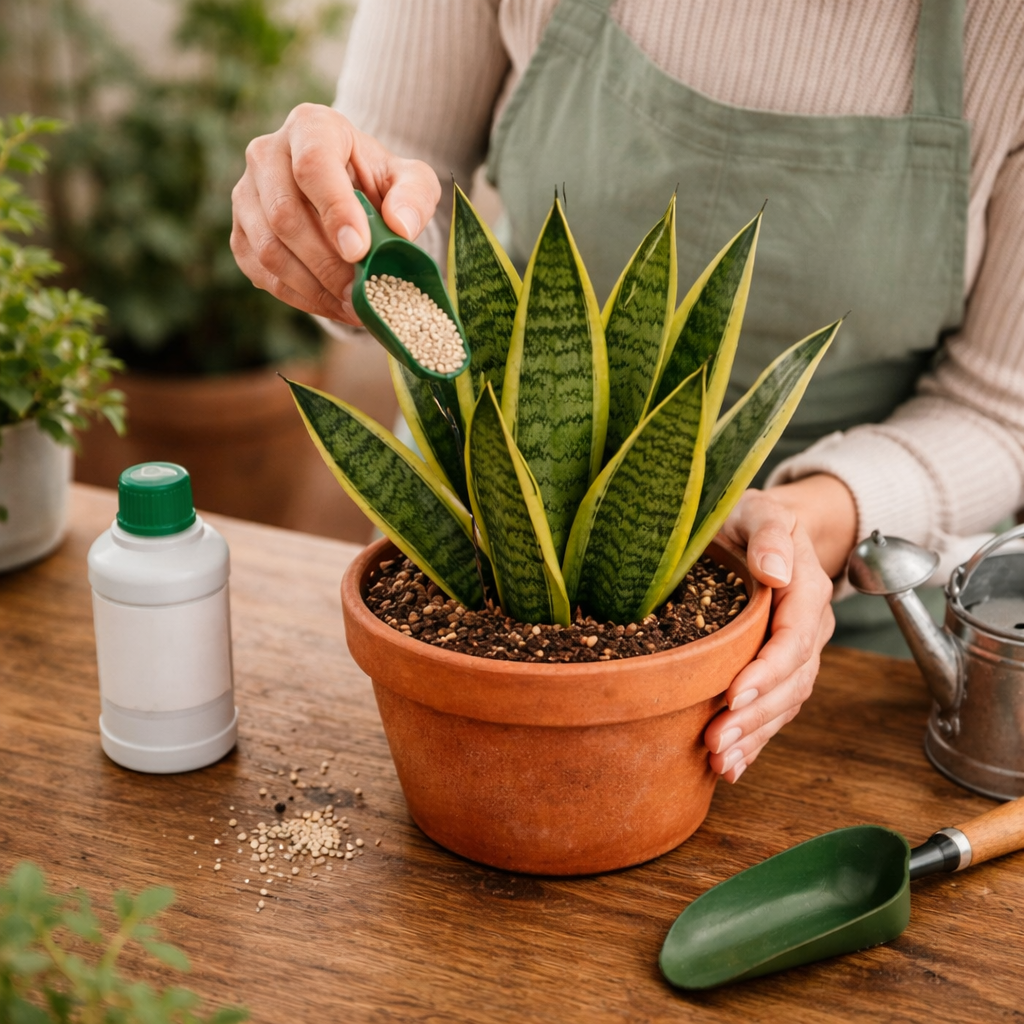
Follow these steps for safe, effective feeding.
- Check that the soil is mostly dry
- Water lightly with plain water first (optional but helpful)
- Mix diluted fertilizer according to instructions
- Pour evenly over the soil, avoiding the leaves
- Allow excess water to drain completely
Never fertilize dry, compacted soil without moisture—this can burn roots.
Fertilizing Potted vs. Outdoor Snake Plants
Indoor Snake Plants
Indoor plants grow more slowly and need less fertilizer.
Tips:
- Use weaker dilution
- Fertilize less often
- Ensure excellent drainage
Indoor environments don’t flush salts from soil as easily as outdoor conditions.
Outdoor Snake Plants
Outdoor plants may need slightly more feeding during warm months.
Tips:
- Fertilize once every 4–6 weeks during summer
- Water thoroughly after feeding
- Stop fertilizing when temperatures cool
Outdoor rainfall helps wash excess salts from the soil.
Signs Your Snake Plant Needs Fertilizer
Your plant may benefit from feeding if you notice:
- Pale or dull leaf color
- Very slow growth during spring or summer
- Thin or weak new leaves
These signs should only be considered during the active growing season. In winter, slow growth is normal.
Signs of Over-Fertilizing
Overfeeding is far more common than underfeeding.
Watch for:
- Brown leaf tips or edges
- Yellowing leaves not caused by watering issues
- White crusty residue on the soil surface
- Soft or mushy roots
If these occur, stop fertilizing immediately and flush the soil with distilled or filtered water.
What Happens If You Never Fertilize?
A snake plant that is never fertilized will usually:
- Grow very slowly
- Remain smaller than its potential size
- Stay healthy if light and watering are correct
Fertilizer enhances growth, but it is not required for basic plant health.
Should You Fertilize After Repotting?
No—at least not right away.
Fresh potting mix already contains nutrients. Wait:
- 4–6 weeks after repotting before fertilizing
Fertilizing too soon after repotting can overwhelm newly disturbed roots.
Common Fertilizing Mistakes to Avoid
Avoid these frequent errors:
- Fertilizing during winter dormancy
- Using full-strength fertilizer
- Feeding dry soil
- Fertilizing stressed or recently repotted plants
- Applying fertilizer to leaves instead of soil
Snake plants reward patience and restraint.
Final Thoughts
Fertilizing a snake plant is all about moderation. When done sparingly during the growing season, fertilizer supports healthier leaves and steadier growth. When done too often or too strongly, it can cause long-term damage.
If you’re ever unsure, it’s better to skip a feeding than to overdo it. Snake plants thrive when they’re slightly neglected.