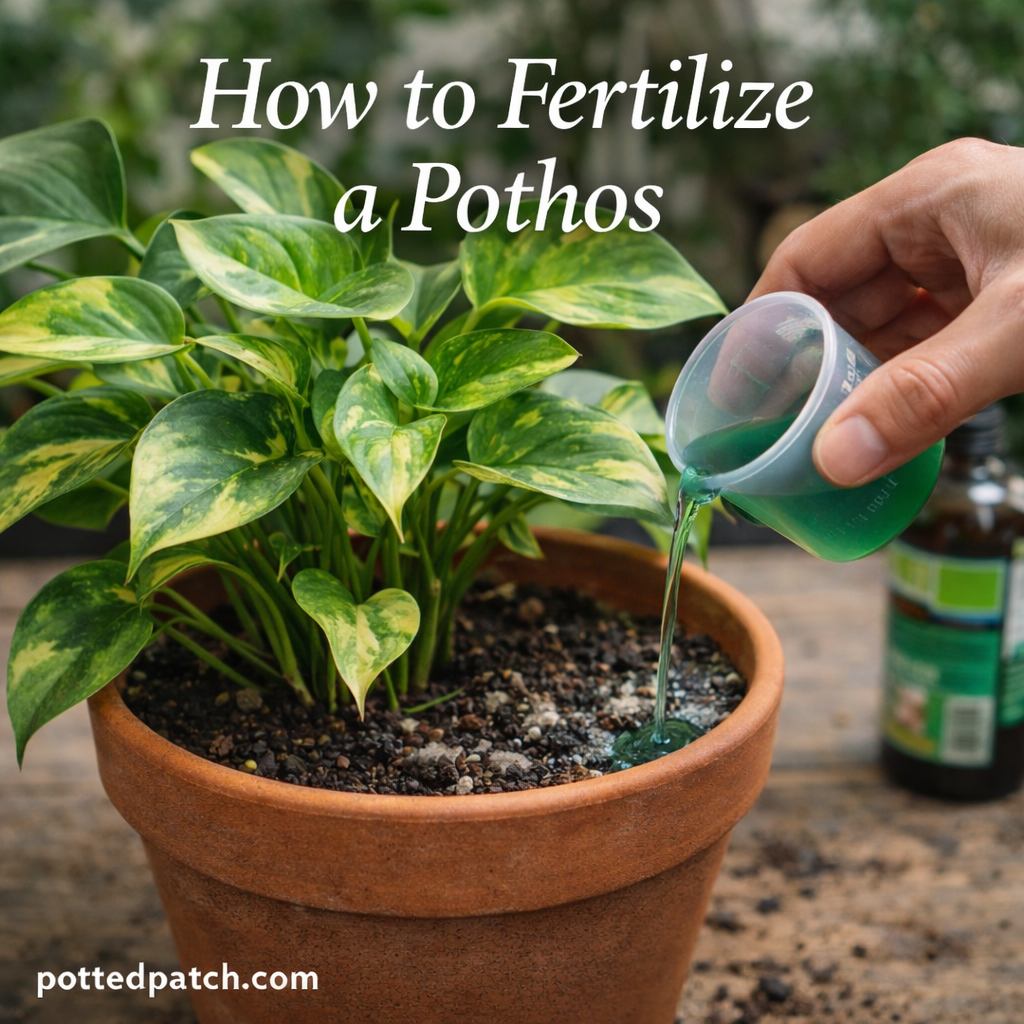
Pothos plants are known for thriving with minimal care, but proper fertilization can take them from “surviving” to truly flourishing. The key is knowing when, how, and how much to fertilize—because overdoing it can cause more harm than good.
This guide explains exactly how to fertilize a pothos, what type of fertilizer works best, and common mistakes to avoid.
Does Pothos Really Need Fertilizer?
Pothos can live for long periods without fertilizer, especially if planted in fresh potting soil. However, over time the soil nutrients get used up. Light, consistent feeding helps:
• Encourage faster growth
• Support larger, healthier leaves
• Maintain vibrant color
• Prevent slow or leggy growth
Fertilizer is a boost—not a requirement—but it makes a noticeable difference.
Best Time to Fertilize a Pothos
Timing matters more than frequency.
Growing Season (Spring and Summer)
This is when pothos actively grows and benefits most from feeding.
• Fertilize every 4–6 weeks
• Use a diluted fertilizer
• Water the plant before fertilizing
Dormant Season (Fall and Winter)
Growth slows significantly.
• Stop fertilizing or reduce to once every 8–10 weeks
• Skip feeding entirely if growth has paused
Feeding during dormancy can lead to salt buildup and root stress.
Best Type of Fertilizer for Pothos
Pothos prefers a balanced, gentle fertilizer.
Recommended Fertilizer Options
• Liquid houseplant fertilizer
• Balanced NPK ratio (10-10-10 or 20-20-20)
• Organic liquid fertilizers (fish emulsion, seaweed extract)
Liquid fertilizers are ideal because they’re easy to dilute and control.
How to Fertilize a Pothos Correctly
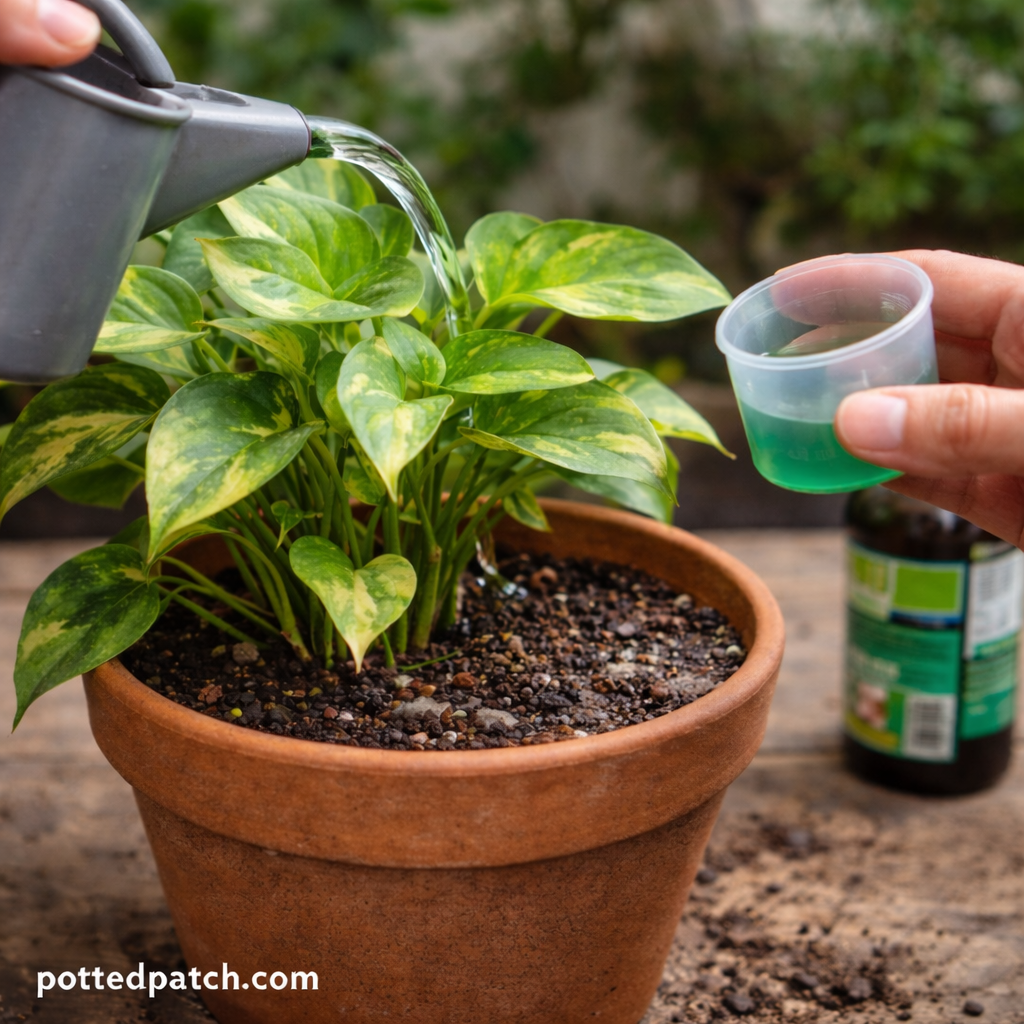
Step 1: Dilute the Fertilizer
Always dilute more than the label suggests.
• Use ½ or even ¼ strength
• Strong fertilizer can burn roots and leaves
Gentle feeding is far safer than heavy feeding.
Step 2: Water First
Never fertilize dry soil.
• Water the pothos lightly first
• This protects roots from fertilizer burn
Step 3: Apply Evenly
• Pour fertilizer slowly around the soil surface
• Avoid splashing leaves
• Stop once excess drains from the bottom
How Often Should You Fertilize Pothos?
A simple schedule works best:
• Spring–summer: once every 4–6 weeks
• Fall–winter: once every 8–10 weeks or not at all
If your pothos grows in bright indirect light, it may benefit from slightly more frequent feeding than one in low light.
Signs Your Pothos Needs Fertilizer
Watch for subtle clues:
• Pale or light green leaves
• Slow or stalled growth
• Smaller new leaves
• Long, bare vines
These usually indicate nutrient depletion—not disease.
Signs of Over-Fertilizing
Too much fertilizer causes visible stress.
• Brown or crispy leaf edges
• Yellowing leaves
• White crust on soil surface
• Wilting despite watering
If this happens, flush the soil thoroughly with plain water and pause fertilizing for several weeks.
Should You Fertilize Newly Potted Pothos?
No—at least not right away.
Fresh potting soil already contains nutrients.
• Wait 6–8 weeks after repotting
• Resume gentle feeding afterward
Fertilizing too soon can overwhelm young roots.
Can You Use Slow-Release Fertilizer for Pothos?
Yes, but with caution.
Pros
• Low maintenance
• Steady nutrient release
Cons
• Easy to overapply
• Harder to correct mistakes
If used, apply less than recommended and avoid additional liquid fertilizer.
Common Fertilizing Mistakes to Avoid
• Fertilizing on a strict schedule instead of observing growth
• Using full-strength fertilizer
• Feeding during winter dormancy
• Applying fertilizer to dry soil
• Mixing multiple fertilizers
Less is always better with pothos.
Final Thoughts
Fertilizing a pothos doesn’t require precision—just consistency and restraint. A diluted liquid fertilizer during the growing season is more than enough to keep your plant healthy, green, and growing steadily.
When in doubt, feed less often and at lower strength. Pothos will always forgive underfeeding faster than overfeeding.