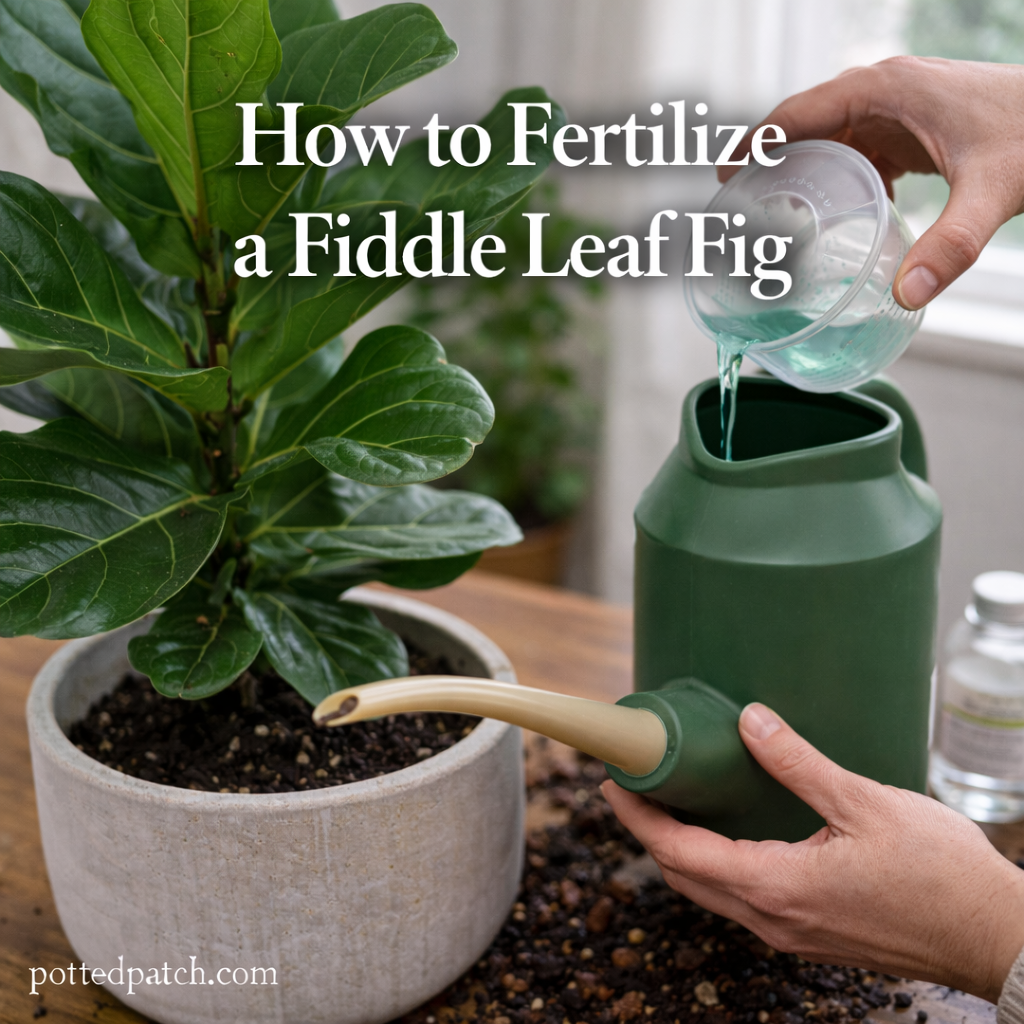
Fiddle leaf figs are known for their large, glossy leaves and bold presence. But to keep them growing strong indoors, they need more than just water and light—they need nutrients.
Fertilizing properly encourages healthy leaf growth, stronger stems, and consistent development. Done incorrectly, however, fertilizer can cause root burn or leaf damage.
Here’s exactly how to fertilize your fiddle leaf fig the right way.
Do Fiddle Leaf Figs Need Fertilizer?
Yes—but only during their active growing season.
Fiddle leaf figs benefit from fertilizer when they are:
- Producing new leaves
- Growing taller
- Actively developing roots
Growth typically occurs in spring and summer. During fall and winter, growth slows and fertilizer is usually unnecessary.
Best Type of Fertilizer for a Fiddle Leaf Fig
Look for a balanced liquid fertilizer formulated for houseplants.
An ideal nutrient ratio is:
- 3-1-2 (Nitrogen-Phosphorus-Potassium)
- Or a balanced 10-10-10 or 20-20-20 formula (diluted)
Why Nitrogen Matters
Nitrogen supports leaf growth, which is especially important for a foliage plant like a fiddle leaf fig.
Avoid high-phosphorus formulas designed for flowering plants—they’re not necessary.
How Often to Fertilize
During spring and summer:
- Fertilize once every 4 weeks
- Or use a diluted solution every 2–3 weeks
During fall and winter:
- Stop fertilizing
- Resume in early spring when new growth begins
Overfertilizing is more harmful than underfertilizing.
Step-by-Step: How to Fertilize Correctly
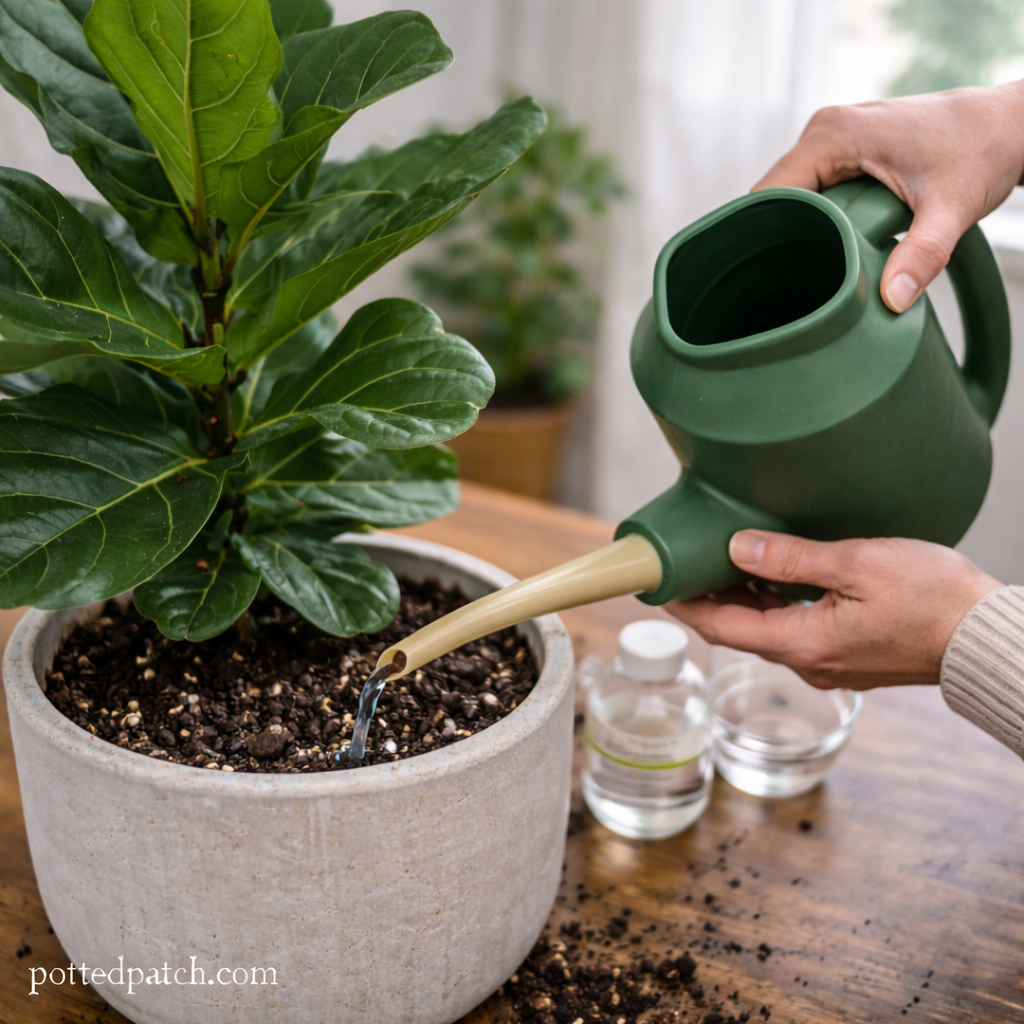
Follow these steps for safe feeding:
- Water the plant lightly first (never fertilize dry soil).
- Dilute the fertilizer to half strength.
- Apply evenly around the soil.
- Allow excess liquid to drain.
- Empty the saucer.
Always follow label instructions and err on the side of caution.
Signs Your Plant Needs Fertilizer
Your fiddle leaf fig may need nutrients if you notice:
- Pale or light green leaves
- Slower growth during active season
- Smaller new leaves
- Weak stems
If lighting and watering are correct, nutrient deficiency may be the cause.
Signs of Overfertilizing
Too much fertilizer can cause:
- Brown leaf edges
- Leaf drop
- White crust on soil surface
- Burned roots
If this happens:
- Flush the soil with distilled water.
- Stop fertilizing for several weeks.
- Resume at a lower strength later.
Should You Use Slow-Release Fertilizer?
Slow-release pellets can work well.
Benefits include:
- Less frequent application
- Steady nutrient delivery
- Lower risk of overfeeding
However, liquid fertilizer allows more control, especially indoors.
Choose the method that fits your care routine.
Organic vs. Synthetic Fertilizer
Both can work effectively.
Organic options:
- Fish emulsion
- Compost tea
- Worm castings
Synthetic options:
- Balanced liquid houseplant fertilizers
- Pre-mixed indoor formulas
Organic fertilizers release nutrients more slowly, while synthetic formulas act faster.
Seasonal Fertilizing Tips
Spring & Summer
- Regular monthly feeding
- Monitor for strong leaf production
Fall
- Reduce frequency
- Watch for slowing growth
Winter
- Pause feeding entirely
- Resume when daylight increases
Fertilizing during dormancy can stress the roots.
Final Thoughts
Fertilizing a fiddle leaf fig isn’t complicated—but timing and moderation matter.
To keep your plant thriving:
- Feed during active growth
- Use a balanced fertilizer
- Dilute properly
- Avoid overfeeding
- Pause in winter
With the right nutrients, your fiddle leaf fig will produce strong stems, larger leaves, and steady indoor growth.
Healthy soil and smart fertilizing go hand in hand.