
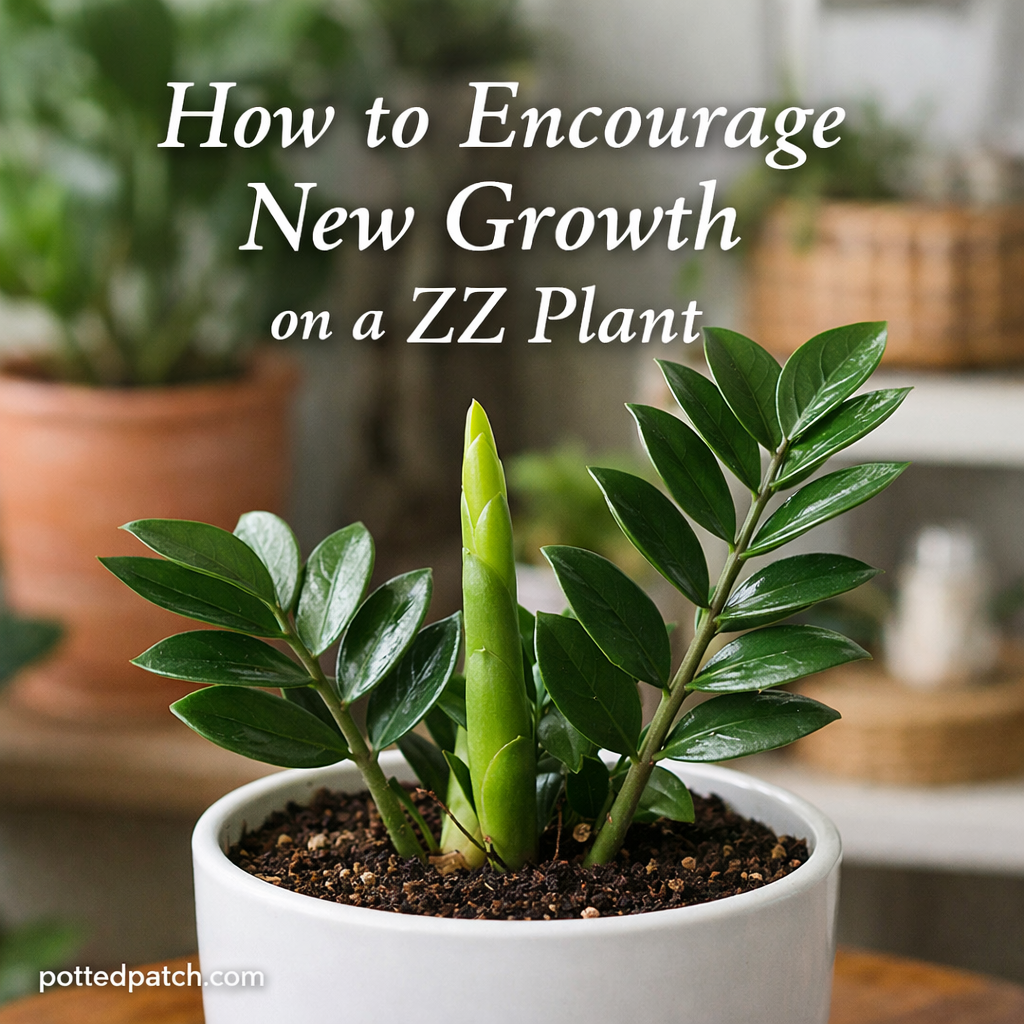
ZZ plants (Zamioculcas zamiifolia) are famous for their glossy leaves, sculptural stems, and near-indestructible reputation. But if yours hasn’t pushed out a new shoot in months, you might be wondering: is it stuck?
The good news? ZZ plants grow slowly by nature—but with the right adjustments, you can absolutely encourage healthy new growth.
This guide walks you through exactly how to stimulate fresh stems and fuller foliage without stressing your plant.
Understanding How ZZ Plants Grow
Before trying to speed things up, it helps to understand how a ZZ plant grows.
Unlike trailing or vining houseplants, ZZ plants grow from underground rhizomes. These thick, potato-like structures store water and nutrients. When conditions are right, they send up entirely new stalks from the soil.
Important things to know:
- Growth is naturally slow.
- New shoots typically appear in spring and summer.
- Mature plants grow faster than very young ones.
- Light is the biggest growth factor.
If your plant looks healthy but isn’t growing, it may simply be in a resting phase.
1. Increase Bright, Indirect Light
Light is the #1 driver of new growth.
ZZ plants tolerate low light, but they do not thrive in it. In dim conditions, they survive — they don’t actively grow.
To encourage new shoots:
- Move the plant closer to a bright window.
- Aim for bright, indirect light.
- Avoid harsh afternoon sun (which can scorch leaves).
- Rotate the plant every few weeks for even growth.
If your ZZ plant sits in a dark corner, relocating it alone can trigger noticeable improvement within a few months.
2. Water Correctly (Not More Often)
Overwatering is the fastest way to stall growth.
Because ZZ plants store water in their rhizomes, they prefer drying out between waterings. Constantly damp soil prevents oxygen from reaching roots, which slows or stops new growth.
Follow this watering strategy:
- Wait until the soil is completely dry.
- Check at least 2–3 inches deep.
- Water thoroughly until excess drains out.
- Empty the saucer after 10–15 minutes.
Healthy roots = active rhizomes = new shoots.
3. Use a Well-Draining Soil Mix
Dense, compacted soil restricts oxygen and root expansion.
For best results, use:
- Standard houseplant potting mix
- Mixed with perlite or pumice (about 25–40%)
- Optional: a small amount of orchid bark for airflow
If your ZZ plant has been in the same soil for years, refreshing the mix can dramatically improve growth potential.
4. Fertilize During the Growing Season
ZZ plants are light feeders, but they still need nutrients to produce new stems.
Feed only during spring and summer:
- Use a balanced liquid houseplant fertilizer (10-10-10 or similar).
- Dilute to half strength.
- Apply once every 4–6 weeks.
- Stop fertilizing in fall and winter.
Over-fertilizing can damage roots, so less is more.
5. Repot If Rootbound
ZZ plants don’t mind being slightly snug in their pots. But if they’re severely rootbound, growth can slow dramatically.
Signs it’s time to repot:
- Roots circling tightly at the bottom.
- Soil drying extremely fast.
- Rhizomes visibly pushing against the pot.
- Cracked plastic container.
When repotting:
- Choose a pot only 1–2 inches larger.
- Use fresh, well-draining soil.
- Avoid jumping to a much bigger container.
Too much extra soil can hold excess moisture and lead to rot.
6. Keep Temperatures Stable
ZZ plants prefer steady indoor temperatures.
Ideal range:
- 65–80°F (18–27°C)
Avoid:
- Cold drafts
- AC vents
- Sudden temperature swings
- Below 50°F
Cold stress can pause growth for weeks.
7. Be Patient — Growth Comes in Bursts
One of the most important things to remember:
ZZ plants grow in waves.
You may see:
- No activity for months
- Then multiple new shoots at once
Once a new stalk begins emerging, it can grow surprisingly quickly — often reaching full height within a few weeks.
Common Reasons Your ZZ Plant Isn’t Growing
If you’re not seeing progress, check for these issues:
- Too little light
- Overwatering
- Compacted soil
- Cold environment
- Winter dormancy
- Recently moved (adjustment period)
Correcting even one of these factors can restart growth.
Can You Propagate to Encourage Fullness?
If you want a fuller-looking plant, propagation can help.
Options include:
- Dividing rhizomes during repotting
- Leaf cuttings (slower method)
- Stem cuttings in soil or water
While propagation doesn’t force the original plant to grow faster, combining multiple plants in one pot can create a fuller display.
What Healthy New Growth Looks Like
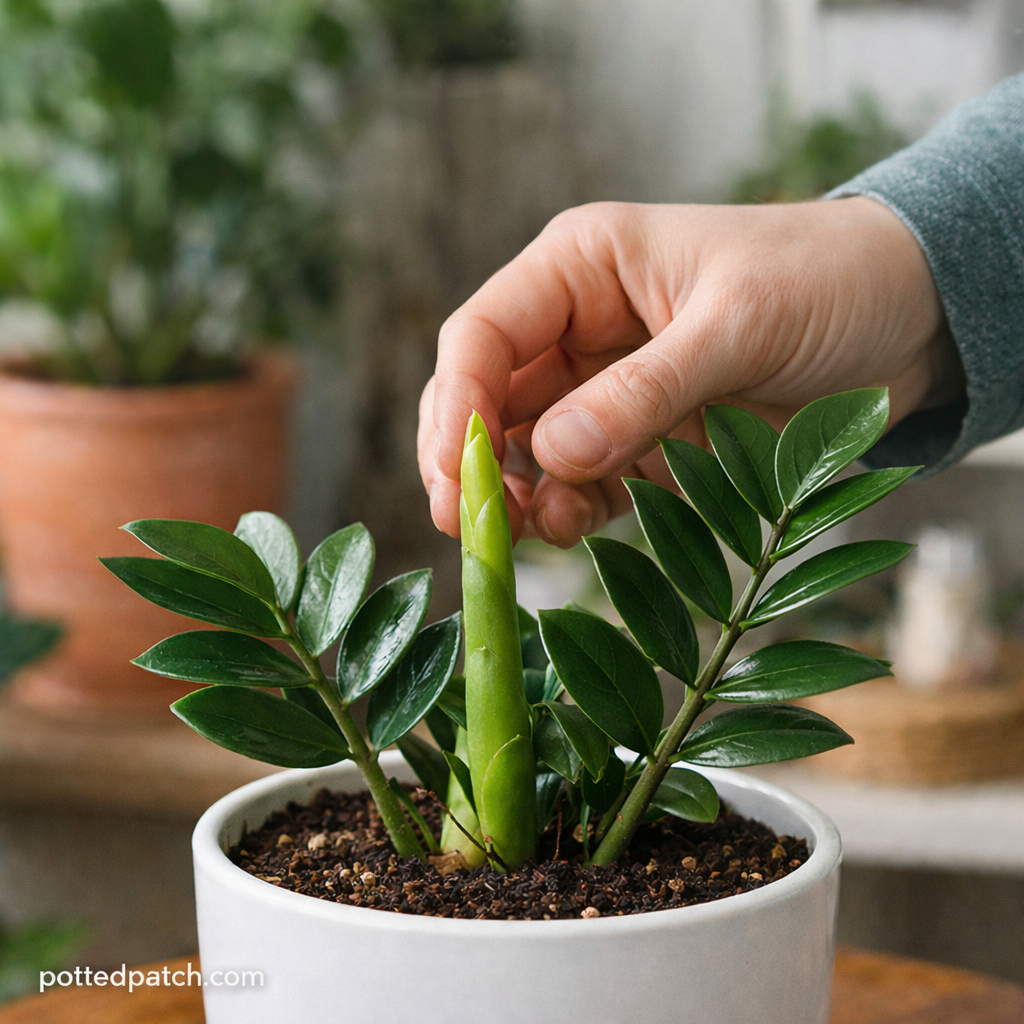
New ZZ growth appears as:
- A pointed, lime-green spear emerging from the soil
- Soft and flexible at first
- Gradually darkening and firming up
- Leaves unfurling over time
Fresh growth is always lighter than mature foliage.
If you see this — your care routine is working.
Final Thoughts
Encouraging new growth on a ZZ plant isn’t about forcing it — it’s about optimizing conditions.
Focus on:
- Bright, indirect light
- Proper watering habits
- Well-draining soil
- Seasonal feeding
- Stable indoor temperatures
Give your ZZ plant what it needs, and it will reward you with glossy new stems — just on its own timeline.