

Spider plants are known for their resilience, fast growth, and ability to produce baby offshoots (often called “spiderettes”). But sometimes growth slows down, leaves look tired, or the plant stops producing new shoots altogether.
If your spider plant seems stuck, don’t worry. With a few simple adjustments, you can stimulate fresh, healthy growth and bring it back to life.
Understanding How Spider Plants Grow
Spider plants (Chlorophytum comosum) grow from a central crown. New leaves emerge from the middle, and mature plants send out long arching stems that produce baby plants.
Healthy growth depends on:
- Bright but indirect light
- Consistent watering
- Well-draining soil
- Occasional feeding
- Proper pot size
When one of these factors is off, growth can stall.
Let’s walk through how to fix that.
Step 1: Improve Lighting Conditions
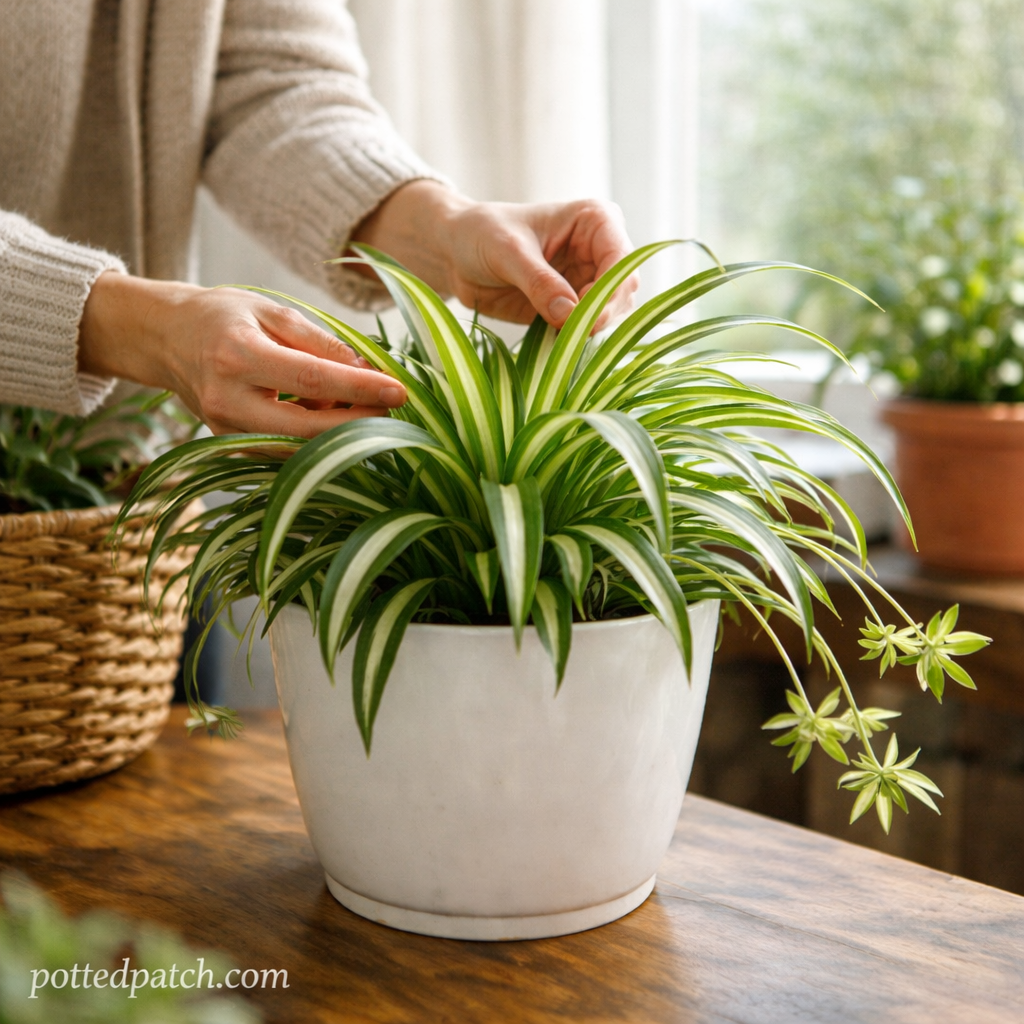
Light is the number one factor influencing new growth.
Spider plants thrive in bright, indirect sunlight. Too little light slows growth. Too much direct sun can scorch leaves.
Ideal placement
- Near an east-facing window
- A few feet back from a south- or west-facing window
- In a bright room with filtered light
If your plant is in a dark corner, move it gradually to a brighter location. You should start seeing stronger, more vibrant leaves within a few weeks.
Step 2: Adjust Your Watering Routine
Improper watering is a common reason for slow growth.
Spider plants prefer soil that stays lightly moist but never soggy.
Watering guidelines
- Water when the top 1–2 inches of soil feel dry.
- Water thoroughly until excess drains out.
- Empty the saucer after watering.
Overwatering leads to root stress. Underwatering causes growth to pause as the plant conserves energy.
If the soil stays wet for days, consider switching to a better-draining mix.
Step 3: Refresh the Soil
Nutrients deplete over time, especially if your spider plant has been in the same soil for more than a year.
Repotting into fresh, well-draining soil can dramatically boost new growth.
Best soil mix
- Standard houseplant potting mix
- Add perlite for drainage
- Optional: a small amount of orchid bark for airflow
Fresh soil improves oxygen flow to roots and provides nutrients that encourage leaf production.
Step 4: Feed During Active Growing Season
Spider plants grow most actively in spring and summer.
Use a balanced liquid houseplant fertilizer every 4–6 weeks during the growing season.
Fertilizer tips
- Dilute to half strength
- Avoid feeding in fall and winter
- Flush soil occasionally to prevent salt buildup
Over-fertilizing can cause brown tips and root damage, so keep it moderate.
Step 5: Check for Root Bound Conditions
Spider plants grow quickly and can become root bound.
Signs your plant needs a larger pot:
- Roots circling the inside of the pot
- Water runs straight through quickly
- Growth has slowed despite good care
Choose a pot that is only 1–2 inches larger in diameter. Too large a pot can hold excess moisture and cause root issues.
Step 6: Prune to Redirect Energy
Pruning encourages fresh growth by redirecting energy to healthy areas.
Remove:
- Brown or damaged leaves
- Weak or yellowing stems
- Old flower stalks if you want stronger leaf growth
Use clean, sharp scissors and cut at the base.
If your goal is leaf growth rather than baby plants, trimming long offshoots can encourage the plant to focus on central foliage.
Step 7: Increase Humidity Slightly
Spider plants tolerate average indoor humidity, but slightly higher levels can encourage more vigorous growth.
You can:
- Place the plant near other houseplants
- Use a pebble tray
- Run a humidifier nearby
Avoid misting heavily, as consistently wet leaves can cause issues.
Step 8: Maintain Consistent Temperatures
Spider plants grow best between 65–80°F.
Avoid:
- Cold drafts
- Heating vents
- Sudden temperature drops
Stable environments reduce stress and allow the plant to focus on producing new leaves.
How Long Does It Take to See New Growth?
If you improve lighting and watering, you may see new leaves emerging from the center within 2–4 weeks.
More dramatic improvements (like after repotting or correcting root problems) can take 4–8 weeks.
Growth speed depends on:
- Season
- Plant maturity
- Overall root health
Patience is key. Spider plants respond well once conditions are corrected.
Common Mistakes That Slow Growth
Here are the most frequent issues:
- Keeping the plant in low light
- Using compacted, poor-draining soil
- Letting roots sit in water
- Over-fertilizing
- Ignoring root-bound signs
Fixing even one of these can noticeably improve performance.
Bonus: Encouraging Spiderettes (Baby Plants)
If your plant is mature and healthy, you can encourage baby plant production by:
- Providing bright, indirect light
- Keeping it slightly root bound
- Feeding lightly during spring
Spiderettes usually appear when the plant feels stable and established.
Final Thoughts
Encouraging new growth on a spider plant isn’t about doing something dramatic. It’s about fine-tuning the basics.
Improve light.
Water properly.
Refresh soil when needed.
Feed lightly in growing season.
Once the plant feels supported, it will naturally respond with fresh, vibrant leaves — and often a cascade of baby plants to follow.
Spider plants are forgiving and resilient. With the right environment, they reward you with steady, satisfying growth.