

Snake plants (Sansevieria, now classified as Dracaena) are famous for being nearly indestructible—but that toughness can also make them slow to show new growth. If your plant looks healthy yet stubbornly unchanged, the good news is that a few targeted adjustments can wake it up and encourage fresh leaves and pups.
Below is a practical guide to help your snake plant shift from survival mode into growth mode.
Understand How Snake Plants Grow
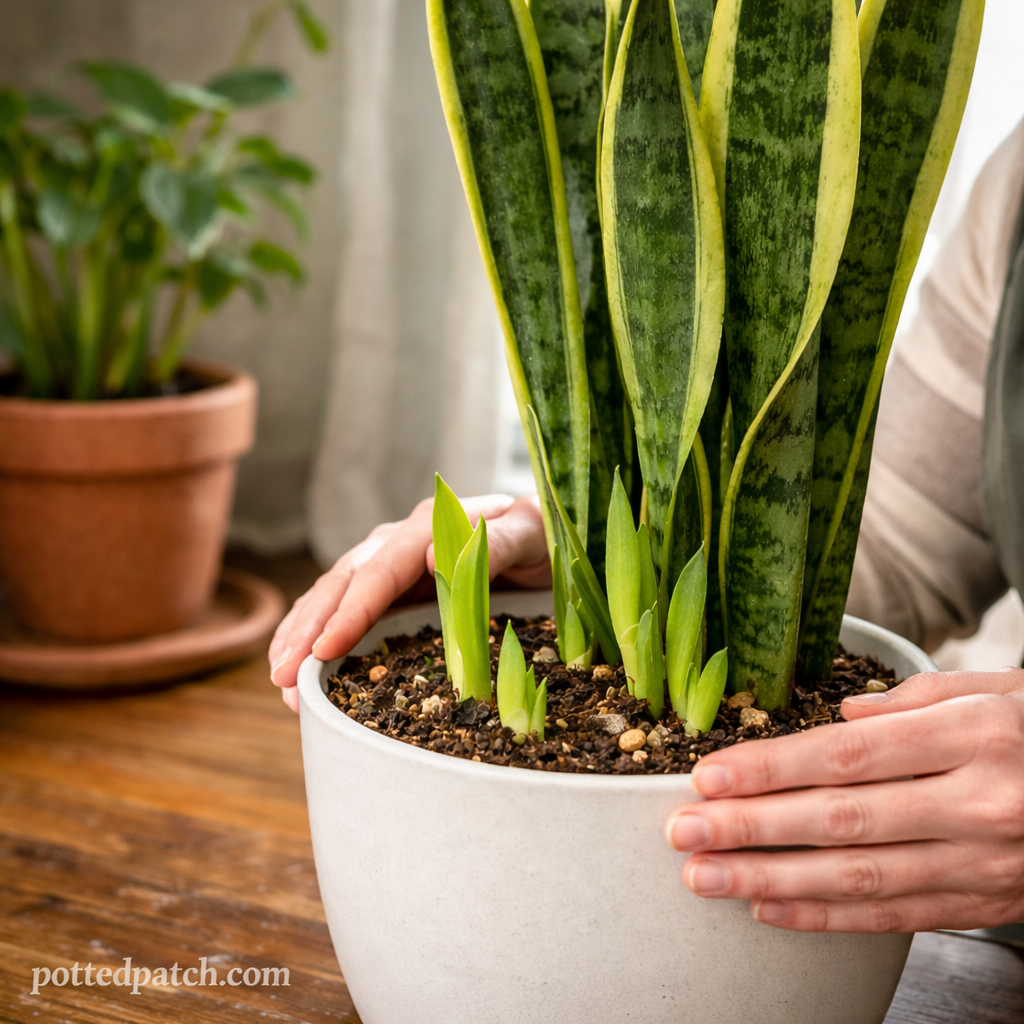
Before changing anything, it helps to know what “new growth” actually looks like for a snake plant.
Snake plants grow in two main ways:
- New upright leaves emerging from the soil
- Pups (baby plants) forming at the base via underground rhizomes
They do not branch from existing leaves, and damaged leaves will never regenerate. Growth always comes from the roots and rhizomes, so that’s where your focus should be.
Give It Brighter (But Still Gentle) Light
Light is the single biggest factor that determines how fast a snake plant grows.
While snake plants tolerate low light, they grow best in:
- Bright, indirect light
- Near an east- or west-facing window
- A few feet back from a south-facing window with filtered sun
Low light keeps the plant alive, but it dramatically slows new growth.
Signs light is limiting growth
- No new leaves for many months
- Leaves growing thinner than older ones
- Very slow pup production
If your plant has lived in a dim corner for a long time, increase light gradually over 1–2 weeks to avoid stress.
Water Correctly (Less Often, More Intentionally)
Snake plants grow best when watered deeply but infrequently.
Overwatering suppresses growth by damaging roots, while underwatering can keep the plant in dormancy.
Best watering approach
- Let the soil dry out completely
- Water thoroughly until excess drains out
- Empty the saucer after watering
In most homes, this means:
- Every 2–3 weeks in spring and summer
- Every 4–6 weeks in fall and winter
If the soil stays wet for days, growth will stall.
Use a Fast-Draining Soil Mix
Roots need oxygen to produce new growth. Dense or moisture-retentive soil suffocates them.
Ideal soil characteristics
- Loose and airy
- Drains quickly
- Never stays soggy
A reliable mix:
- 2 parts cactus or succulent soil
- 1 part perlite or pumice
If your snake plant is in heavy potting soil and hasn’t grown in a long time, repotting into a better mix can trigger new leaves within weeks.
Repot Only When the Plant Is Ready
Snake plants actually grow better when slightly root-bound, but there’s a limit.
Signs it’s time to repot
- Roots pushing out of drainage holes
- Pot bulging or cracking
- Water running straight through with no absorption
- Crowded rhizomes at the soil surface
When repotting:
- Go up only 1–2 inches in pot size
- Always choose a pot with drainage holes
- Avoid oversized containers
Repotting during spring or early summer gives the best results.
Fertilize Lightly During the Growing Season
Snake plants are light feeders, but a small nutrient boost can encourage new growth when conditions are right.
How to fertilize safely
- Use a balanced houseplant or succulent fertilizer
- Dilute to half strength
- Apply once every 4–6 weeks in spring and summer
Do not fertilize:
- In fall or winter
- Right after repotting
- If the plant is stressed or overwatered
Too much fertilizer causes weak growth and leaf damage, not faster growth.
Keep Temperatures in the Growth Zone
Snake plants grow fastest in warm, stable conditions.
Ideal temperature range
- 65–85°F (18–29°C)
Growth slows dramatically when temperatures drop below 60°F.
Avoid placing your plant:
- Near cold windows in winter
- By drafty doors
- Under air conditioning vents
Consistent warmth signals the plant that it’s safe to produce new leaves.
Encourage Pup Growth Naturally
If your goal is more snake plants, pups are the prize.
To encourage pups:
- Use a slightly snug pot
- Provide bright indirect light
- Maintain consistent watering
- Avoid disturbing the roots too often
Pups form from healthy rhizomes, so patience matters. A thriving mother plant almost always produces pups eventually.
Pruning: What Helps and What Doesn’t
Pruning does not stimulate new growth on snake plants the way it does on some houseplants.
What pruning can help with
- Removing damaged or bent leaves
- Improving appearance
- Redirecting energy to healthy roots
What pruning cannot do
- Trigger branching
- Regrow cut leaves
- Force new shoots directly
Always cut leaves cleanly at the soil line using sterile scissors or shears.
Seasonal Growth Expectations
Snake plants have a natural growth cycle.
Spring and summer:
- Active growth period
- Best time for repotting and fertilizing
- Most new leaves and pups appear
Fall and winter:
- Growth slows or pauses
- Minimal watering needed
- No fertilizer required
If your plant isn’t growing in winter, that’s normal.
Common Reasons Growth Stalls
If you’ve tried everything and still see no growth, check for these issues:
- Pot without drainage holes
- Chronic overwatering
- Extremely low light
- Cold indoor temperatures
- Compacted or old soil
- Root rot beneath healthy-looking leaves
Correcting just one of these can restart growth surprisingly fast.
How Long Does New Growth Take?
Under good conditions:
- New leaves may appear within 4–8 weeks
- Pups can take several months
- Faster growth usually shows in brighter light
Snake plants reward consistency, not quick fixes.
Final Thoughts
Encouraging new growth on a snake plant isn’t about pushing it harder—it’s about removing the barriers holding it back. Bright indirect light, proper watering, well-draining soil, and patience are the real growth boosters.
Once your snake plant feels comfortable, it will do what it does best: grow quietly, steadily, and reliably.