
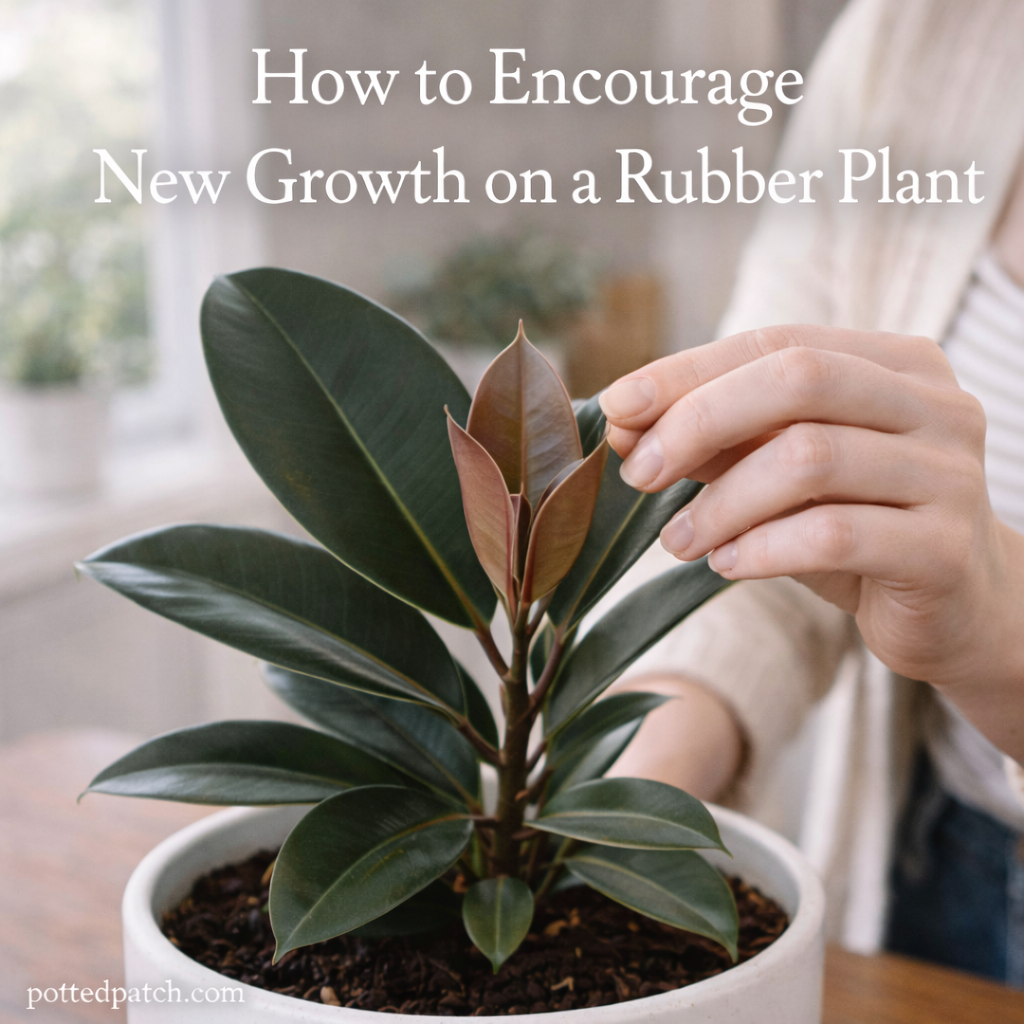
Rubber plants are bold, glossy, and dramatic — but sometimes they seem to stall. If your rubber plant hasn’t produced new leaves in months, don’t worry. Slow growth is usually a care issue, not a permanent problem.
The good news? With a few targeted adjustments, you can stimulate healthy, consistent new growth.
Here’s exactly how to do it.
1. Increase Light (The #1 Growth Trigger)
Light is the biggest factor in new leaf production.
Rubber plants (Ficus elastica) thrive in bright, indirect light. While they tolerate medium light, they won’t grow vigorously without strong exposure.
Signs Your Plant Needs More Light
- No new leaves for months
- Small or thin new growth
- Leggy stems
- Leaves spaced far apart
How to Fix It
- Move closer to a bright window
- Use sheer curtains to diffuse harsh sun
- Consider a grow light if natural light is limited
More light = more energy = more growth.
2. Prune Strategically
Pruning signals the plant to branch and push new growth.
When you cut just above a node (where a leaf meets the stem), the plant redirects energy into producing new shoots.
Best Time to Prune
- Spring
- Early summer
Avoid heavy pruning in winter when growth naturally slows.
Even trimming the top stem slightly can encourage bushier growth.
3. Feed During the Growing Season
Rubber plants need nutrients to support new leaves.
If you haven’t fertilized in a year or more, your plant may simply lack fuel.
Fertilizing Tips
- Use a balanced liquid houseplant fertilizer
- Feed once a month during spring and summer
- Skip fertilizing in fall and winter
Never over-fertilize — more isn’t better.
4. Check Root Health
Healthy roots equal healthy growth.
If your rubber plant is root-bound or sitting in soggy soil, growth will slow dramatically.
Look for These Signs
- Roots circling the bottom of the pot
- Soil drying out too quickly
- Water sitting for days
If root-bound, repot into a container 1–2 inches larger with fresh, well-draining soil.
5. Maintain Consistent Watering
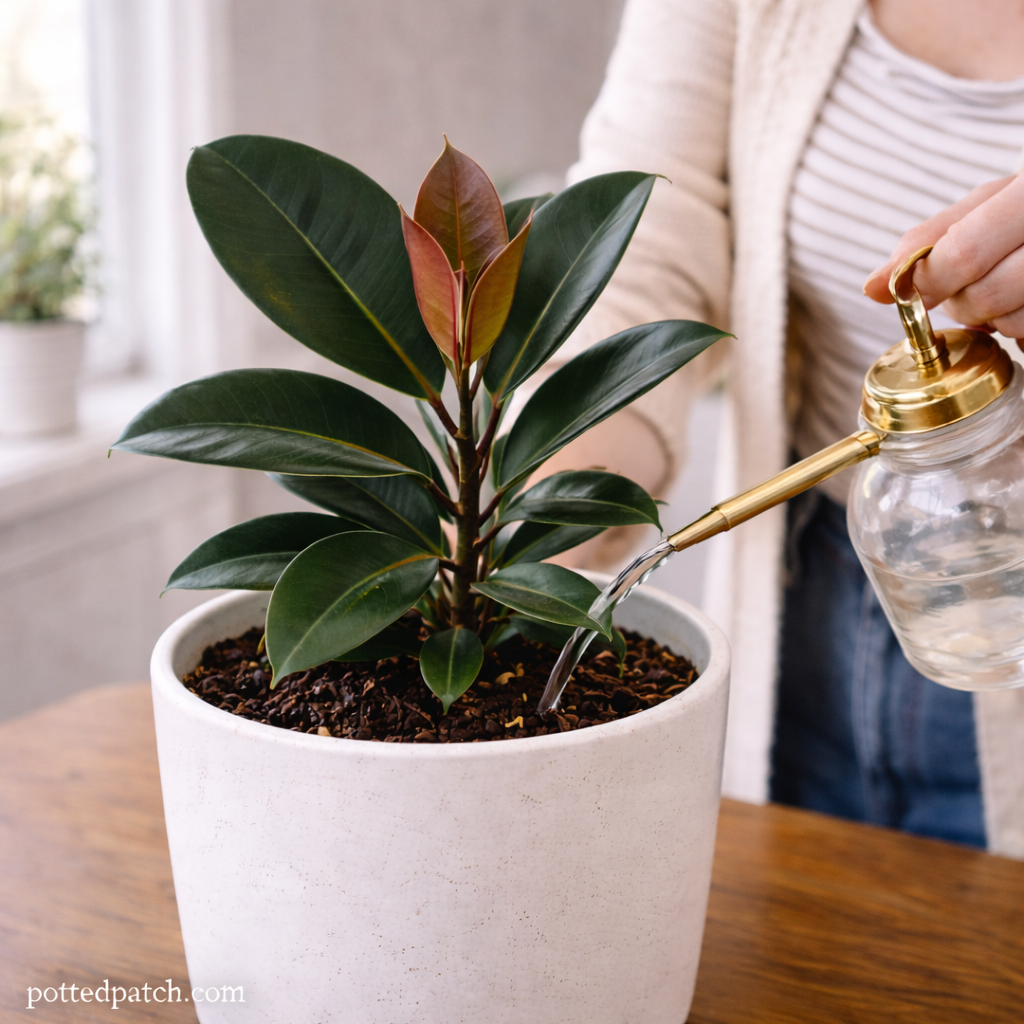
Rubber plants prefer moderate moisture.
Too much water suffocates roots. Too little stresses the plant.
The ideal method:
- Water thoroughly.
- Let excess drain.
- Wait until the top 1–2 inches of soil are dry before watering again.
Consistency supports steady growth.
6. Keep Temperatures Stable
Rubber plants grow best between 65–80°F.
Cold drafts or temperature swings can slow development.
Avoid placing your plant near:
- Air conditioning vents
- Heaters
- Drafty windows
Stable warmth encourages active growth.
7. Clean the Leaves
Dust blocks light absorption.
Wiping leaves every few weeks allows the plant to photosynthesize more efficiently, which directly supports new growth.
Use a damp cloth and gently clean both sides of each leaf.
8. Be Patient With Seasonal Changes
Growth naturally slows in fall and winter.
If your plant pauses during colder months, this is normal.
Most rubber plants produce noticeable new growth during:
- Spring
- Summer
Patience combined with proper care produces the best results.
Bonus: How Long Does New Growth Take?
If conditions are right, you may see:
- A new leaf spike forming within 2–4 weeks
- A fully unfurled leaf within 4–8 weeks
Healthy rubber plants grow steadily when their environment supports them.
Quick Growth Checklist
If you want a simple action plan:
- Increase bright, indirect light
- Prune above a node
- Fertilize lightly during growing season
- Ensure proper drainage
- Maintain consistent watering
Most growth issues resolve once light and nutrition are optimized.
Final Thoughts
Encouraging new growth on a rubber plant isn’t about doing everything — it’s about doing the right things consistently.
Bright light, strategic pruning, proper watering, and light feeding create the perfect environment for strong, glossy new leaves.
Give your plant what it needs, and it will reward you with steady, vibrant growth.