

Philodendrons are some of the most forgiving and rewarding houseplants you can grow. With the right care, they produce steady, lush foliage and can quickly become a statement piece in your home.
If your plant seems stalled, leggy, or slow to leaf out, don’t worry. Encouraging new growth on a philodendron is usually a matter of fine-tuning light, watering, feeding, and pruning.
This guide walks you through exactly how to trigger healthy, consistent growth.
Understand How Philodendrons Grow
Philodendrons grow from nodes — the small bumps along the stem where leaves and aerial roots form. New leaves emerge from these growth points, and the plant either:
- Climbs (vining varieties like heartleaf philodendron)
- Grows upright (self-heading varieties like Congo types)
New growth is strongest during spring and summer when light and warmth increase. During fall and winter, growth naturally slows.
If your plant isn’t growing, first confirm whether it’s simply in a seasonal slowdown.
1. Increase Light (Without Burning the Leaves)
Light is the #1 factor in encouraging new growth.
Philodendrons prefer:
- Bright, indirect light
- Near an east- or north-facing window
- A few feet back from a south- or west-facing window
Signs your plant needs more light:
- Long gaps between leaves (leggy stems)
- Smaller new leaves
- Slow or no growth
- Leaning toward a window
How to Fix It
- Move the plant closer to a bright window.
- Rotate it every 1–2 weeks for even growth.
- Use a grow light if natural light is limited.
Avoid direct, harsh sun, which can scorch leaves.
2. Water Properly (Consistency Matters)
Philodendrons grow best when watered consistently but not excessively.
Ideal Watering Routine
- Check soil moisture with your finger.
- Water when the top 1–2 inches are dry.
- Water thoroughly until excess drains out.
- Empty the saucer.
Overwatering slows growth by suffocating roots.
Underwatering stresses the plant and stalls leaf production.
If your plant hasn’t grown in months, check for compacted or soggy soil.
3. Feed During Active Growth
Philodendrons need nutrients to push out new leaves.
Fertilizing Tips
- Use a balanced liquid houseplant fertilizer (10-10-10 or similar).
- Feed every 4–6 weeks in spring and summer.
- Dilute to half strength to avoid burn.
- Stop fertilizing in fall and winter.
If your plant hasn’t been fed in over 6 months, it may simply be low on nutrients.
4. Prune to Stimulate Growth
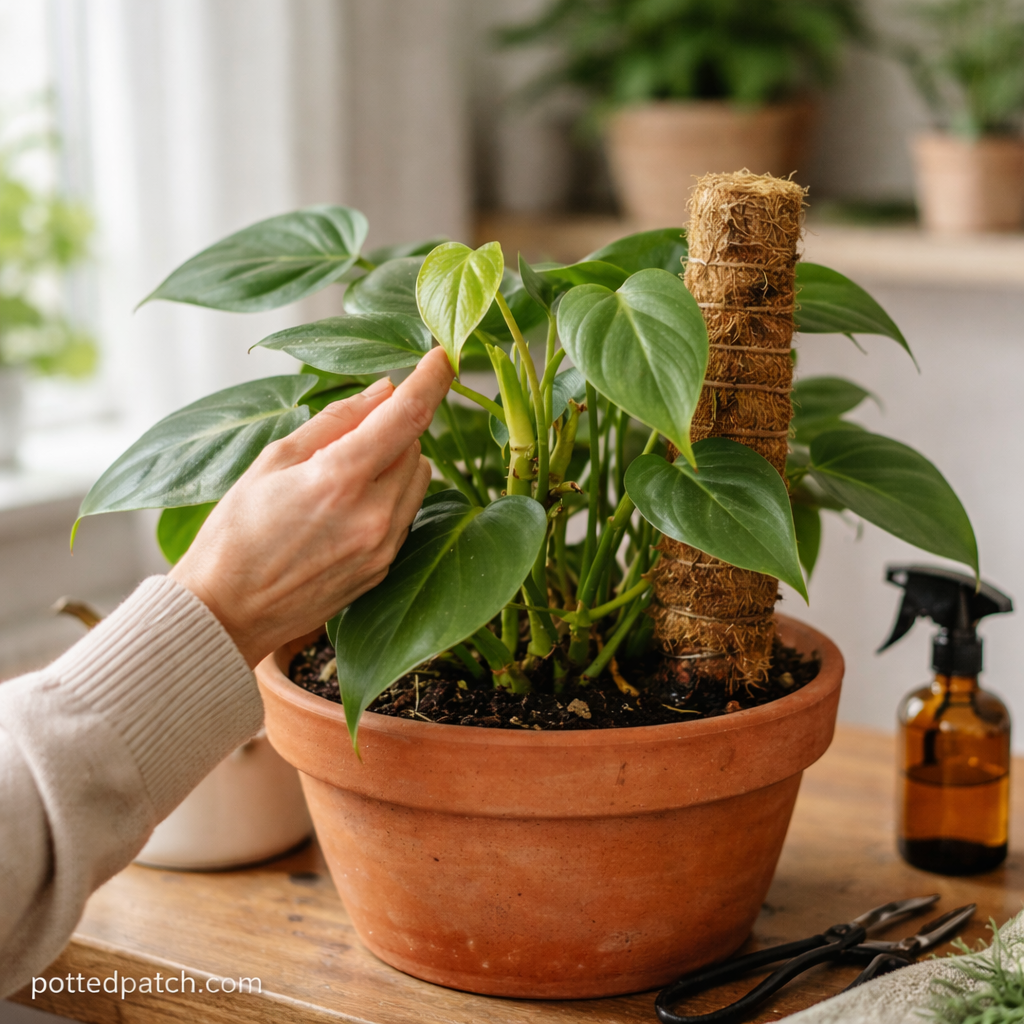
Pruning encourages branching and fuller growth.
When you trim a vine just above a node, the plant redirects energy and often produces:
- Multiple new growth points
- Thicker stems
- Bushier shape
How to Prune Correctly
- Identify a healthy node.
- Use clean, sharp scissors.
- Cut ¼ inch above the node.
- Keep cuttings for propagation if desired.
Pruning is especially helpful for leggy philodendrons.
5. Repot If Rootbound
If roots are tightly circling the bottom of the pot, your plant may struggle to produce new growth.
Signs it’s rootbound:
- Roots growing out of drainage holes
- Water runs straight through the pot
- Soil dries extremely fast
- Stalled growth despite good care
Repotting Tips
- Move up only 1–2 inches in pot size.
- Use well-draining potting mix (peat + perlite or chunky aroid mix).
- Repot in spring if possible.
Fresh soil provides nutrients and oxygen for new root development.
6. Increase Humidity
Philodendrons are tropical plants. Higher humidity encourages larger, healthier leaves.
Ideal humidity range:
- 50–70%
Ways to boost humidity:
- Group plants together
- Use a humidifier
- Place the pot on a pebble tray
- Keep away from heating vents
Low humidity can slow leaf expansion and cause smaller new growth.
7. Support Climbing Varieties
Vining philodendrons grow larger leaves when given vertical support.
Add:
- A moss pole
- A coir pole
- A trellis
As the plant climbs, it often produces bigger, more mature foliage.
8. Maintain Warm Temperatures
Growth slows dramatically below 65°F.
Ideal temperature range:
- 70–85°F during the day
- No lower than 60°F at night
Keep plants away from:
- Cold drafts
- Air conditioning vents
- Exterior doors in winter
Stable warmth = steady growth.
Common Reasons Philodendrons Stop Growing
If your plant isn’t producing new leaves, check for:
- Insufficient light
- Overwatering
- Nutrient deficiency
- Rootbound conditions
- Cold temperatures
- Pest issues (like spider mites)
Addressing even one of these factors can restart growth within weeks.
How Long Does It Take to See New Growth?
Under proper conditions:
- New leaves may appear every 2–4 weeks in active season.
- Faster-growing varieties may push growth even more frequently.
- After repotting or pruning, expect visible growth within 3–6 weeks.
Patience matters — healthy growth builds gradually.
Final Thoughts
Encouraging new growth on a philodendron isn’t about one dramatic change. It’s about optimizing the basics:
- Bright, indirect light
- Consistent watering
- Seasonal feeding
- Occasional pruning
- Proper humidity and warmth
When these conditions are right, philodendrons respond quickly — rewarding you with fresh, vibrant leaves and fuller growth.
Small adjustments today can lead to noticeable new growth within a month.