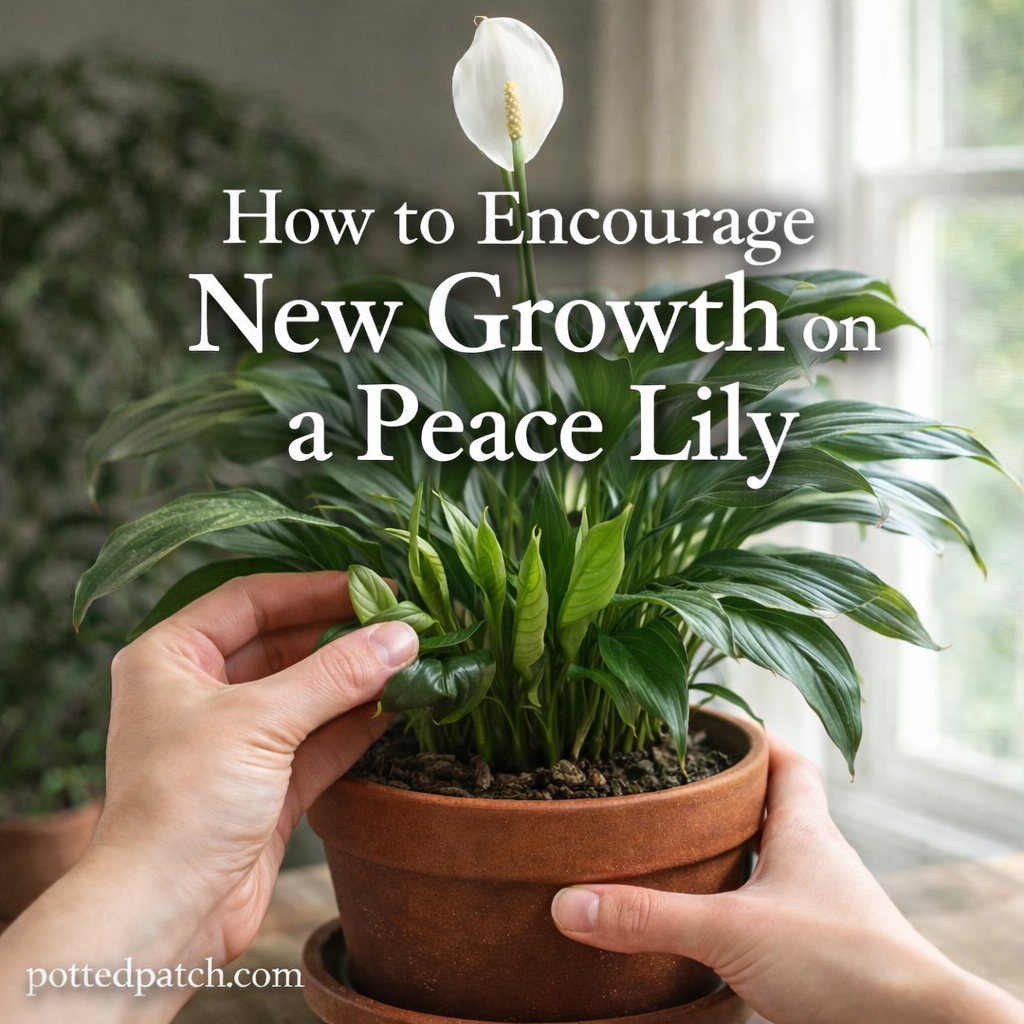
Peace lilies are loved for their glossy leaves and elegant white blooms. But sometimes growth slows down, flowering stops, or the plant seems stuck in survival mode.
If your peace lily isn’t producing new leaves or blooms, don’t worry. With a few simple adjustments, you can stimulate healthy, steady growth again.
This guide walks you through exactly how to encourage new growth on a peace lily — step by step.
Why Peace Lilies Stop Growing
Before fixing the issue, it helps to understand what might be slowing your plant down.
Common causes include:
- Low light
- Overwatering or underwatering
- Rootbound conditions
- Nutrient deficiencies
- Cold drafts
- Natural seasonal dormancy
Once you identify the cause, growth usually resumes quickly.
Provide Bright, Indirect Light
Light is the number one driver of new growth.
Peace lilies tolerate low light, but they grow best in:
- Bright, indirect light
- Near east- or north-facing windows
- A few feet back from a sunny south-facing window
If your plant hasn’t produced new leaves in months, it may need more light.
Avoid direct sun, which can scorch leaves.
Adjust Your Watering Routine
Peace lilies like consistently moist soil — but never soggy.
To encourage growth:
- Water when the top 1–2 inches of soil feel dry
- Use room-temperature water
- Empty the saucer after watering
Overwatering suffocates roots and halts growth. Underwatering stresses the plant and delays new leaves.
Balanced moisture is key.
Fertilize During the Growing Season
Peace lilies benefit from light feeding in spring and summer.
Use:
- A balanced liquid houseplant fertilizer
- Diluted to half strength
- Every 4–6 weeks during active growth
Stop fertilizing in fall and winter when growth naturally slows.
Too much fertilizer can burn roots and damage new shoots.
Repot If Rootbound
If roots are circling tightly inside the pot, growth may stall.
Signs your peace lily needs repotting:
- Roots growing out of drainage holes
- Water running straight through the pot
- Slowed leaf production
Choose a pot only 1–2 inches larger than the current one. Fresh soil gives roots space and nutrients to support new growth.
Prune Old or Yellow Leaves
Removing damaged or aging leaves redirects energy toward new growth.
Use clean scissors and:
- Cut yellow leaves at the base
- Remove spent flowers
- Trim brown tips if needed
Pruning improves airflow and encourages fresh growth from the center.
Increase Humidity
Peace lilies are tropical plants and appreciate moderate humidity.
To boost humidity:
- Place near other plants
- Use a pebble tray
- Run a humidifier nearby
Higher humidity supports healthier leaves and faster development.
Maintain Ideal Temperature
Peace lilies grow best between:
- 65–80°F (18–27°C)
Avoid:
- Cold drafts
- Air conditioning vents
- Sudden temperature changes
Stable warmth promotes steady growth.
Be Patient During Dormancy
If it’s fall or winter, slower growth is normal.
Peace lilies naturally rest during cooler, darker months. Focus on maintenance care and expect growth to pick up again in spring.
Signs New Growth Is Coming
Watch for:
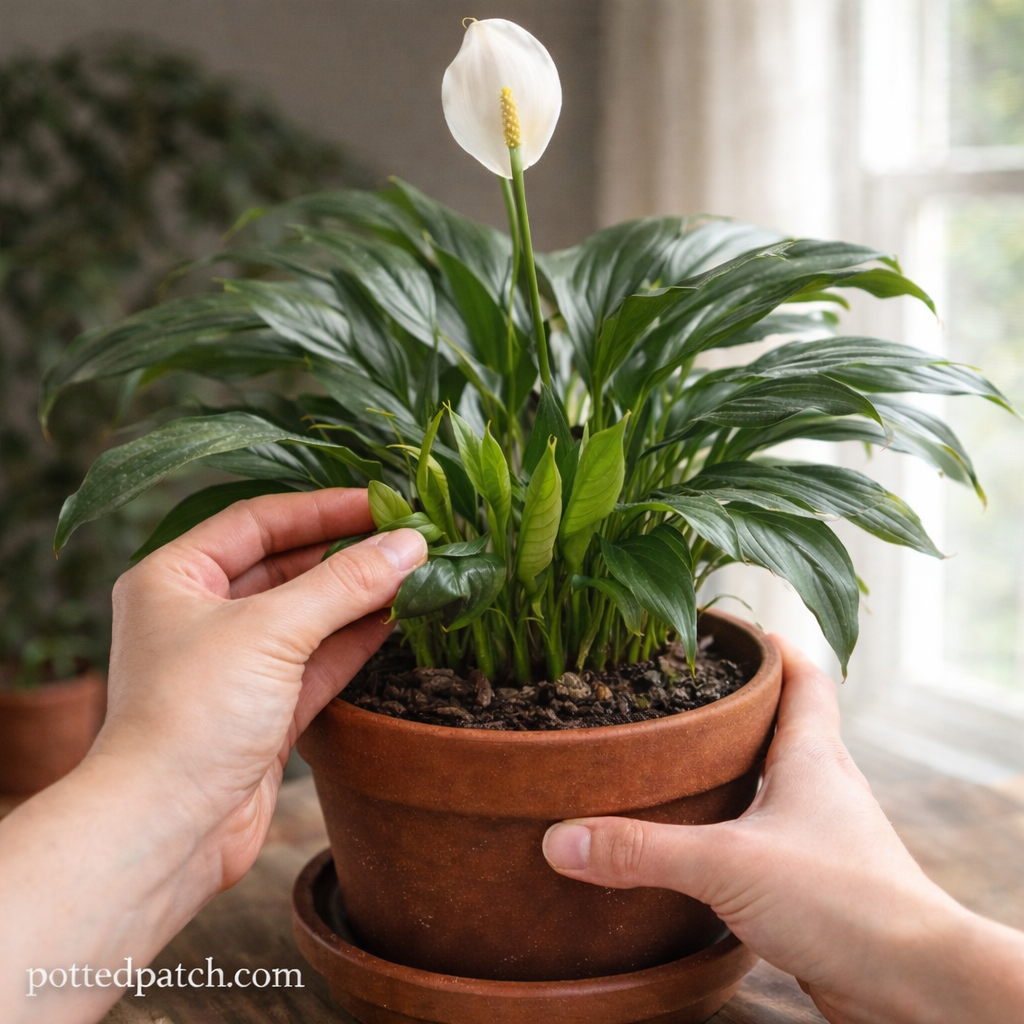
- Small, tightly curled leaves emerging from the center
- Brighter green foliage
- Stronger stems
- New flower buds
New leaves usually appear before blooms.
Final Thoughts
Encouraging new growth on a peace lily comes down to light, balanced watering, proper nutrition, and occasional pruning.
When conditions are right, peace lilies respond quickly with lush leaves and elegant blooms.
Small adjustments can make a big difference — and your plant will show you when it’s happy.