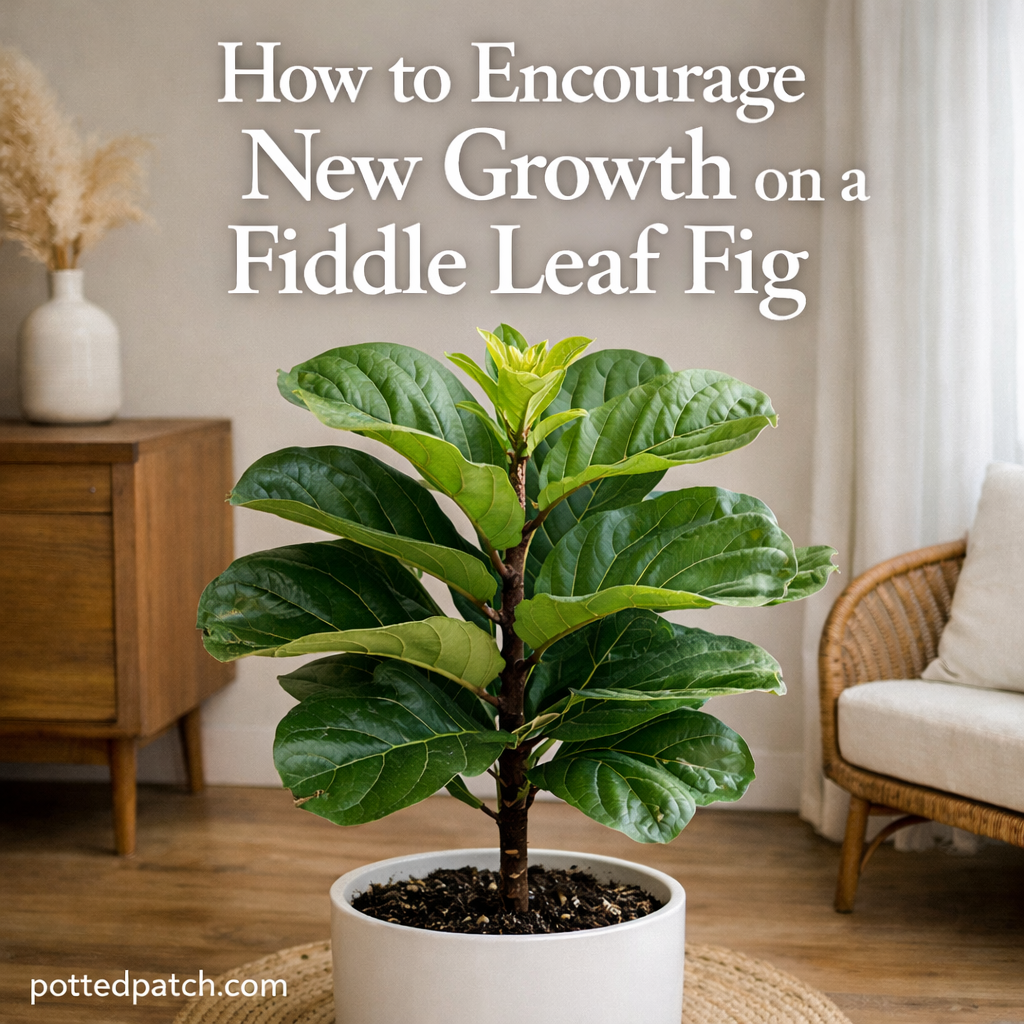
If your fiddle leaf fig looks healthy but hasn’t produced new leaves in a while, you’re not alone. These popular houseplants can stall when conditions aren’t ideal. The good news? With the right adjustments, you can encourage steady, vibrant new growth.
In this guide, you’ll learn practical, proven ways to stimulate new leaves and stronger stems on your fiddle leaf fig.
Understand How Fiddle Leaf Figs Grow
Fiddle leaf figs produce new growth from the top of their main stem or branches. Growth typically happens during the active growing season:
- Spring
- Summer
- Early fall
During winter, growth naturally slows or pauses due to lower light levels.
If your plant isn’t growing, the first step is to evaluate light, watering, soil health, and overall environment.
Give It Brighter, Consistent Light
Light is the #1 factor in stimulating new growth.
Fiddle leaf figs thrive in bright, indirect light. Without enough light, they conserve energy instead of producing new leaves.
What to Do
- Place your plant near a south- or east-facing window
- Ensure it receives several hours of bright light daily
- Rotate every 1–2 weeks for balanced growth
- Consider a grow light during darker months
If your plant is several feet away from a window, it may not be getting enough light to push new leaves.
Feed During the Growing Season
New leaves require nutrients. If your plant hasn’t been fertilized in months, it may lack the energy to grow.
Fertilizing Tips
- Use a balanced liquid houseplant fertilizer
- Fertilize once a month during spring and summer
- Reduce or stop feeding in winter
Over-fertilizing can cause leaf burn, so stick to recommended dilutions.
Prune to Stimulate Branching
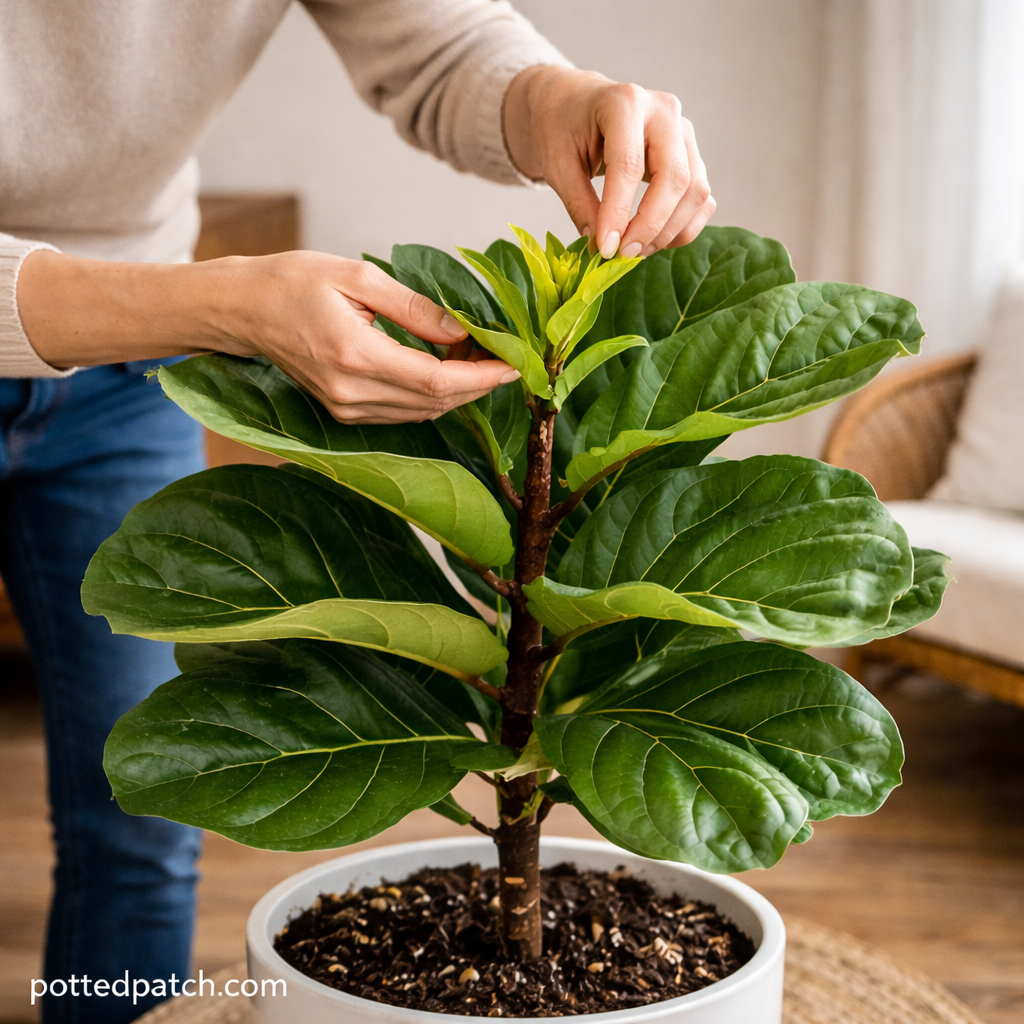
Strategic pruning encourages your plant to branch and produce multiple new growth points.
When you trim the top of a stem, the plant redirects energy into side buds, often resulting in fuller growth.
How to Prune Safely
- Use clean, sharp pruning shears
- Cut just above a leaf node
- Remove no more than 10–20% of the plant at once
Within several weeks, you may see new growth emerging near the cut area.
Improve Soil and Drainage
Healthy roots equal healthy leaves.
If your soil is compacted, waterlogged, or depleted, new growth may slow down.
Signs It’s Time to Repot
- Roots circling the bottom of the pot
- Water draining too quickly
- Soil staying soggy for days
Use a well-draining indoor plant mix and a pot with drainage holes.
Water Consistently (But Don’t Overwater)
Inconsistent watering can stall growth.
Ideal Watering Routine
- Water when the top 1–2 inches of soil feel dry
- Ensure excess water drains fully
- Avoid letting the plant sit in standing water
Overwatering can cause root stress, which slows new leaf production.
Increase Humidity If Needed
Fiddle leaf figs prefer moderate humidity.
Dry indoor air — especially in winter — can reduce growth momentum.
Easy Ways to Boost Humidity
- Use a humidifier nearby
- Group plants together
- Place the pot on a pebble tray
Aim for humidity around 40–60% for optimal growth.
Try Notching for Targeted Growth
If you want growth along the trunk rather than just at the top, you can try a technique called notching.
This involves making a small, shallow cut above a leaf node to encourage a dormant bud to activate.
How to Notch
- Use a sterile blade
- Make a small cut about ¼ inch above a node
- Do not cut too deeply into the stem
Results vary, but many plant owners see new growth within several weeks.
Be Patient and Watch for Signs
Healthy new growth appears as:
- Small, tightly curled leaves at the top
- Brighter green foliage
- Stronger stem development
Growth may take several weeks after adjustments. Consistency is key.
Common Reasons New Growth Isn’t Happening
If your fiddle leaf fig still isn’t growing, check for:
- Insufficient light
- Overwatering or underwatering
- Lack of nutrients
- Cold drafts
- Sudden environmental changes
Even a small improvement in one area can restart growth.
Final Thoughts
Encouraging new growth on a fiddle leaf fig comes down to optimizing light, nutrition, watering, and pruning. Most growth stalls are environmental — not permanent problems.
With bright light, steady care, and a little patience, your plant can begin producing fresh, beautiful leaves again.