
Ferns are prized for their lush, delicate fronds. But if your plant looks thin, slow-growing, or stuck in place, you might be wondering how to encourage new growth on a fern.
The good news? Ferns respond quickly when their environment matches their natural forest conditions. With the right adjustments, you’ll start seeing fresh, vibrant fronds unfurling again.
Here’s exactly how to stimulate healthy new growth.
1. Improve Light (But Avoid Direct Sun)
Light is one of the biggest growth factors.
Ferns prefer bright, indirect light. Too little light slows growth. Too much direct sun scorches fronds and stresses the plant.
Ideal Placement
- Near an east-facing window
- A few feet from a south or west window
- In bright rooms with filtered light
If your fern hasn’t produced new fronds in months, evaluate lighting first.
2. Keep Soil Consistently Moist
Ferns do not like drying out.
Allowing soil to go bone dry repeatedly slows growth and can damage root systems.
Watering Tips
- Water when the top inch feels slightly dry
- Ensure water drains completely
- Avoid letting the pot sit in standing water
Even moisture supports steady, healthy frond production.
3. Increase Humidity
Low humidity is one of the most common reasons ferns stall.
Most indoor ferns thrive in moderate to high humidity. Dry air causes stress, which diverts energy away from new growth.
How to Boost Humidity
- Use a humidifier
- Group plants together
- Place a pebble tray beneath the pot
- Keep away from heating vents
Higher humidity often leads to visible improvement within weeks.
4. Refresh the Soil
Old, compacted soil can suffocate roots and reduce nutrient availability.
If your fern hasn’t been repotted in 1–2 years, consider refreshing the soil.
Signs Soil Needs Replacing
- Water runs straight through
- Roots circling the pot
- Slowed growth
- Compacted, dense soil
Use a light, organic-rich mix with added perlite for drainage.
5. Fertilize Gently During Growing Season
Ferns are light feeders, but they do benefit from nutrients during spring and summer.
Fertilizing Guidelines
- Use diluted liquid houseplant fertilizer
- Feed once per month during active growth
- Avoid fertilizing in fall and winter
Over-fertilizing can burn roots and slow growth, so less is more.
6. Trim Old or Damaged Fronds
Removing brown, crispy, or dying fronds redirects energy to new growth.
How to Prune Properly
- Use clean, sharp scissors
- Cut at the base of the frond
- Avoid trimming healthy green leaves
Pruning keeps the plant tidy and encourages fresh shoots.
7. Maintain Stable Temperatures
Ferns prefer consistent indoor temperatures between 60–80°F.
Avoid:
- Cold drafts
- Sudden temperature swings
- Placement near heating or cooling vents
Stable conditions reduce stress and promote growth.
8. Be Patient With Seasonal Growth Cycles
Most ferns grow actively in spring and summer.
If your plant seems slow during fall or winter, that may be normal dormancy rather than a problem.
Focus on maintaining proper care, and growth should resume naturally when the growing season returns.
Signs Your Fern Is Producing New Growth
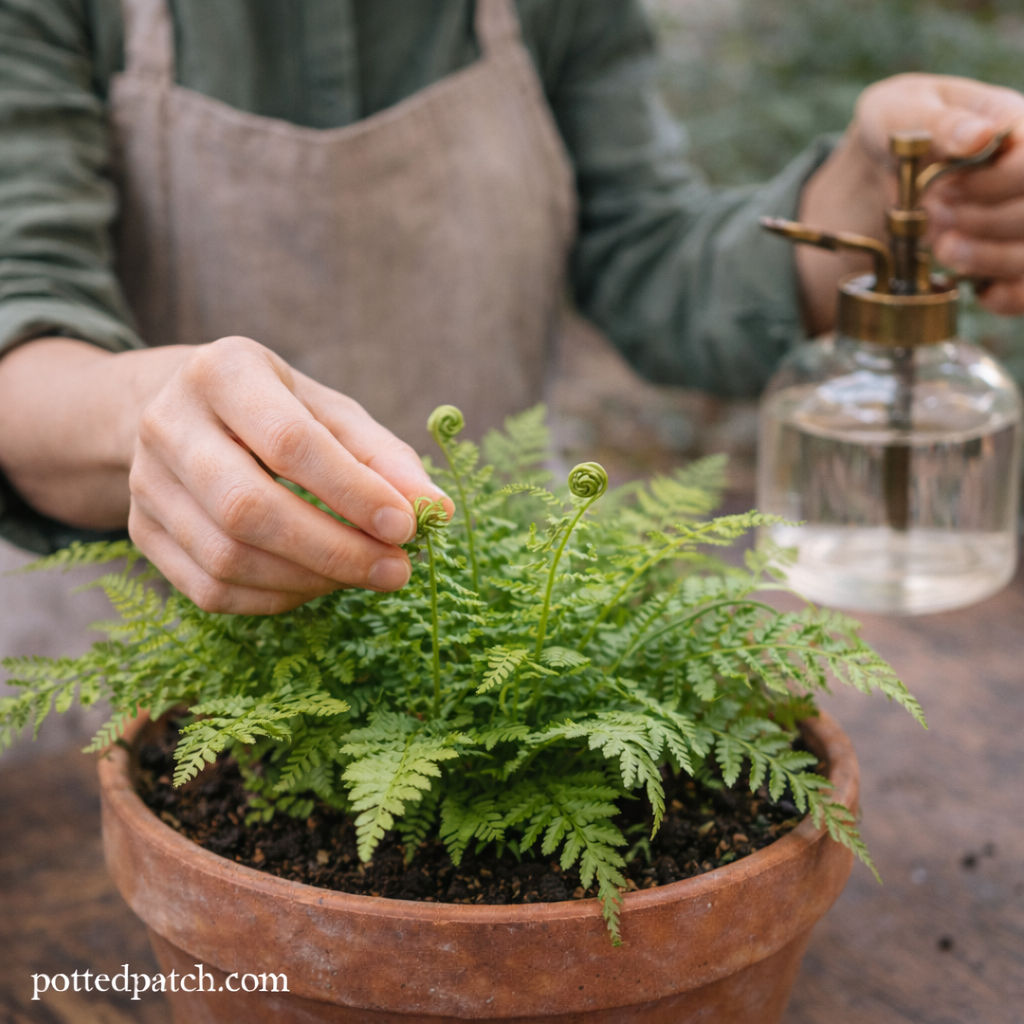
Look for:
- Small, tightly coiled fronds (called fiddleheads)
- Brighter green emerging leaves
- Thicker, fuller plant shape
- Steady upward or outward expansion
New fronds often start small and unfurl gradually over time.
Final Thoughts
Encouraging new growth on a fern comes down to recreating its natural environment: bright indirect light, consistent moisture, good humidity, and fresh, airy soil.
Small improvements in care can make a noticeable difference. With steady conditions and a little patience, your fern will reward you with lush, vibrant new fronds.