

Calatheas are loved for their bold patterns, velvety leaves, and dramatic nighttime movement. But when growth slows or stops, it can feel frustrating—especially if the plant looks healthy otherwise.
The good news? Calatheas respond quickly when their environment is dialed in. If you adjust light, humidity, watering, and feeding, you can often trigger fresh leaves within a few weeks during the growing season.
Here’s how to encourage new growth on your Calathea the right way.
Understand How Calatheas Grow
Calatheas grow from a rhizome (an underground stem). New leaves emerge rolled up tightly like little tubes and then unfurl over several days.
They typically grow most actively in:
- Spring
- Summer
- Early fall
Growth slows significantly in winter, even in ideal conditions. So timing matters.
If you’re not seeing new leaves, it’s usually due to one of five factors:
- Insufficient light
- Low humidity
- Inconsistent watering
- Poor soil conditions
- Lack of nutrients
Let’s fix each one.
Increase Bright, Indirect Light
Calatheas do not tolerate harsh direct sun—but they absolutely need bright indirect light to push new growth.
Signs light is too low:
- No new leaves for months
- Faded leaf patterns
- Leggy or leaning growth
Ideal Light Setup
- Place near an east-facing window
- Or 3–6 feet from a south or west window
- Use sheer curtains to filter strong sunlight
If your space is naturally dim, a grow light can dramatically improve growth.
Tip: Rotate your plant every 2–3 weeks to encourage even development.
Boost Humidity (This Is Critical)
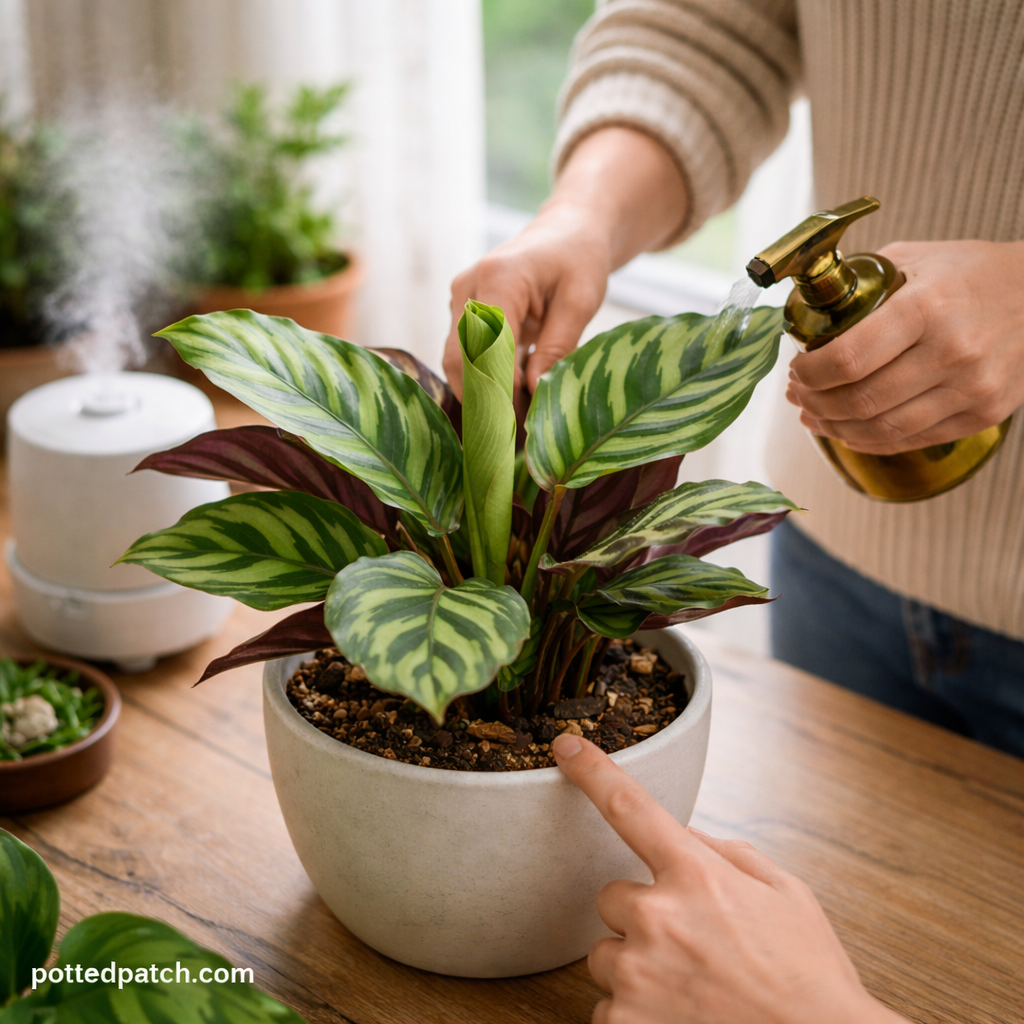
Humidity is the single biggest growth trigger for Calatheas.
They thrive in 60%+ humidity. Most homes sit at 30–45%.
Low humidity leads to:
- Brown leaf edges
- Stalled growth
- Leaves that unfurl poorly
Easy Ways to Raise Humidity
- Use a small humidifier nearby
- Group plants together
- Place the pot on a pebble tray with water
- Keep in a bright bathroom (if lighting allows)
If you want new leaves, humidity is non-negotiable.
Master Your Watering Routine
Calatheas like consistently moist soil—but never soggy.
Too dry = stress
Too wet = root damage
Either one slows growth.
Proper Watering Method
- Check the top 1 inch of soil.
- If dry, water thoroughly until water drains out.
- Empty the saucer after 10–15 minutes.
Use filtered, distilled, or rainwater if possible. Calatheas are sensitive to minerals and chemicals in tap water.
Consistency is key. Irregular watering confuses the plant and delays growth.
Refresh the Soil (If It’s Compacted)
Old soil becomes dense over time. When roots can’t breathe, growth stalls.
Signs it’s time to repot:
- Water sits on top before soaking in
- Soil dries extremely fast
- Roots circling the bottom of the pot
Ideal Soil Mix
Use a chunky, well-draining mix:
- 2 parts peat-based potting mix
- 1 part perlite
- 1 part orchid bark or coco coir
This improves oxygen flow and encourages strong root expansion—leading to new leaves.
Repot in spring for best results.
Feed During the Growing Season
Calatheas aren’t heavy feeders, but they still need nutrients to produce new foliage.
Fertilizing Guidelines
- Use a balanced liquid fertilizer (like 10-10-10 or 20-20-20)
- Dilute to half strength
- Feed once every 4 weeks in spring and summer
- Stop fertilizing in fall and winter
Overfertilizing causes leaf burn, so less is more.
Prune Strategically
Removing damaged or old leaves redirects energy toward new growth.
Use clean scissors and cut the leaf stem at the base.
Pruning helps by:
- Improving airflow
- Reducing stress
- Encouraging the rhizome to push new shoots
Don’t remove more than 25% of the plant at once.
Check for Hidden Stress Factors
Even subtle stress can slow growth.
Inspect for:
- Spider mites
- Fungus gnats
- Drafty windows
- Cold temperatures below 65°F
- Air vents blowing directly on the plant
Calatheas prefer stable environments. Dramatic fluctuations halt new development.
How Long Until You See New Growth?
If conditions are corrected during the growing season, you may see:
- New leaf spikes within 2–4 weeks
- Noticeable size increase within 6–8 weeks
In winter, growth may pause completely. That’s normal.
Focus on maintaining healthy roots and strong foliage so it’s ready to explode with growth in spring.
Quick Growth-Boost Checklist
If you want a fast summary:
- Bright indirect light
- 60%+ humidity
- Consistent moisture (not soggy)
- Well-draining, airy soil
- Light monthly feeding (spring/summer)
- Stable temperatures (65–80°F)
When all six are in place, Calatheas almost always respond.
Final Thoughts
Encouraging new growth on a Calathea isn’t about one magic trick—it’s about consistency.
These plants are sensitive, but they reward attentive care. Once you balance light, humidity, water, and soil, you’ll start seeing those tightly rolled new leaves appear again.
Patience plus the right environment equals growth.