
Cacti are known for slow, steady growth. But if your cactus hasn’t shown new growth in months — or even years — you may be wondering what’s wrong.
The truth is, cacti grow when their environment mimics natural desert conditions: bright light, proper watering, and seasonal cycles.
In this guide, you’ll learn exactly how to encourage healthy new growth on your cactus without stressing the plant.
Understand the Natural Growth Cycle
Before trying to “boost” growth, it’s important to understand how cacti grow.
Most indoor cacti:
- Grow actively in spring and summer
- Slow down in fall
- Enter dormancy in winter
If it’s winter and your cactus isn’t growing, that’s completely normal.
Focus on optimizing conditions during the active growing season.
1. Increase Light Exposure
Light is the single most important factor for cactus growth.
Without enough light, cacti will:
- Grow very slowly
- Become pale
- Stretch (etiolate)
- Lean toward the light source
How to Improve Lighting
- Place near a south- or west-facing window
- Rotate the plant occasionally for even growth
- Use a grow light if natural light is limited
Aim for at least 6 hours of bright light daily.
More light (without burning) = stronger growth.
2. Water Properly During Growing Season
Cacti need more water during active growth — but still not too much.
The Right Watering Method
- Water deeply
- Let excess drain completely
- Wait until soil is fully dry before watering again
Deep, infrequent watering stimulates root expansion and stronger growth.
Avoid small, frequent sips of water.
3. Use Well-Draining Soil
Dense soil suffocates roots and slows growth.
A proper cactus mix should include:
- Perlite
- Sand
- Pumice
- Small gravel
Good drainage allows roots to absorb nutrients efficiently.
If your soil stays wet longer than a few days, consider repotting.
4. Feed During Active Growth
Cacti don’t need heavy feeding, but a little fertilizer during spring and summer can encourage new growth.
How to Fertilize Safely
- Use a diluted cactus fertilizer
- Feed once per month during spring and summer
- Skip feeding in fall and winter
Over-fertilizing can cause root damage and slow growth.
Less is more.
5. Repot When Root Bound
If your cactus hasn’t grown in years, it may be root bound.
Signs include:
- Roots circling inside the pot
- Water draining immediately through
- Stalled growth despite proper care
Repot into a container only 1–2 inches larger with fresh soil.
The extra space can stimulate new root and stem growth.
6. Provide Warm Temperatures
Cacti grow best in warm conditions.
Ideal growing temperatures:
- 65–85°F during the day
- Slightly cooler at night
Cold drafts and temperatures below 50°F can halt growth.
Keep your cactus away from air conditioning vents and drafty windows.
7. Respect Dormancy
Encouraging growth doesn’t mean forcing it year-round.
During winter dormancy:
- Reduce watering drastically
- Stop fertilizing
- Maintain bright light
- Keep temperatures slightly cooler
This rest period actually supports stronger growth in spring.
8. Avoid Frequent Relocation
Cacti prefer stability.
Constantly moving your cactus can:
- Interrupt light exposure
- Cause stress
- Slow growth
Choose a bright spot and allow the plant to adjust long-term.
9. Check for Pests
Growth can stall if pests are present.
Look for:
- White cottony spots (mealybugs)
- Sticky residue
- Tiny webs
Treat infestations promptly with insecticidal soap or neem oil.
Healthy plants grow better.
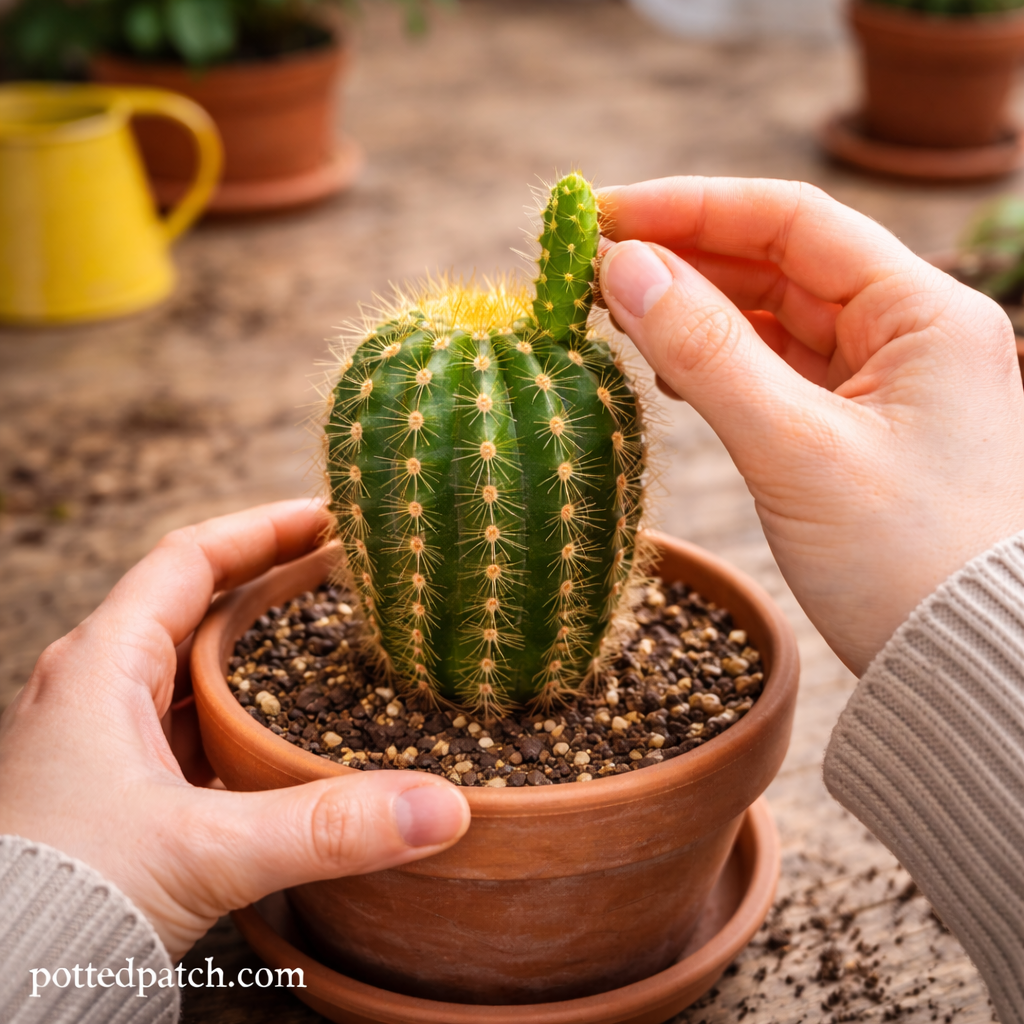
Signs Your Cactus Is Producing New Growth
Depending on the species, you may notice:
- Fresh green color at the top
- New pads (on paddle cacti)
- New segments
- Small spines forming
- Increased height or width
Growth may be slow, but steady progress is a good sign.
How Long Does It Take?
Cactus growth is gradual.
Some species grow:
- A few inches per year
- New pads once or twice per season
- Slight thickening over time
Patience is essential.
Strong growth comes from consistent care — not quick fixes.
Quick Growth Checklist
To encourage new growth:
- Provide bright light
- Water deeply but infrequently
- Use fast-draining soil
- Fertilize lightly in spring and summer
- Keep warm temperatures
- Allow winter dormancy
Simple conditions lead to steady improvement.
Final Thoughts
If your cactus isn’t growing, it’s usually missing one key factor — most often light.
Focus on:
- Bright exposure
- Proper watering
- Seasonal care
With the right environment, your cactus will reward you with healthy, steady new growth year after year.