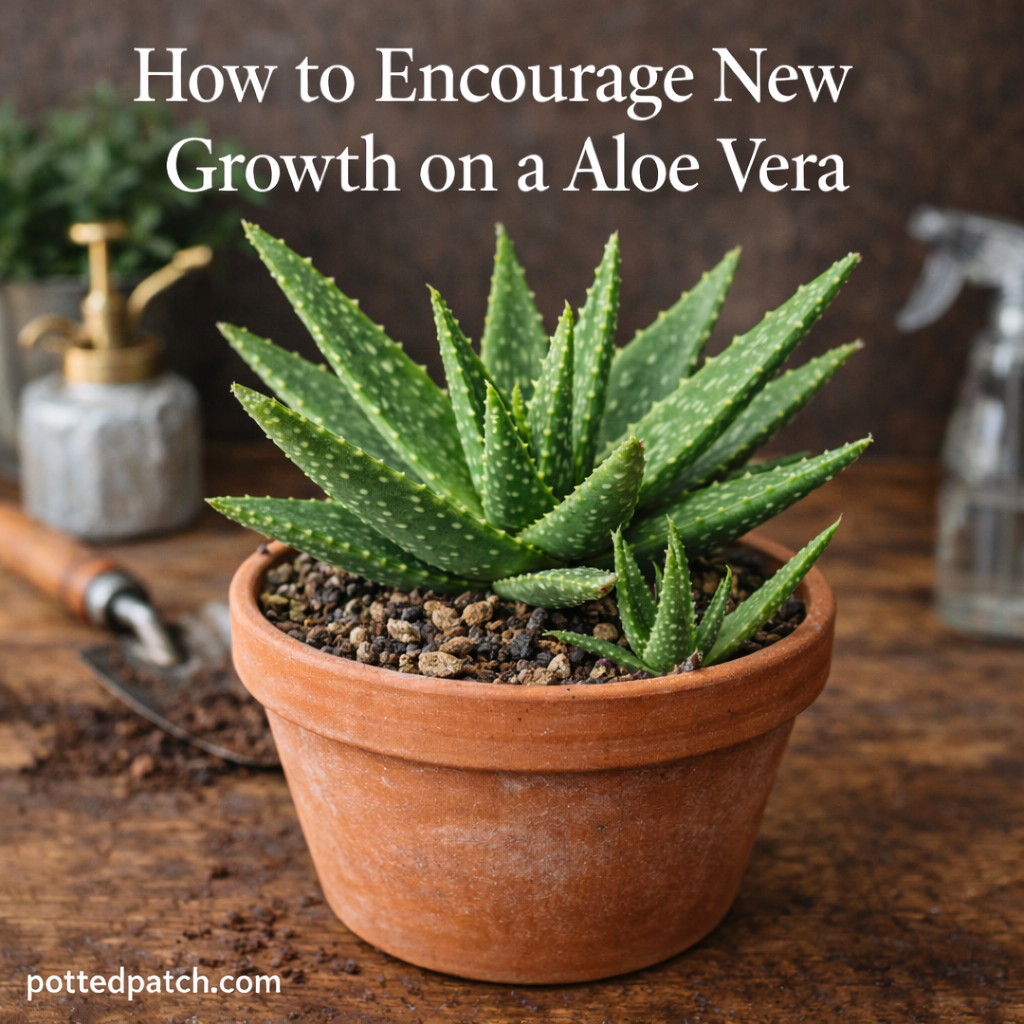
Aloe vera is known for its thick, fleshy leaves and resilient nature. But sometimes it seems to just sit there — no new leaves, no pups, no visible growth.
If your aloe hasn’t grown in a while, don’t worry. With the right adjustments, you can encourage steady, healthy new growth.
In this guide, you’ll learn exactly how to stimulate aloe vera growth indoors without overdoing it.
Understanding How Aloe Vera Grows
Before trying to speed things up, it helps to understand how aloe grows naturally.
Aloe vera:
- Produces new leaves from the center of the plant
- Grows slowly compared to leafy houseplants
- Produces “pups” (baby plants) from the base when mature
- Grows most actively in spring and summer
If it’s fall or winter, slower growth is normal.
1. Increase Light Exposure
Light is the biggest factor in aloe growth.
If your plant isn’t producing new leaves, insufficient light is often the reason.
Ideal Lighting Conditions
- Bright, indirect sunlight
- At least 6–8 hours of light daily
- South- or west-facing window preferred
Signs Your Aloe Needs More Light
- Pale green leaves
- Stretching or leaning toward the window
- Slow or stalled growth
If natural light is limited, consider using a grow light during darker months.
2. Use Well-Draining Soil
Healthy roots equal healthy growth.
Aloe vera needs soil that drains quickly to prevent rot and allow roots to breathe.
Best Soil Options
- Cactus or succulent mix
- Potting soil amended with perlite and coarse sand
- Avoid dense, moisture-retaining mixes
If the soil stays wet for several days after watering, growth may slow due to root stress.
3. Water Properly (Not Frequently)
Many people assume more water equals faster growth. For aloe, the opposite is true.
Overwatering slows growth and damages roots.
Correct Watering Method
- Wait until soil is completely dry.
- Water deeply until it drains from the bottom.
- Empty the saucer.
In most indoor environments, watering every 2–4 weeks is sufficient.
Healthy roots encourage steady new leaf production.
4. Provide Warm Temperatures
Aloe grows best in warm conditions.
Ideal Temperature Range
- 60–85°F
- Avoid cold drafts
- Keep away from freezing temperatures
Cool environments can slow or temporarily stop growth.
5. Fertilize Lightly During Growing Season
Aloe doesn’t need heavy feeding, but a small nutrient boost during spring and summer can encourage new growth.
How to Fertilize Safely
- Use a diluted succulent fertilizer
- Feed once in spring and once in early summer
- Avoid fertilizing in fall and winter
Too much fertilizer can burn roots and stunt growth.
6. Repot When Rootbound
If your aloe has been in the same pot for years, it may be rootbound.
When roots become crowded, growth slows.
Signs It’s Time to Repot
- Roots growing out of drainage holes
- Water runs straight through the pot
- Soil dries out extremely fast
Choose a pot only 1–2 inches larger in diameter to prevent excess moisture retention.
7. Encourage Pup Development
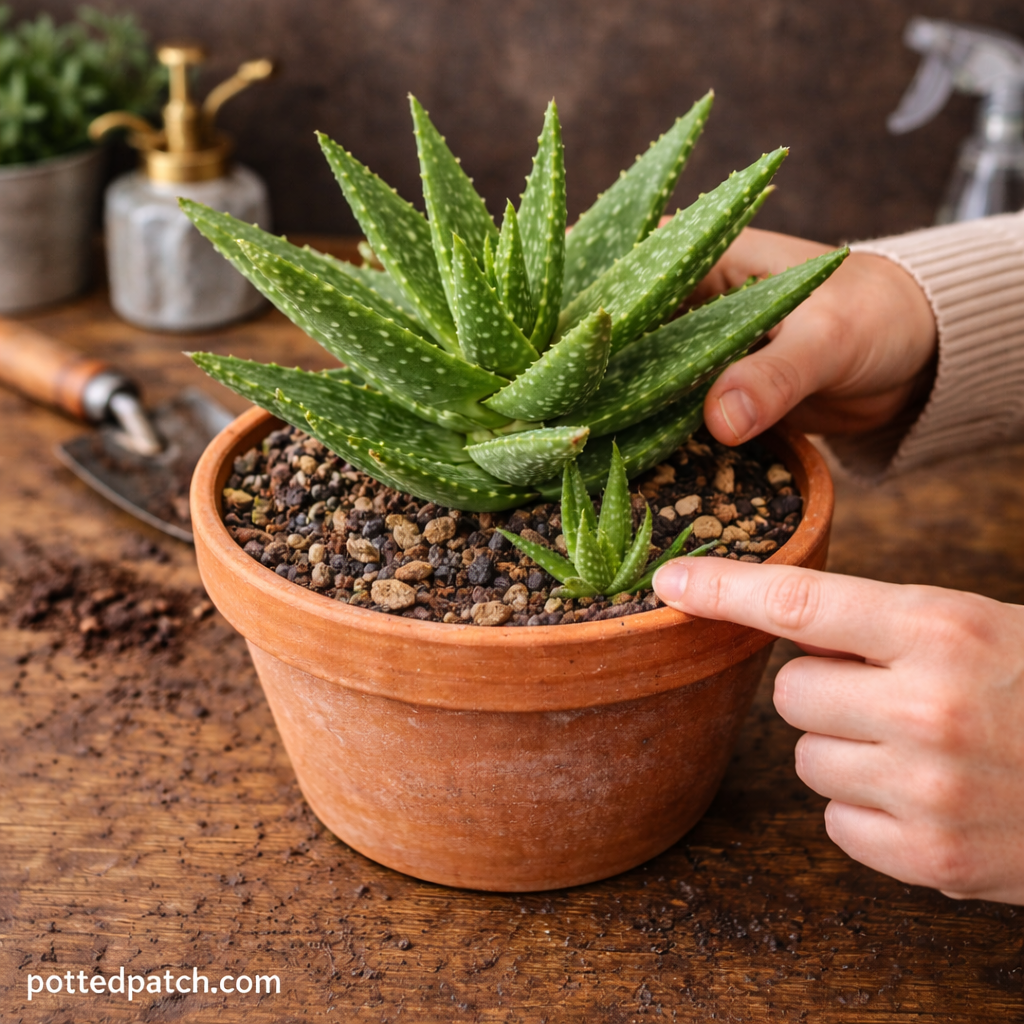
Mature aloe plants produce small offshoots called pups.
These baby plants form at the base and are a sign of a healthy, growing aloe.
How to Encourage Pups
- Ensure strong light exposure
- Avoid overwatering
- Let the plant mature (usually 2–3 years old)
Pups indicate that the root system is strong and the plant is thriving.
8. Be Patient
Aloe vera is not a fast grower.
Even under perfect conditions, growth is gradual.
New leaves emerge from the center, and you may notice:
- Slight thickening before visible elongation
- Gradual upward growth
- Increased firmness in new leaves
Consistency matters more than speed.
Quick Growth Checklist
If you want to encourage new aloe growth, make sure you’re doing this:
- Bright, consistent light
- Fully drying soil between waterings
- Fast-draining soil mix
- Warm indoor temperatures
- Light feeding in growing season
- Repot only when necessary
Small improvements often make a big difference.
Final Thoughts
Encouraging new growth on aloe vera isn’t about forcing it — it’s about optimizing its environment.
Focus on light, drainage, and proper watering. Once those basics are dialed in, your aloe will reward you with steady new leaves and, eventually, healthy pups.
With the right balance of care and patience, aloe vera becomes one of the most dependable and satisfying indoor plants to grow.