
Keeping houseplants alive doesn’t require complicated charts or daily reminders. In fact, most plants fail because of too much attention, not too little. A simple, flexible plant care schedule helps you stay consistent without overwatering, overfeeding, or forgetting basic needs.
This beginner-friendly guide walks you through creating a plant care schedule that actually works in real life.
Why a Plant Care Schedule Matters
Plants thrive on consistency. A loose schedule helps you:
- Avoid overwatering
- Catch problems early
- Build a routine without stress
- Adjust care based on seasons
A schedule isn’t about exact dates—it’s about regular check-ins.
Start by Grouping Your Plants
Before creating a schedule, group your plants by similar care needs.
Common plant groups include:
- Low-water plants (snake plants, ZZ plants, succulents)
- Moderate-water plants (pothos, philodendrons, monsteras)
- Moisture-loving plants (ferns, calatheas, peace lilies)
Grouping prevents confusion and reduces the number of routines you need to remember.
Choose Weekly Check-Ins, Not Daily Tasks
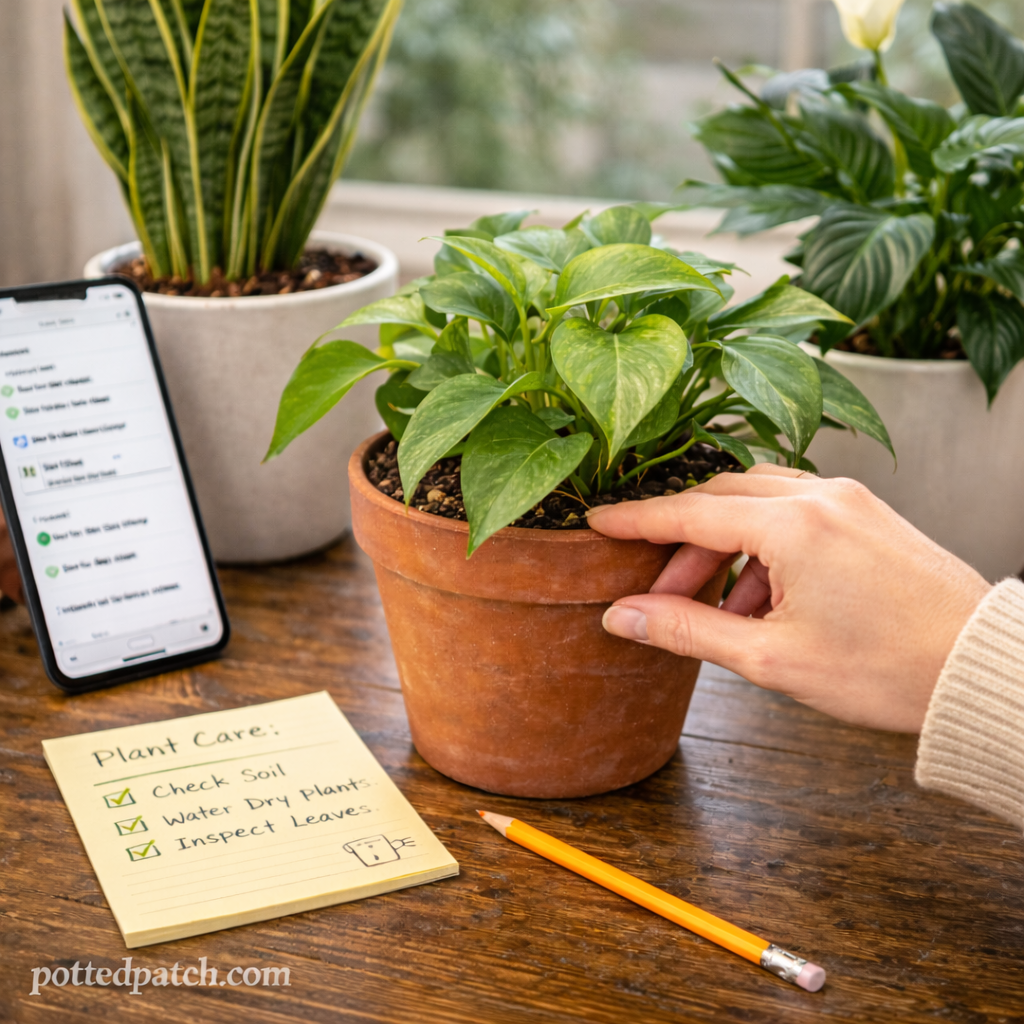
Most houseplants don’t need daily care. A once-a-week check-in is ideal for beginners.
Pick one consistent day each week to:
- Check soil moisture
- Inspect leaves
- Rotate plants if needed
- Look for pests or damage
Think of this as observation day, not watering day.
Build a Simple Weekly Plant Care Routine
Here’s a beginner-friendly weekly flow:
- Walk through your plant space
- Check soil moisture with your finger
- Water only plants that are dry
- Wipe dusty leaves if needed
- Remove dead or yellowing leaves
This takes 10–20 minutes for most homes and prevents rushed mistakes.
Create a Flexible Watering Schedule
Instead of fixed watering dates, use ranges.
Examples:
- Every 7–10 days for moderate-water plants
- Every 2–3 weeks for drought-tolerant plants
- Weekly for moisture-loving plants (if soil isn’t drying too fast)
Always let the soil tell you when to water, not the calendar.
Add Monthly Maintenance Tasks
Some care tasks don’t need to happen often.
Once a month:
- Rotate plants for even growth
- Clean leaves with a damp cloth
- Check drainage holes
- Inspect pots and soil condition
Monthly care keeps plants healthy without overwhelming you.
Plan for Seasonal Adjustments
Plants don’t grow the same way year-round.
Spring and summer:
- More frequent watering
- Occasional fertilizing
- Faster growth
Fall and winter:
- Less watering
- No fertilizing for most plants
- Slower growth
Update your schedule twice a year instead of constantly changing it.
Keep Your Schedule Visible and Simple
The best plant care schedule is the one you’ll actually follow.
Easy ways to track care:
- Notes app checklist
- Calendar reminder once a week
- Small plant journal
- Labels grouped by plant type
Avoid complex spreadsheets unless you enjoy them.
Common Beginner Mistakes to Avoid
When creating a plant care schedule, avoid:
- Watering all plants on the same day automatically
- Following strict dates instead of soil checks
- Adding too many tasks at once
- Ignoring seasonal changes
Simple systems last longer than perfect ones.
Example of a Simple Plant Care Schedule
Weekly:
- Soil check
- Water only dry plants
- Quick leaf inspection
Monthly:
- Rotate plants
- Clean leaves
- Check drainage
Seasonally:
- Adjust watering frequency
- Pause or resume fertilizing
That’s all most homes need.
Final Thoughts
A simple plant care schedule isn’t about control—it’s about awareness. When you build a routine around observation instead of rules, plants become easier, healthier, and more enjoyable to care for.
Start small, stay flexible, and let your plants guide the schedule.