Plants do more than decorate a space—they change how it feels. A well-placed plant can soften hard edges, calm visual noise, and make a room feel more grounded and peaceful. You don’t need a jungle or complicated care routines to create a relaxing home with plants. What matters most is intention, placement, and choosing the right plants for your lifestyle.
This guide walks you through how to use plants to create a calm, restorative home environment without stress or clutter.
Why Plants Make a Home Feel More Relaxing
Plants naturally support relaxation in several ways:
- They soften sharp lines and empty corners
- Green tones reduce visual tension
- Organic shapes create balance in modern spaces
- Living elements make rooms feel more welcoming
Even a few thoughtfully placed plants can change the emotional tone of a room.
Start With Fewer, Better-Placed Plants
More plants do not always equal more calm.
For a relaxing home:
- Choose fewer plants with purpose
- Avoid crowding shelves and surfaces
- Let each plant “breathe” visually
Negative space is just as important as greenery when creating a peaceful atmosphere.
Choose Plants That Match a Calm Aesthetic
Not all plants give the same visual effect. Some feel energetic, others soothing.
Best Plant Types for a Relaxing Home
- Snake plants – upright, structured, and quiet visually
- Pothos – soft trailing lines that feel gentle
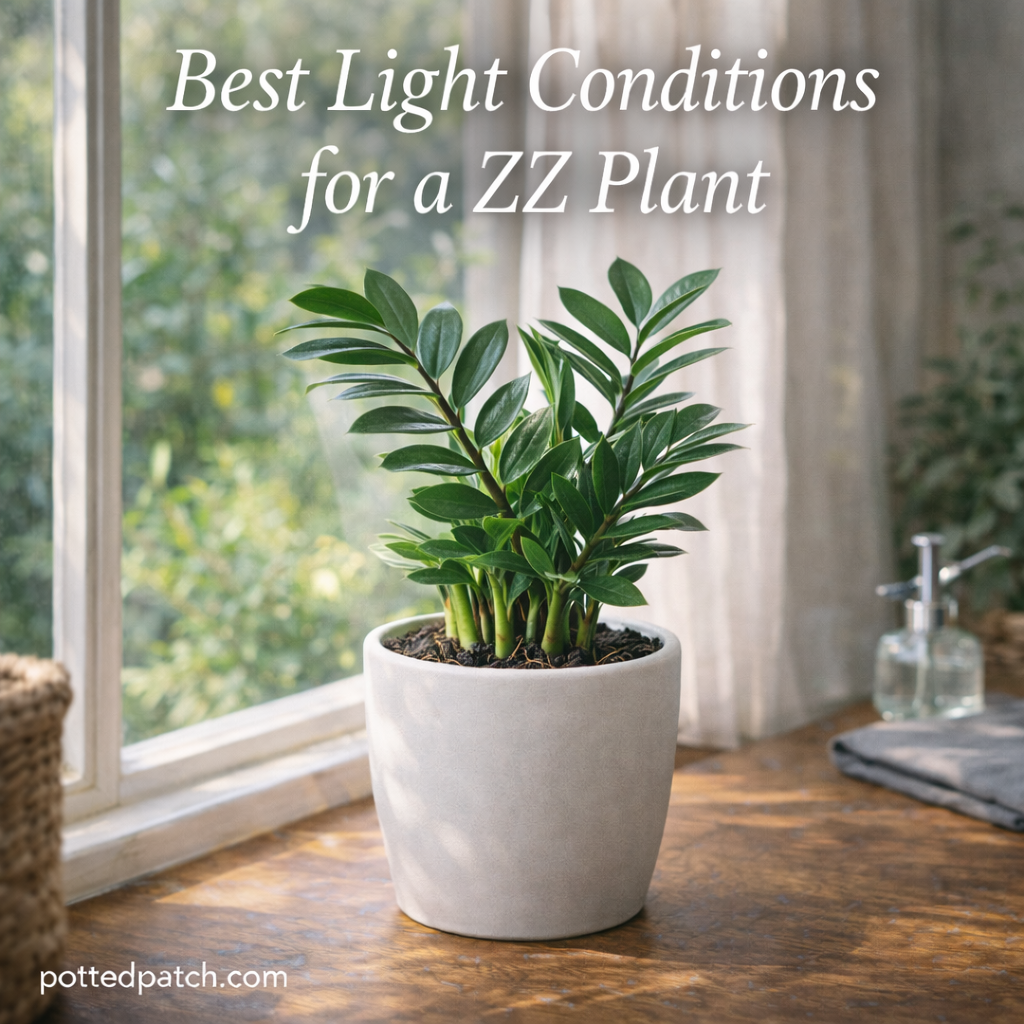
- ZZ plants – glossy leaves and slow growth
- Peace lilies – smooth shapes and clean lines
- Ferns – delicate texture for softness
Avoid overly spiky, chaotic, or fast-growing plants if your goal is calm.
Use Plants to Soften Hard Spaces
Plants work especially well where rooms feel cold or rigid.
Great places to soften with plants:
- Corners with sharp furniture lines
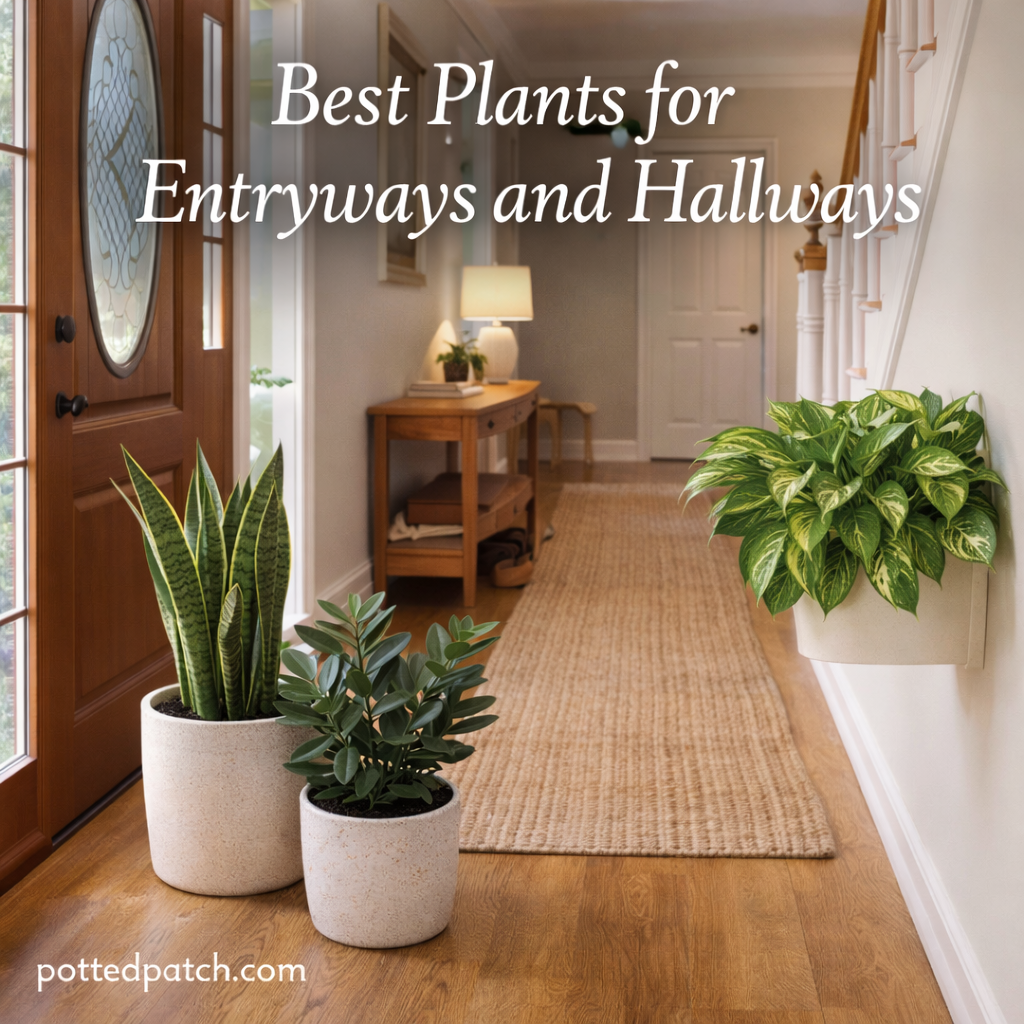
- Entryways with blank walls
- Bathrooms with tile and mirrors
- Kitchens with lots of hard surfaces
A single plant can make a space feel warmer and more balanced.
Create Calm Through Thoughtful Placement
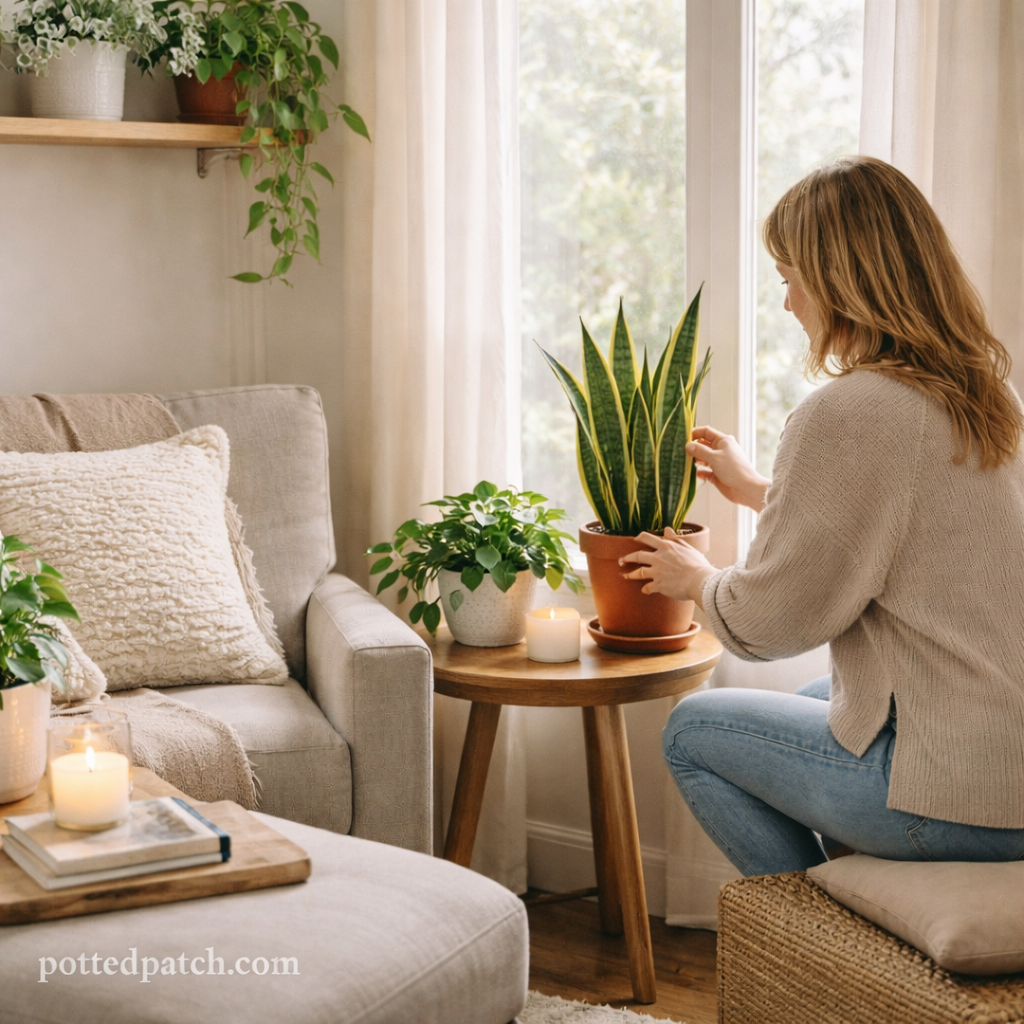
Placement matters more than quantity.
Floor Plants for Grounding
Large floor plants help anchor a room.
Best spots:
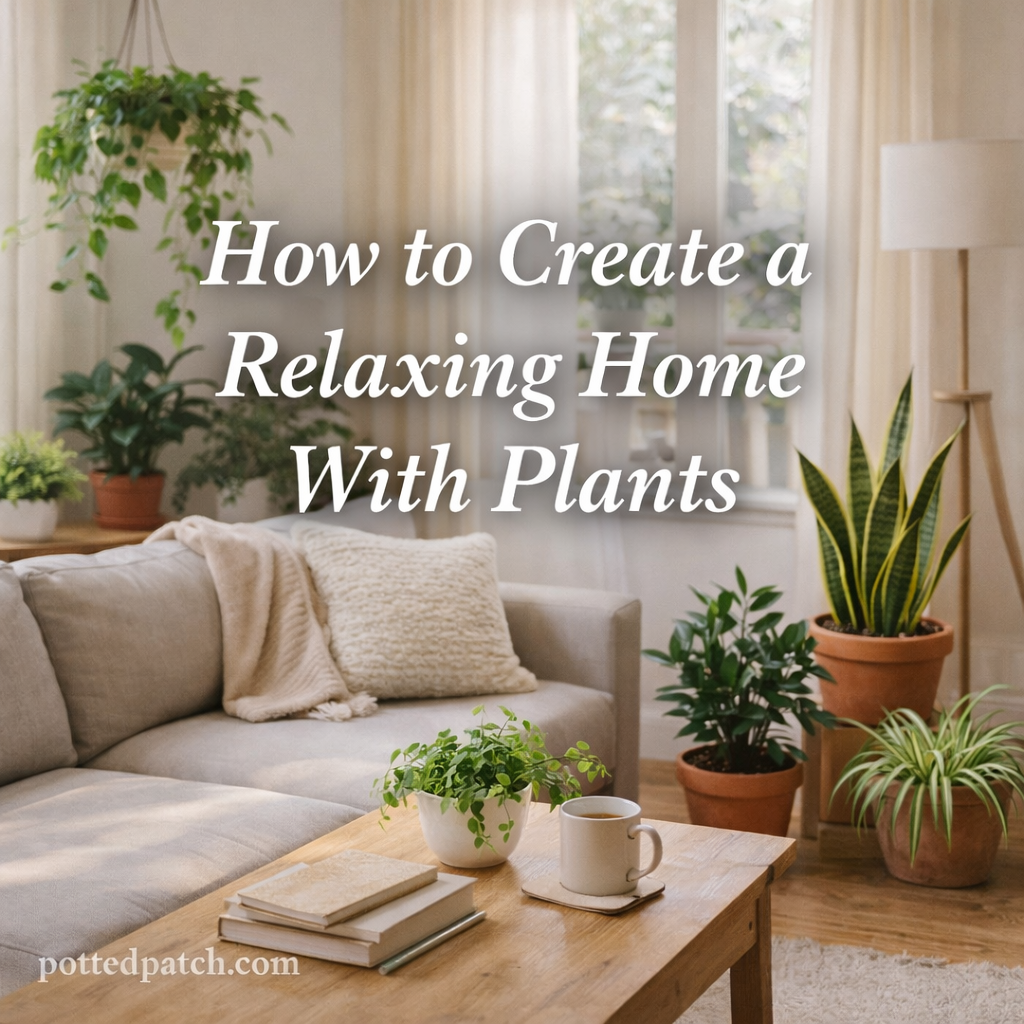
- Next to sofas or armchairs
- In unused corners
- Near windows with filtered light
They create stability and visual calm.
Tabletop Plants for Gentle Focus
Small plants work best when they don’t compete for attention.
Good placements:
- Coffee tables (centered or off to one side)
- Nightstands
- Desks
Keep these plants simple and uncluttered.
Keep Plant Care Low-Stress
A relaxing home shouldn’t come with constant plant anxiety.
To reduce stress:
- Choose plants that tolerate missed waterings
- Group plants with similar care needs
- Use pots with drainage to avoid guesswork
Plants that thrive on minimal care support relaxation instead of adding pressure.
Use Matching or Neutral Planters
Visual calm often comes from consistency.
Planter tips:
- Stick to a limited color palette
- Use neutral tones like white, clay, stone, or matte black
- Avoid overly busy patterns
Matching or complementary pots help plants feel like part of the space, not distractions.
Let Plants Define Zones
Plants can quietly separate areas without walls or clutter.
Examples:
- A tall plant between living and dining areas
- A plant near a reading chair to define a calm corner
- Small plants lining a windowsill for rhythm
This creates flow while maintaining openness.
Use Plants to Support Daily Routines
Plants feel most relaxing when they’re part of your daily life.
Ideas:
- A plant near your morning coffee spot
- Greenery in a meditation or reading area
- A calming plant in the bedroom (away from clutter)
Associating plants with quiet moments reinforces their calming effect.
Avoid Overdecorating With Plants
Too many plants can feel chaotic instead of soothing.
Signs you’ve gone too far:
- Surfaces feel crowded
- Plants block light or movement
- Care feels overwhelming
If a space feels busy, remove one or two plants and reassess.
Seasonal Refresh Without Stress
You don’t need to constantly change plants to refresh your space.
Simple refresh ideas:
- Rotate plants between rooms
- Clean leaves to restore shine
- Swap planters instead of plants
Small changes keep your space feeling fresh without disruption.
Final Thoughts
Creating a relaxing home with plants isn’t about filling every corner—it’s about intention. Choose plants that fit your lifestyle, place them where they soften and balance your space, and keep care routines simple.
When plants feel supportive instead of demanding, they naturally enhance calm. A peaceful home grows not from perfection, but from thoughtful choices that make your space feel good to live in.