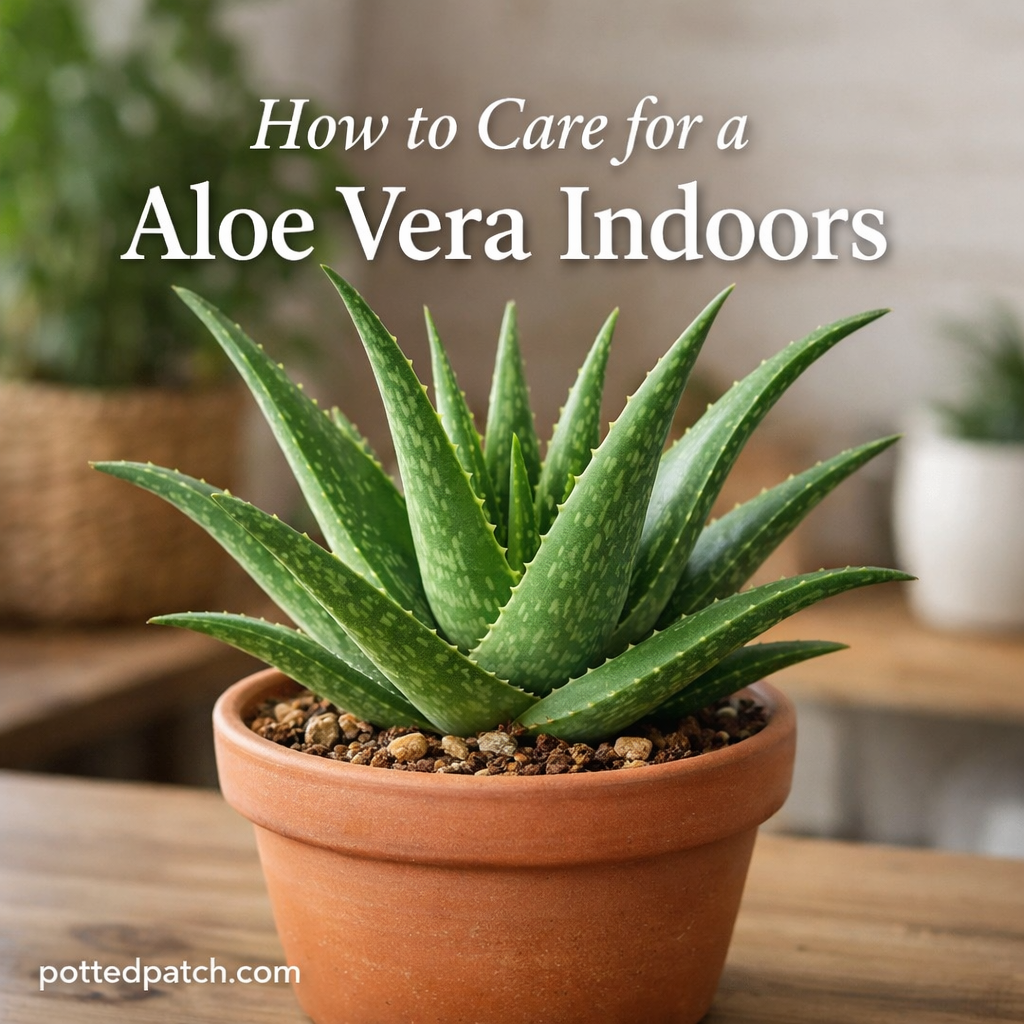
Aloe vera is one of the easiest and most rewarding houseplants you can grow. Known scientifically as Aloe vera, this hardy succulent thrives in bright indoor spaces and requires minimal maintenance. With the right light, watering routine, and soil, your aloe can live for years — even decades.
In this guide, you’ll learn exactly how to care for an aloe vera indoors so it stays healthy, upright, and vibrant year-round.
Why Aloe Vera Makes a Great Indoor Plant
Aloe vera is ideal for beginners and busy plant owners because it:
- Stores water in its thick leaves
- Tolerates dry indoor air
- Requires infrequent watering
- Grows well in containers
- Produces “pups” (baby plants) you can propagate
When grown indoors properly, aloe develops firm, plump leaves with a soft green to slightly gray tone.
Light Requirements for Indoor Aloe Vera
Light is the most important factor for healthy aloe growth.
How Much Light Does Aloe Need?
Aloe vera prefers:
- Bright, indirect sunlight
- At least 6–8 hours of light per day
- A south- or west-facing window for best results
If your aloe starts leaning toward the window, it’s stretching for light. Rotate the pot every few weeks to encourage even growth.
Can Aloe Vera Survive in Low Light?
It can survive, but it won’t thrive. Low light causes:
- Thin, droopy leaves
- Pale color
- Slow growth
If your home lacks bright windows, consider using a grow light positioned 6–12 inches above the plant.
How Often to Water Aloe Vera Indoors
Overwatering is the most common mistake with aloe.
The Correct Watering Schedule
Water your aloe:
- Every 2–3 weeks in spring and summer
- Every 3–4 weeks in fall and winter
- Only when the soil is completely dry
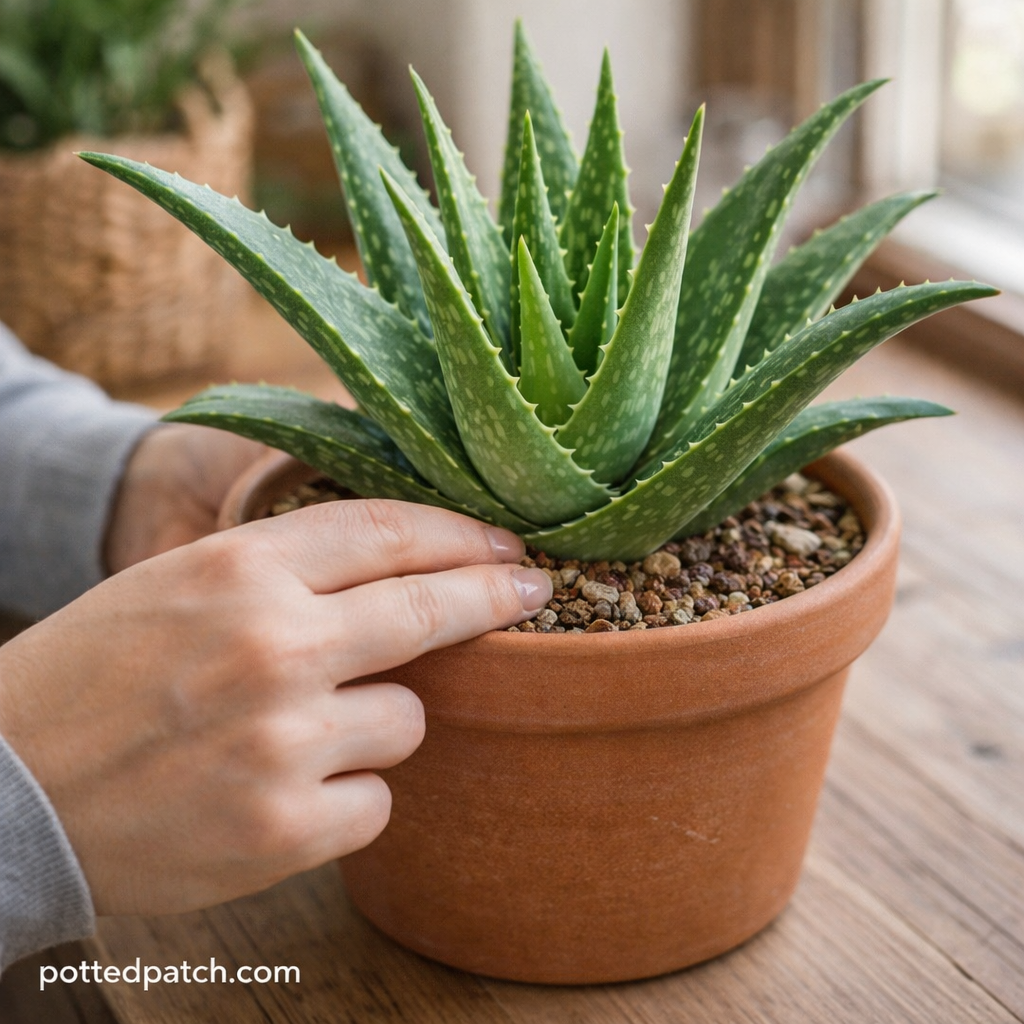
Before watering, stick your finger 2 inches into the soil. If it feels dry, it’s safe to water.
How to Water Properly
- Water deeply until excess drains from the bottom.
- Empty the saucer immediately.
- Never let the plant sit in standing water.
Aloe roots rot quickly in soggy soil.
Best Soil for Aloe Vera Indoors
Aloe needs fast-draining soil.
Use:
- Cactus or succulent potting mix
- Or regular potting soil mixed with 30–50% perlite or coarse sand
Heavy, moisture-retaining soil can suffocate roots and cause rot.
Choosing the Right Pot
The right container prevents many problems.
Choose a pot that:
- Has drainage holes
- Is slightly wider than the root ball
- Is made of terracotta (helps soil dry faster)
Avoid oversized pots — they hold excess moisture and increase rot risk.
Temperature and Humidity Needs
Aloe vera prefers typical indoor conditions.
- Ideal temperature: 55–80°F
- Keep away from cold drafts
- Avoid placing near heating vents
Normal household humidity is fine. Aloe does not require misting.
Fertilizing Aloe Vera
Aloe doesn’t need much fertilizer.
Feed:
- Once in spring
- Once in mid-summer
- Use diluted succulent fertilizer (half strength)
Skip fertilizing in fall and winter.
How to Repot Aloe Vera
Repot every 2–3 years or when:
- Roots grow through drainage holes
- The plant becomes top-heavy
- Soil breaks down and drains poorly
When repotting:
- Choose a slightly larger pot.
- Remove old soil gently.
- Replant at the same depth.
- Wait 5–7 days before watering.
Propagating Aloe Vera Pups
Healthy aloe plants produce baby offshoots called pups.
To propagate:
- Remove the parent plant from its pot.
- Gently separate pups with their own roots.
- Let the cut ends dry for 24 hours.
- Plant in fresh succulent soil.
- Wait about a week before watering.
This is the easiest way to multiply your plant collection.
Common Aloe Vera Problems (and Fixes)
Brown, Mushy Leaves
Cause: Overwatering
Fix: Allow soil to dry completely and improve drainage.
Thin, Curved Leaves
Cause: Not enough light
Fix: Move closer to a bright window.
Dry, Wrinkled Leaves
Cause: Underwatering
Fix: Water thoroughly and check soil dryness regularly.
Soft Base or Foul Smell
Cause: Root rot
Fix: Remove affected roots and repot in dry soil immediately.
Seasonal Care Tips
Spring & Summer
- Active growth period
- Water slightly more often
- Fertilize lightly
Fall & Winter
- Growth slows down
- Reduce watering
- Stop fertilizing
Aloe naturally rests during colder months.
Final Thoughts on Growing Aloe Vera Indoors
Caring for an aloe vera indoors is simple once you understand its needs. Bright light, well-draining soil, and infrequent watering are the keys to success.
Avoid overwatering, give it plenty of sunlight, and your aloe will reward you with healthy, plump leaves and steady growth for years to come.
Whether you’re new to houseplants or expanding your collection, aloe vera is one of the most dependable indoor plants you can grow.