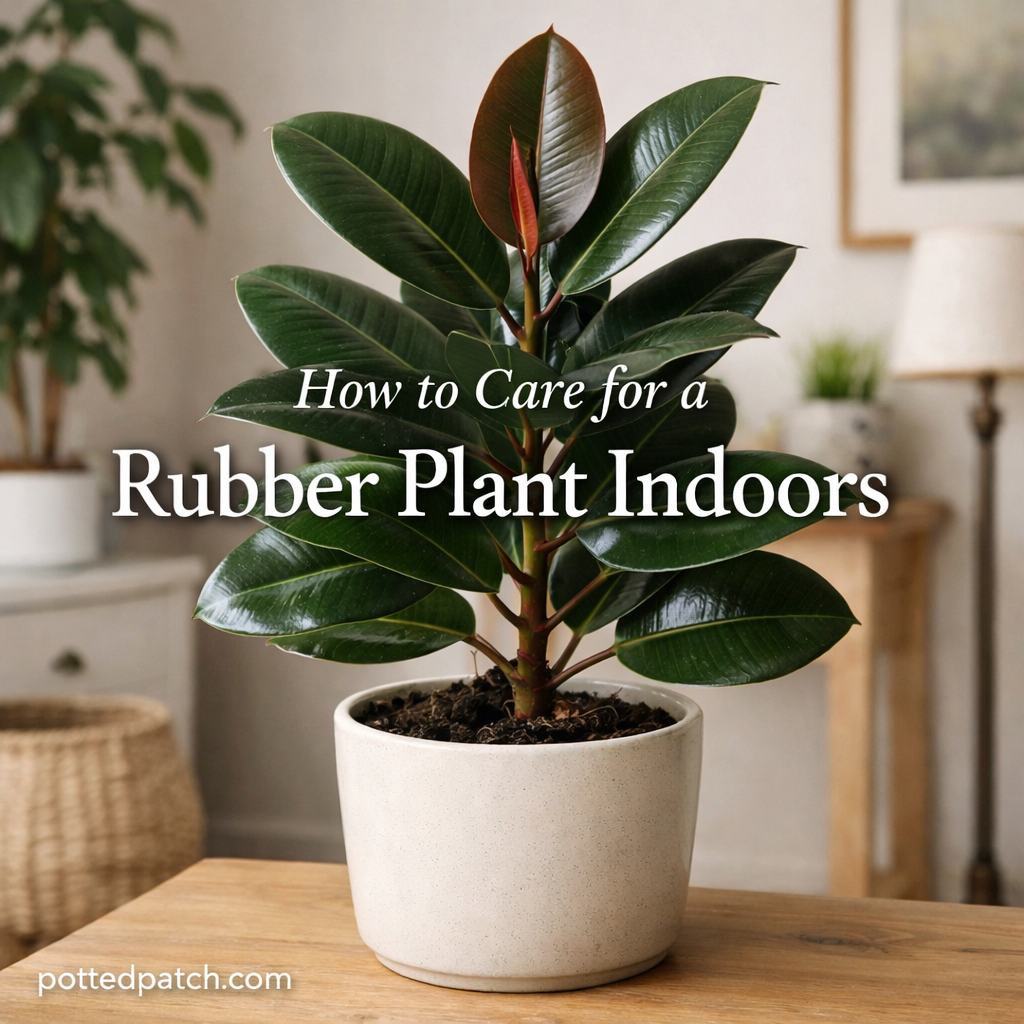
Rubber plants are bold, glossy, and surprisingly easy to care for once you understand their needs. With their thick leaves and upright growth habit, they make a strong statement in living rooms, offices, and bedrooms.
If you’re wondering how to care for a rubber plant indoors, this complete guide walks you through light, watering, soil, pruning, and troubleshooting—so your plant stays healthy and vibrant year-round.
Understanding the Rubber Plant
The rubber plant (Ficus elastica) is a tropical houseplant native to Southeast Asia. Indoors, it’s prized for:
- Large, glossy leaves
- Air-purifying qualities
- Upright, architectural growth
- Relatively low maintenance care
With proper care, a rubber plant can grow 6–10 feet tall indoors over time.
Light Requirements
Light is the most important factor in rubber plant care.
Best Light Conditions
- Bright, indirect light is ideal
- A few hours of gentle morning sun is beneficial
- Avoid harsh afternoon sun, which can scorch leaves
Place your rubber plant near:
- East-facing windows (ideal)
- Bright south- or west-facing windows with sheer curtains
- Well-lit rooms with consistent natural light
Signs of Incorrect Lighting
Too little light:
- Leggy growth
- Leaves dropping
- Dull or smaller leaves
Too much direct sun:
- Brown patches
- Leaf scorch
- Curling edges
If leaves start falling suddenly, lighting is often the cause.
How Often to Water a Rubber Plant
Overwatering is the most common mistake.
Watering Schedule
Water your rubber plant when:
- The top 1–2 inches of soil feel dry
- The pot feels lighter than usual
In most homes:
- Spring/Summer: Every 7–10 days
- Fall/Winter: Every 2–3 weeks
Always adjust based on light, temperature, and humidity.
Proper Watering Technique
- Water thoroughly until it drains from the bottom.
- Empty the saucer after 10–15 minutes.
- Never let the plant sit in standing water.
Yellow leaves often mean overwatering, not underwatering.
Best Soil for Rubber Plants
Rubber plants prefer:
- Well-draining soil
- Slightly acidic to neutral pH
- A mix that retains moisture without staying soggy
A good indoor mix includes:
- Standard houseplant potting soil
- Perlite for drainage
- Optional orchid bark for airflow
Avoid heavy garden soil—it holds too much moisture indoors.
Temperature and Humidity Needs
Rubber plants thrive in normal indoor conditions.
Ideal Temperature
- 60–80°F (16–27°C)
- Avoid drafts and sudden temperature swings
Keep away from:
- AC vents
- Heaters
- Exterior doors in winter
Humidity
They tolerate average indoor humidity but prefer moderate levels.
If your home is dry:
- Use a humidifier
- Group plants together
- Place the pot on a pebble tray
Low humidity can cause leaf edges to brown.
Fertilizing Your Rubber Plant
Rubber plants benefit from regular feeding during the growing season.
Fertilizing Schedule
- Spring through early fall
- Once every 4–6 weeks
- Use a balanced liquid houseplant fertilizer
Do not fertilize in winter when growth slows.
Overfertilizing can cause leaf burn and salt buildup.
Pruning and Shaping
Rubber plants grow upright but can become tall and sparse without pruning.
How to Prune
- Use clean, sharp pruning shears.
- Cut just above a leaf node.
- Remove leggy or uneven growth.
Pruning encourages:
- Bushier growth
- Side branching
- Height control
The plant may release milky sap when cut—this is normal.
Repotting a Rubber Plant
Repot every 1–2 years or when you notice:
- Roots growing out of drainage holes
- Soil drying extremely fast
- Slowed growth
Choose a pot only 1–2 inches larger than the current one.
Too large of a pot can lead to overwatering issues.
Common Rubber Plant Problems
Yellow Leaves
Usually caused by:
- Overwatering
- Poor drainage
- Sudden environmental changes
Dropping Leaves
Often due to:
- Low light
- Temperature stress
- Inconsistent watering
Brown Leaf Edges
Common causes:
- Low humidity
- Salt buildup from fertilizer
- Underwatering
Pests
Occasionally affected by:
- Spider mites
- Scale
- Mealybugs
Wipe leaves regularly and inspect the undersides to catch issues early.
Cleaning and Leaf Care
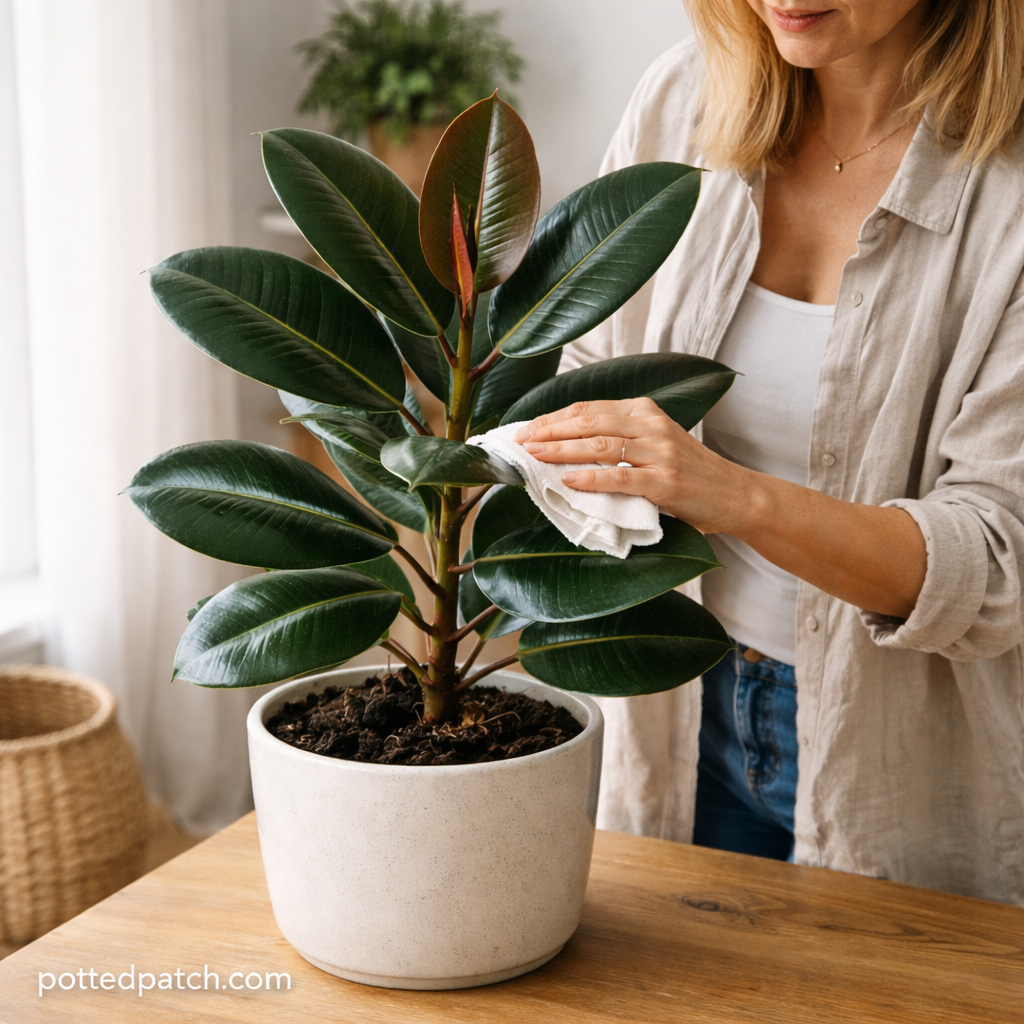
Rubber plant leaves collect dust easily, which blocks light absorption.
Every few weeks:
- Wipe leaves gently with a damp cloth
- Support large leaves while cleaning
Avoid commercial leaf shine products—they can clog leaf pores.
Quick Rubber Plant Care Checklist
Light:
- Bright, indirect light
Water:
- When top 1–2 inches are dry
Soil:
- Well-draining houseplant mix
Temperature:
- 60–80°F
Humidity:
- Moderate preferred
Fertilizer:
- Every 4–6 weeks during growing season
Repot:
- Every 1–2 years
Final Thoughts
Caring for a rubber plant indoors is simple once you master the basics: bright indirect light, careful watering, and well-draining soil.
With consistent care, your rubber plant will reward you with glossy, dramatic leaves and steady upward growth. It’s one of the most forgiving and stylish indoor plants you can add to your home.
Treat it right, and it can thrive for years.