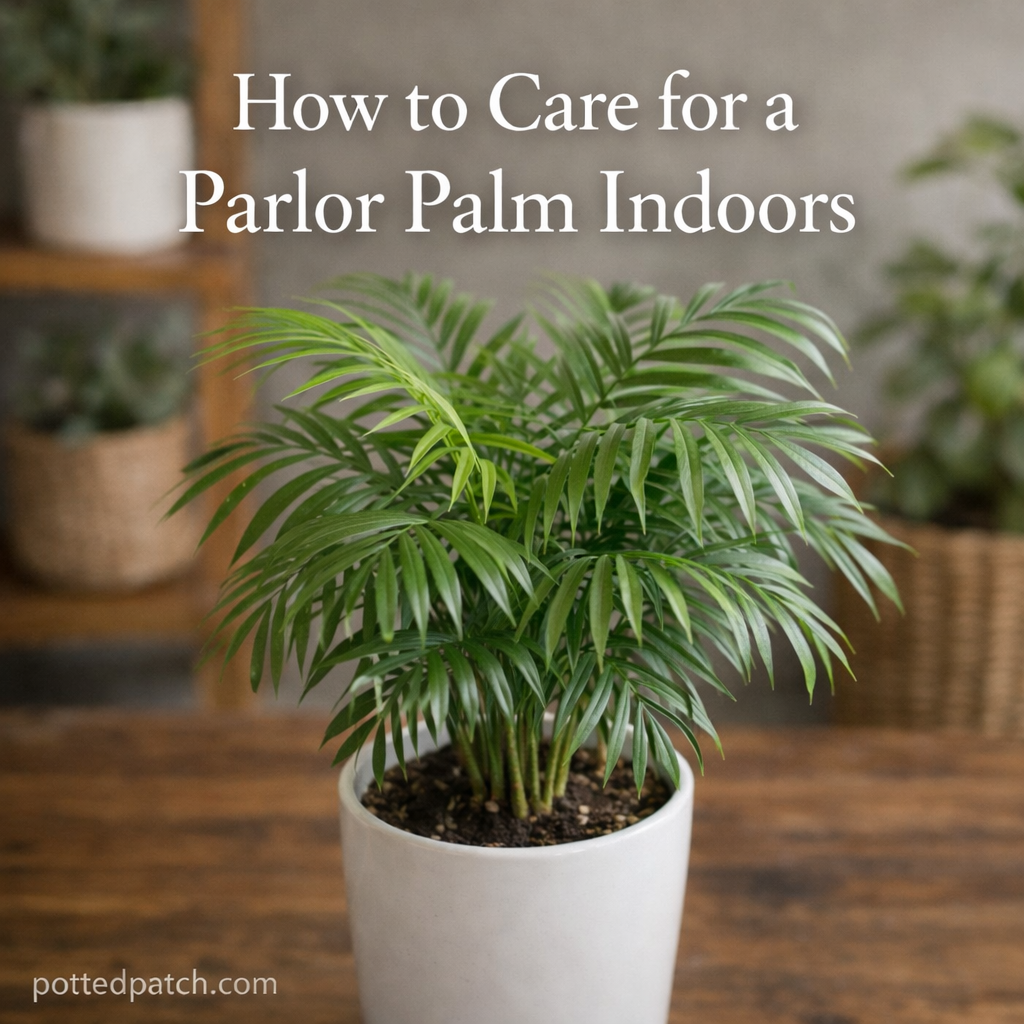
The Parlor Palm is one of the easiest and most elegant houseplants you can grow indoors. With its soft, feathery fronds and compact size, it thrives in typical home conditions and tolerates lower light better than many tropical plants.
If you want a low-maintenance plant that adds instant greenery to your space, the Parlor Palm is a perfect choice. Here’s how to care for it properly so it stays lush and healthy year round.
Understanding the Parlor Palm
Parlor Palms are slow growers that naturally adapt well to indoor environments. Unlike many tropical plants, they don’t demand intense sunlight or high humidity to survive.
That said, proper light, watering, and soil conditions make all the difference between a struggling plant and a thriving one.
Light Requirements
Parlor Palms prefer bright, indirect light but can tolerate low light.
Ideal Placement
- Near an east-facing window
- A few feet from a south- or west-facing window
- In a well-lit room with filtered light
Avoid direct sunlight. Harsh rays can scorch the delicate fronds and cause yellowing.
If growth seems slow or leaves appear pale, increase light slightly.
Watering Schedule
Parlor Palms prefer evenly moist soil — but never soggy.
How Often to Water
- Water when the top 1–2 inches of soil feel dry
- Reduce watering in fall and winter
- Never let the pot sit in standing water
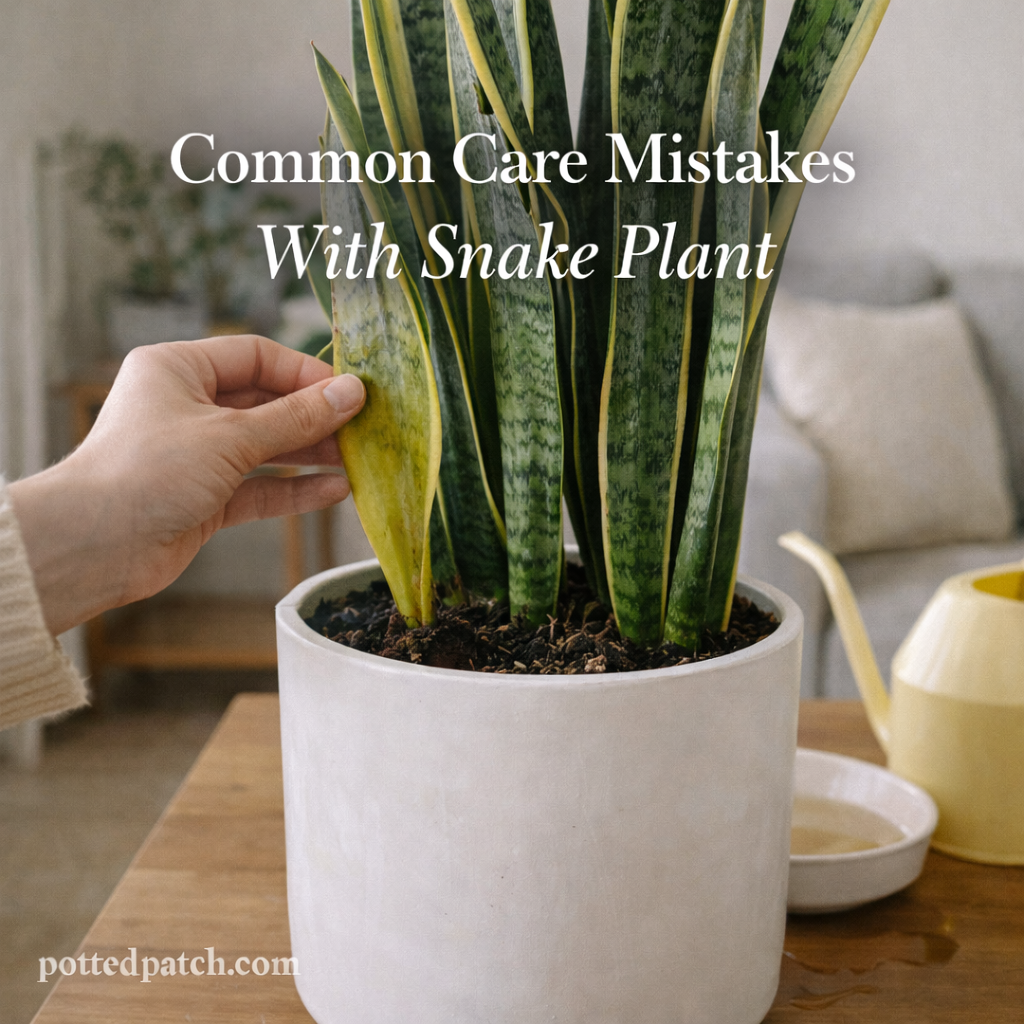
Overwatering is the most common issue. Yellow leaves and soft stems often signal too much moisture.
Underwatering typically shows up as brown, crispy leaf tips.
Soil and Drainage
Use a well-draining houseplant mix.
A peat-based mix with added perlite works well.
Make sure the pot has drainage holes. Poor drainage quickly leads to root rot.
Humidity Needs
Parlor Palms prefer moderate humidity, but they adapt well to normal indoor air.
If your home is very dry:
- Use a small humidifier nearby
- Group plants together
- Place the pot on a pebble tray with water (without the pot sitting directly in water)
Brown leaf tips often indicate dry air rather than watering problems.
Temperature Preferences
Keep your Parlor Palm in temperatures between 65–80°F.
Avoid:
- Cold drafts
- Air conditioning vents
- Heating vents
- Sudden temperature changes
Consistent warmth helps prevent stress and leaf drop.
Fertilizing
Parlor Palms are light feeders.
Feed during spring and summer only.
Fertilizer Tips
- Use a balanced liquid houseplant fertilizer
- Dilute to half strength
- Apply every 4–6 weeks
Do not fertilize in fall or winter. Growth slows during dormancy, and excess nutrients can harm the roots.
Pruning and Maintenance
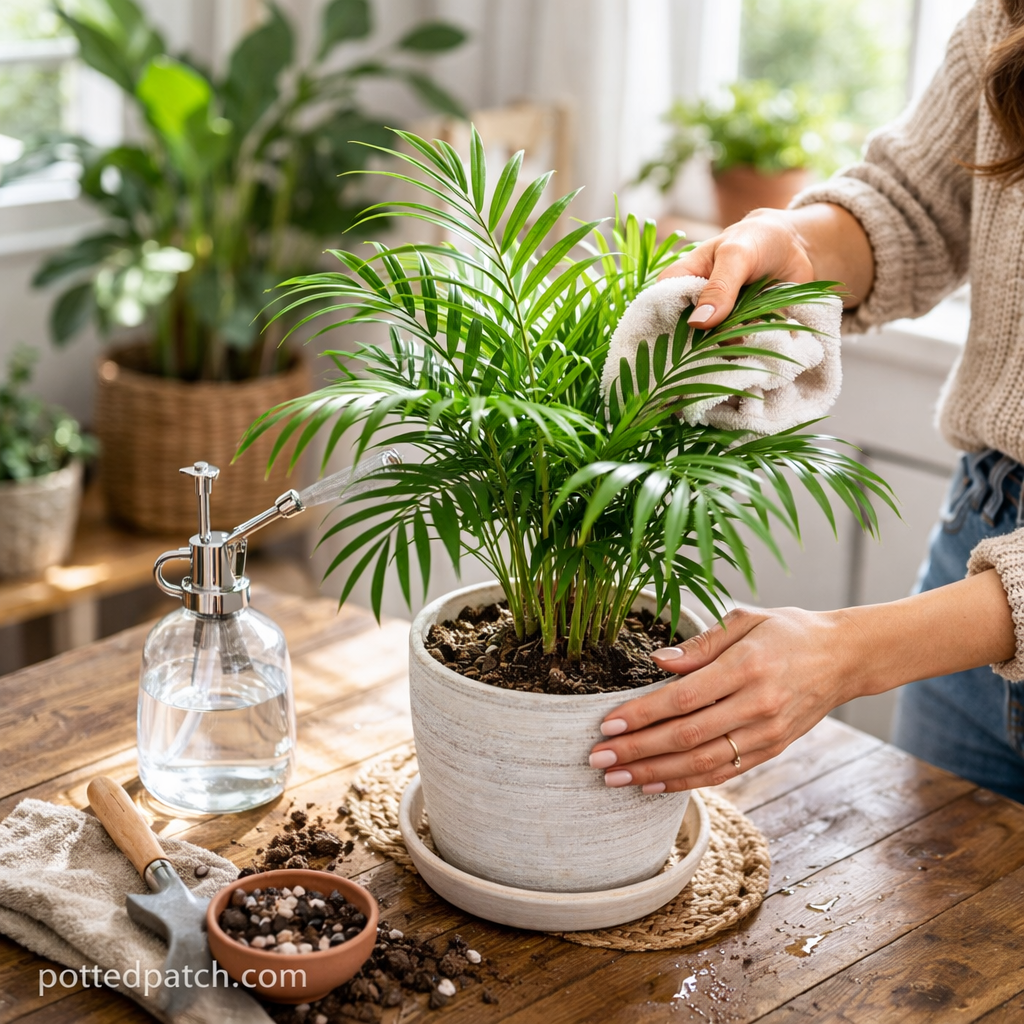
Parlor Palms do not require heavy pruning.
Only remove:
- Fully brown fronds
- Yellowed leaves
- Damaged stems
Cut close to the base using clean scissors.
Avoid trimming green fronds — they are essential for energy production.
Repotting
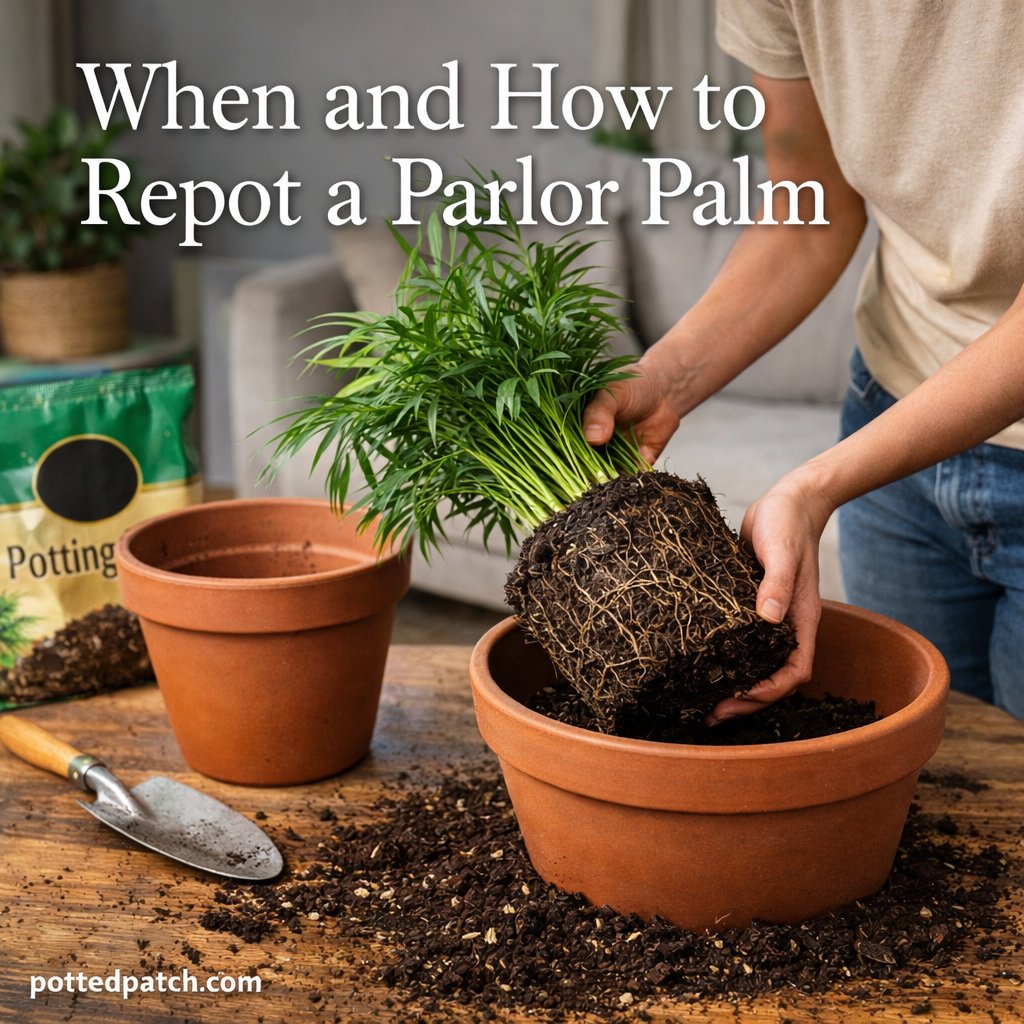
Parlor Palms prefer slightly snug roots.
Repot only every 2–3 years, or when:
- Roots grow through drainage holes
- Water drains too quickly
- Growth has completely stalled
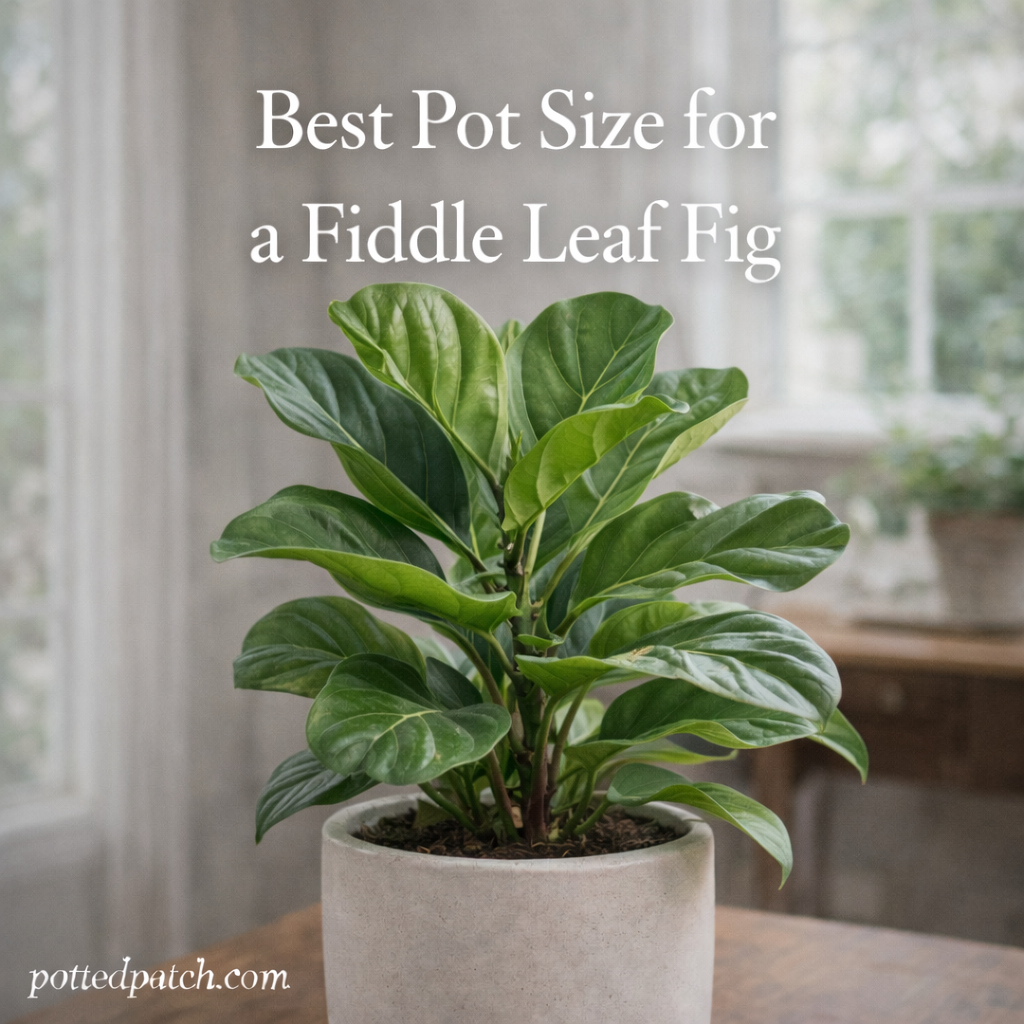
Choose a pot only 1–2 inches larger than the current one.
Common Problems and Solutions
Yellow Leaves
Usually caused by overwatering or poor drainage.
Brown Tips
Often due to dry air or inconsistent watering.
Drooping Fronds
Check soil moisture — it may be too wet or too dry.
Slow Growth
This is normal. Parlor Palms are naturally slow growers indoors.
Signs Your Parlor Palm Is Healthy
- Deep green, arching fronds
- Steady (but slow) new leaf growth
- Firm stems
- No widespread yellowing
Healthy Parlor Palms grow gradually and maintain a graceful shape without much effort.
Final Thoughts
Caring for a Parlor Palm indoors is simple when you focus on balance: moderate light, careful watering, and stable temperatures.
Avoid overwatering, don’t overfeed, and allow it to grow at its natural pace. With minimal care and consistent conditions, your Parlor Palm will remain an elegant, low-maintenance addition to your indoor space for years.