
The Money Tree (Pachira aquatica) is one of the most popular indoor plants for good reason. With its braided trunk and glossy green leaves, it adds a modern, calming touch to any room. It’s also considered a symbol of prosperity and good fortune in Feng Shui traditions.
The good news? Money Trees are relatively low maintenance — but they do have specific care preferences. If you get the basics right, your plant can thrive for years.
In this complete indoor care guide, you’ll learn exactly how to water, light, feed, and maintain your Money Tree for steady, healthy growth.
Understanding Your Money Tree’s Natural Habitat
Money Trees are native to Central and South America, where they grow in warm, humid, swampy regions.
That tells us three important things:
- They like bright, indirect light
- They prefer consistent moisture (not soggy soil)
- They thrive in moderate to high humidity
When you mimic these conditions indoors, your plant will stay strong and vibrant.
Light Requirements
Money Trees love bright, indirect light.
Best placement indoors
- Near an east-facing window
- A few feet away from a south- or west-facing window
- In a bright room with filtered sunlight
Avoid placing it in direct sun for long periods. Harsh afternoon light can scorch the leaves.
If your space is lower light, the plant will survive — but growth may slow.
Signs your Money Tree needs light adjustment
- Pale or yellowing leaves → possibly too much light
- Leggy, stretched growth → likely not enough light
- Leaf drop → sudden lighting change
Rotate your plant every few weeks to encourage even growth.
How Often to Water a Money Tree
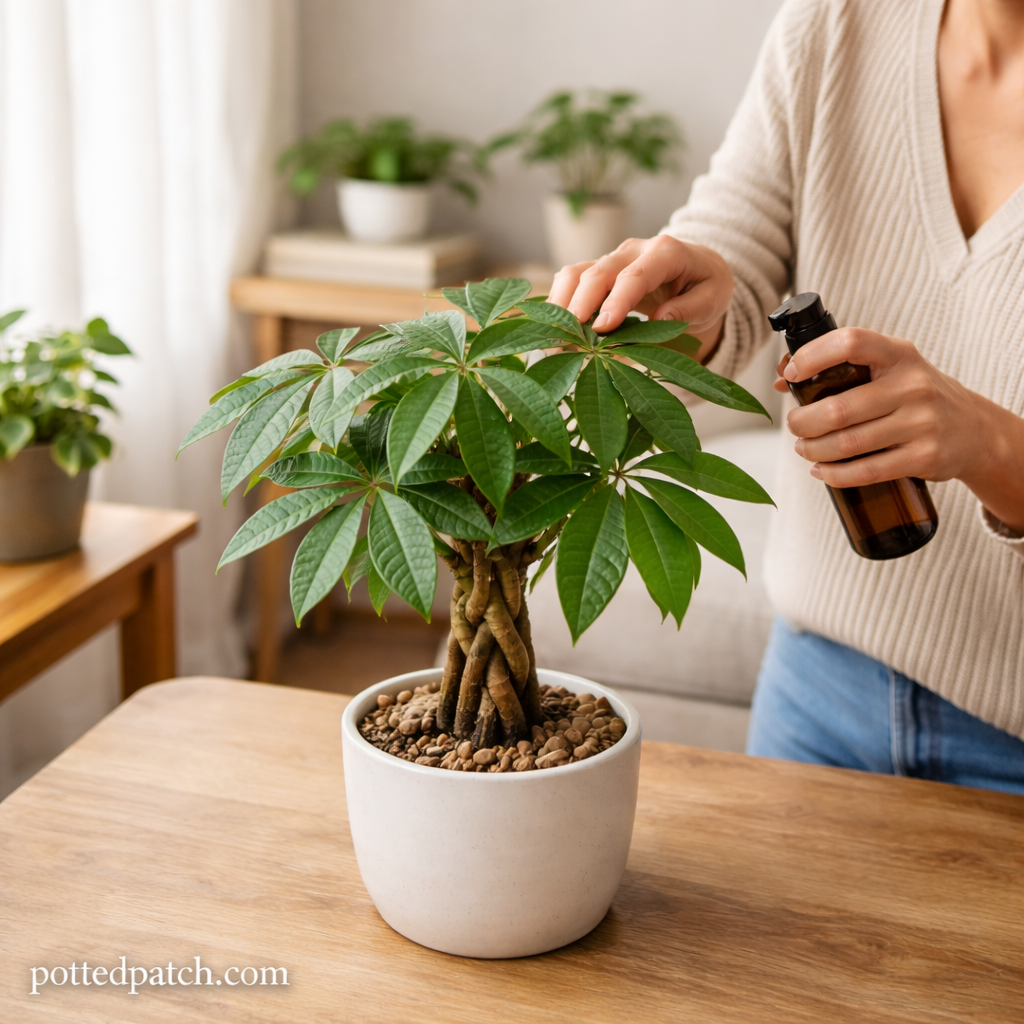
Watering is the most common mistake people make.
Money Trees like evenly moist soil — but never waterlogged.
Watering schedule
- Water when the top 2–3 inches of soil feel dry
- Typically every 1–2 weeks (depending on season and environment)
Always check the soil before watering.
How to water properly
- Use room-temperature water.
- Water slowly and evenly around the base.
- Let excess water drain completely.
- Empty the saucer after 10–15 minutes.
Never let your plant sit in standing water. This leads to root rot.
Signs of watering problems
Overwatering:
- Yellowing leaves
- Soft trunk
- Musty soil smell
Underwatering:
- Drooping leaves
- Dry, crispy edges
- Soil pulling away from pot edges
Consistency is key.
Soil and Potting Needs
Money Trees need well-draining soil.
Ideal soil mix
- Standard houseplant potting mix
- Add perlite or sand for extra drainage if needed
The pot must have drainage holes.
If your Money Tree came in a decorative container without drainage, consider repotting it into one that allows excess water to escape.
Humidity and Temperature
Money Trees prefer moderate humidity.
Ideal indoor conditions
- Temperature: 65–80°F
- Humidity: 40–60%
Keep your plant away from:
- Drafty windows
- Heating vents
- Air conditioners
If your home is dry (especially in winter), you can:
- Use a humidifier
- Place the pot on a pebble tray
- Group it near other plants
Fertilizing Your Money Tree
Feed your Money Tree during the growing season (spring and summer).
Fertilizer guidelines
- Use a balanced liquid houseplant fertilizer
- Dilute to half strength
- Feed once a month during active growth
Do not fertilize in fall or winter when growth slows.
Overfertilizing can cause leaf burn and salt buildup.
Pruning and Shaping
Money Trees respond well to light pruning.
Why prune?
- Remove yellow or damaged leaves
- Control size
- Encourage bushier growth
Use clean, sharp scissors or pruning shears.
You can also trim leggy stems just above a leaf node to promote branching.
Repotting a Money Tree
Repot every 2–3 years or when:
- Roots grow out of drainage holes
- Soil dries out extremely fast
- Growth has stalled
Choose a pot only 1–2 inches larger than the current one.
Repotting in early spring is ideal.
Common Money Tree Problems (and Solutions)
Yellow Leaves
Most often caused by overwatering or poor drainage.
Solution:
- Let soil dry more between waterings
- Ensure pot drains properly
Dropping Leaves
Can be triggered by:
- Sudden temperature changes
- Overwatering
- Underwatering
- Low light
Stability is important. Avoid moving your plant frequently.
Brown Leaf Tips
Usually caused by:
- Low humidity
- Mineral buildup from tap water
Try filtered water and increase humidity.
Placement Tips for a Healthy Indoor Money Tree
For best results, place your plant:
- In a bright living room corner
- Near a home office window
- In an entryway with filtered light
Avoid dark hallways and rooms with no natural light.
Consistency in environment helps prevent stress.
Final Thoughts
Caring for a Money Tree indoors isn’t complicated — it just requires balance.
Bright indirect light, moderate watering, good drainage, and stable temperatures will keep your plant thriving. Once you dial in those basics, your Money Tree can become one of the most reliable and attractive plants in your home.
Stick to a simple care routine, observe your plant regularly, and adjust as needed. Healthy leaves and steady growth are your signs that you’re doing it right.