Fiddle leaf figs are known for their large, glossy leaves and bold, upright growth. While they have a reputation for being finicky, they thrive indoors when given consistent care and the right environment.
The key to success isn’t complicated — it’s about stability. Once you understand their needs, caring for a fiddle leaf fig becomes much easier.
Here’s how to care for a fiddle leaf fig indoors and keep it healthy long term.
Provide Bright, Consistent Light
Light is the most important factor in fiddle leaf fig care.
These plants need bright, indirect light to maintain strong growth.
Ideal placement
- Near a south- or west-facing window
- Directly in front of a bright window with sheer curtains
- Within a few feet of strong natural light
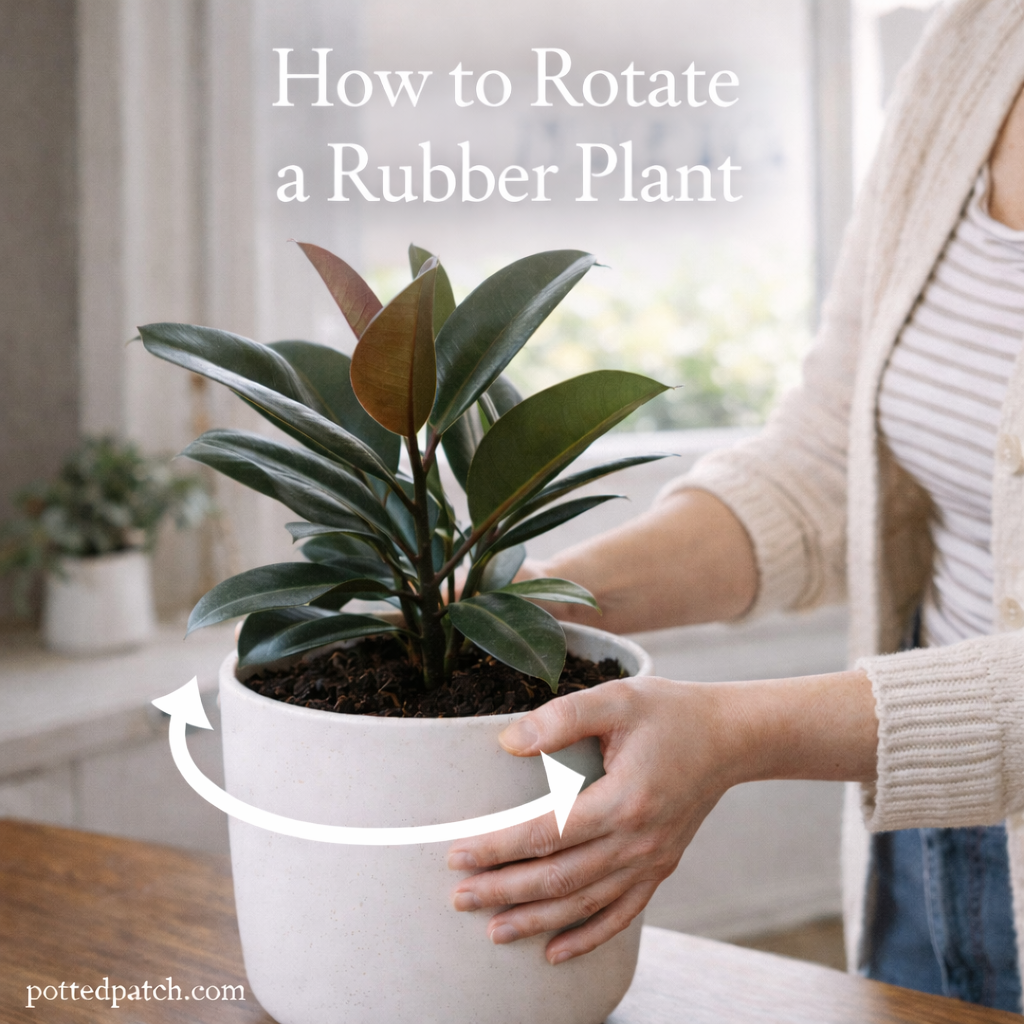
Without enough light, leaves may drop or growth may stall. Rotate the plant every few weeks to encourage even growth.
Avoid placing it in dark corners or far from windows.
Water Properly (Not Too Much, Not Too Little)
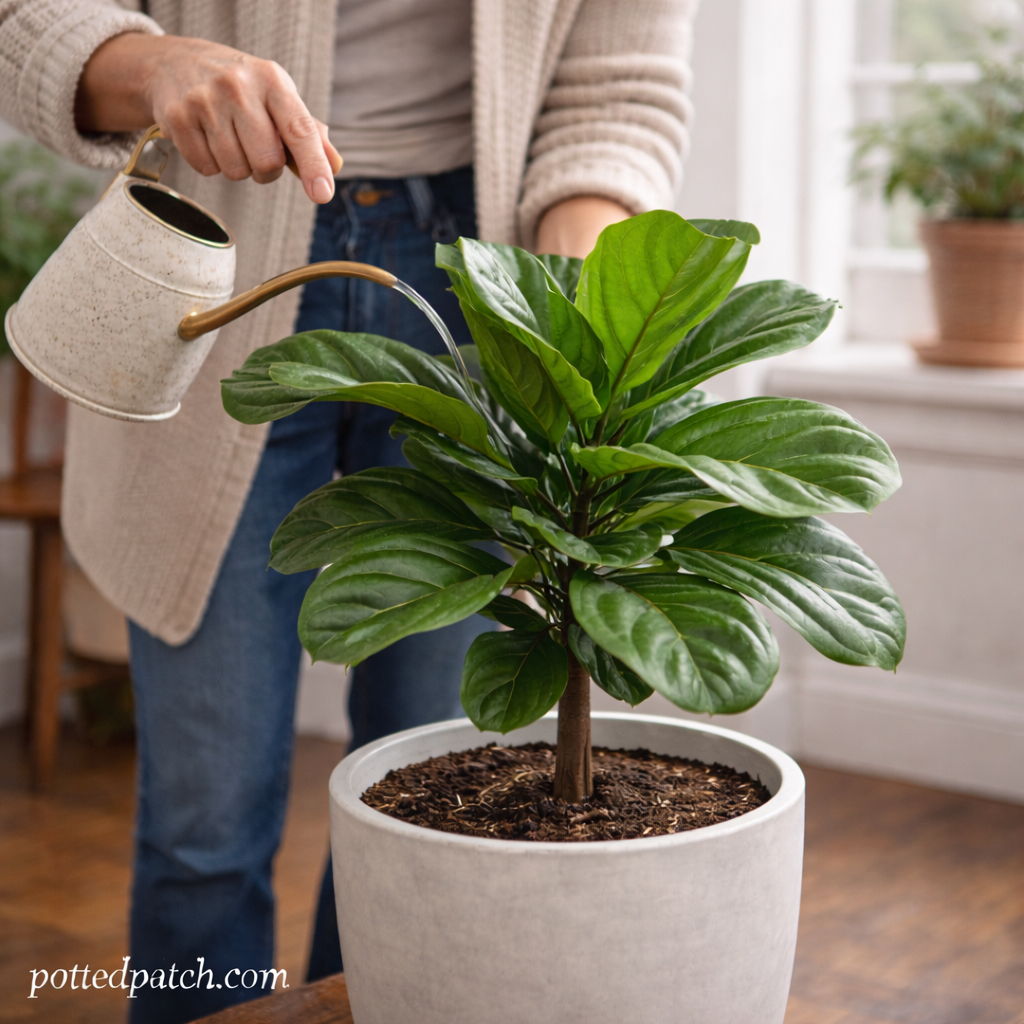
Fiddle leaf figs are sensitive to watering inconsistencies.
Watering guidelines
- Water when the top 2 inches of soil feel dry
- Water thoroughly until excess drains out
- Empty the saucer after watering
Overwatering is the most common issue and can cause root rot. Underwatering may lead to drooping or leaf drop.
Consistency is more important than frequency.
Use Well-Draining Soil
Healthy roots are essential for strong foliage.
Use a loose, well-draining potting mix designed for indoor plants. You can improve drainage by adding:
- Perlite
- Orchid bark
- Coarse sand
Good airflow in the soil prevents soggy conditions and supports steady growth.
Choose the Right Container
A proper container protects root health.
Look for:
- Drainage holes
- A sturdy base for stability
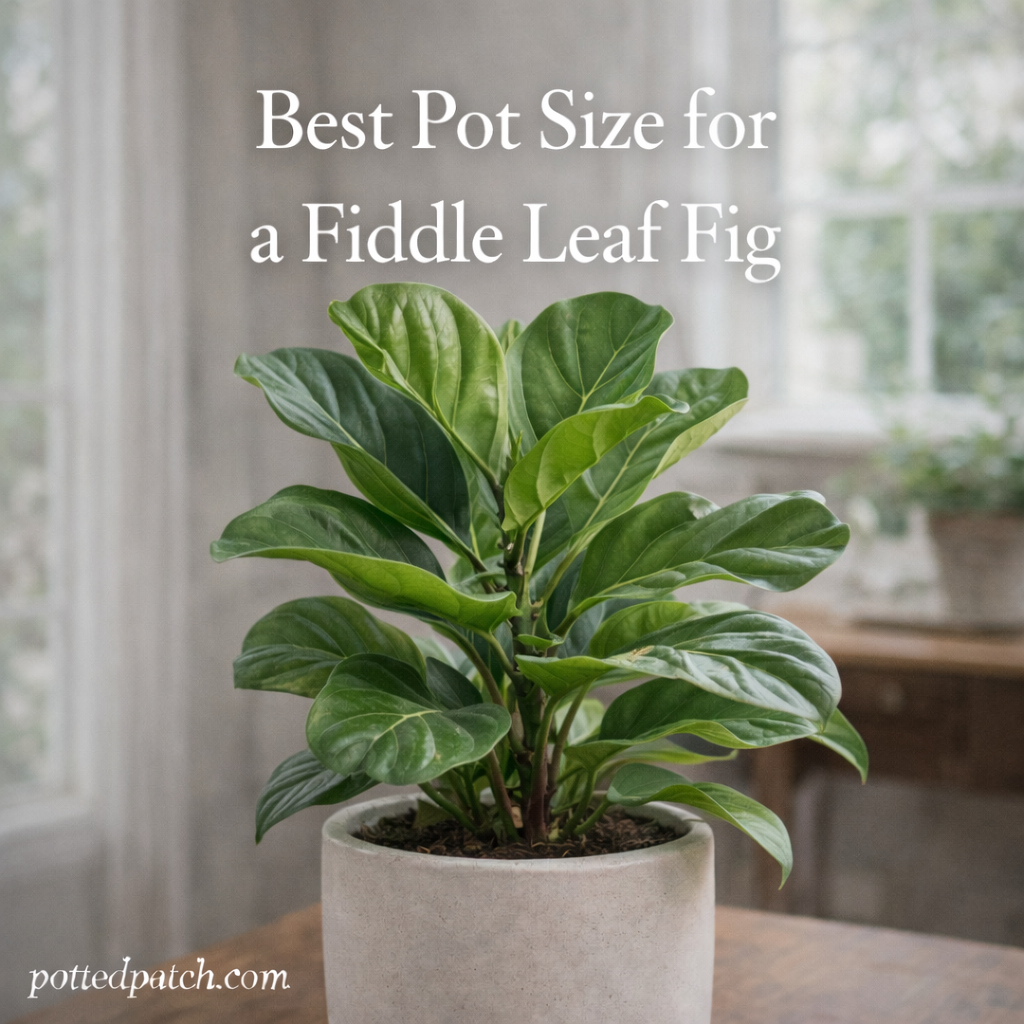
- A pot size only 1–2 inches larger when repotting
Fiddle leaf figs dislike sitting in excess moisture, so drainage is critical.
Repot every 1–2 years as the plant grows.
Maintain Stable Temperatures
Fiddle leaf figs prefer temperatures between 65–85°F.
Avoid placing them near:
- Drafty windows
- Air conditioning vents
- Heating vents
- Exterior doors
Sudden temperature changes can cause leaf drop.
Keep the environment steady for best results.
Provide Moderate Humidity
These plants appreciate moderate humidity, especially in dry indoor climates.
If your home is very dry:
- Use a humidifier
- Group plants together
- Place a pebble tray nearby
Avoid excessive misting, which can cause spotting on leaves.
Clean the Leaves Regularly
Large leaves collect dust, which reduces light absorption.
Wipe leaves gently with a damp cloth every few weeks.
Clean leaves:
- Improve photosynthesis
- Enhance appearance
- Help you spot early pest issues
Healthy leaves stay glossy and vibrant.
Fertilize During Growing Season
Feed your fiddle leaf fig during spring and summer.
Feeding routine
- Use a balanced liquid houseplant fertilizer
- Apply every 4–6 weeks
- Dilute according to label instructions
Avoid fertilizing in fall and winter when growth slows.
Too much fertilizer can cause brown leaf edges.
Prune for Shape and Strength
Pruning encourages branching and fuller growth.
You can prune:
- Leggy stems
- Damaged leaves
- Uneven growth
Use clean, sharp shears and make cuts above a leaf node.
Pruning helps maintain a balanced indoor shape.
Watch for Common Problems
Monitor your plant for:
- Yellowing leaves (overwatering)
- Brown spots (watering or fungal issues)
- Leaf drop (light or temperature stress)
- Drooping (watering imbalance)
Early adjustments prevent long-term damage.
Final Thoughts
Caring for a fiddle leaf fig indoors requires consistency more than perfection.
Provide bright light.
Water carefully.
Ensure good drainage.
Keep temperatures stable.
When given steady conditions, a fiddle leaf fig becomes a striking and rewarding indoor centerpiece.
With the right routine, your plant can grow tall, strong, and beautifully leafy for years.