

Ferns bring soft texture and vibrant greenery into your home — but they’re a little more particular than cacti or succulents.
If your fern has crispy edges, drooping fronds, or shedding leaves, it’s usually reacting to light, water, or humidity.
The good news? Once you understand what ferns need, they’re incredibly rewarding houseplants.
Here’s a complete guide to caring for a fern indoors.
Understand What Ferns Naturally Prefer
Most common indoor ferns (like Boston ferns and maidenhair ferns) come from humid forest environments.
They prefer:
- Indirect light
- Consistently moist soil
- High humidity
- Moderate temperatures
Think “shady forest floor,” not sunny windowsill.
Light Requirements
Ferns thrive in bright, indirect light.
Ideal Placement
- Near a north- or east-facing window
- A few feet back from a south-facing window
- In filtered light through sheer curtains
Avoid direct sunlight — it scorches delicate fronds and causes browning.
Too little light can cause sparse, weak growth.
How to Water a Fern Properly
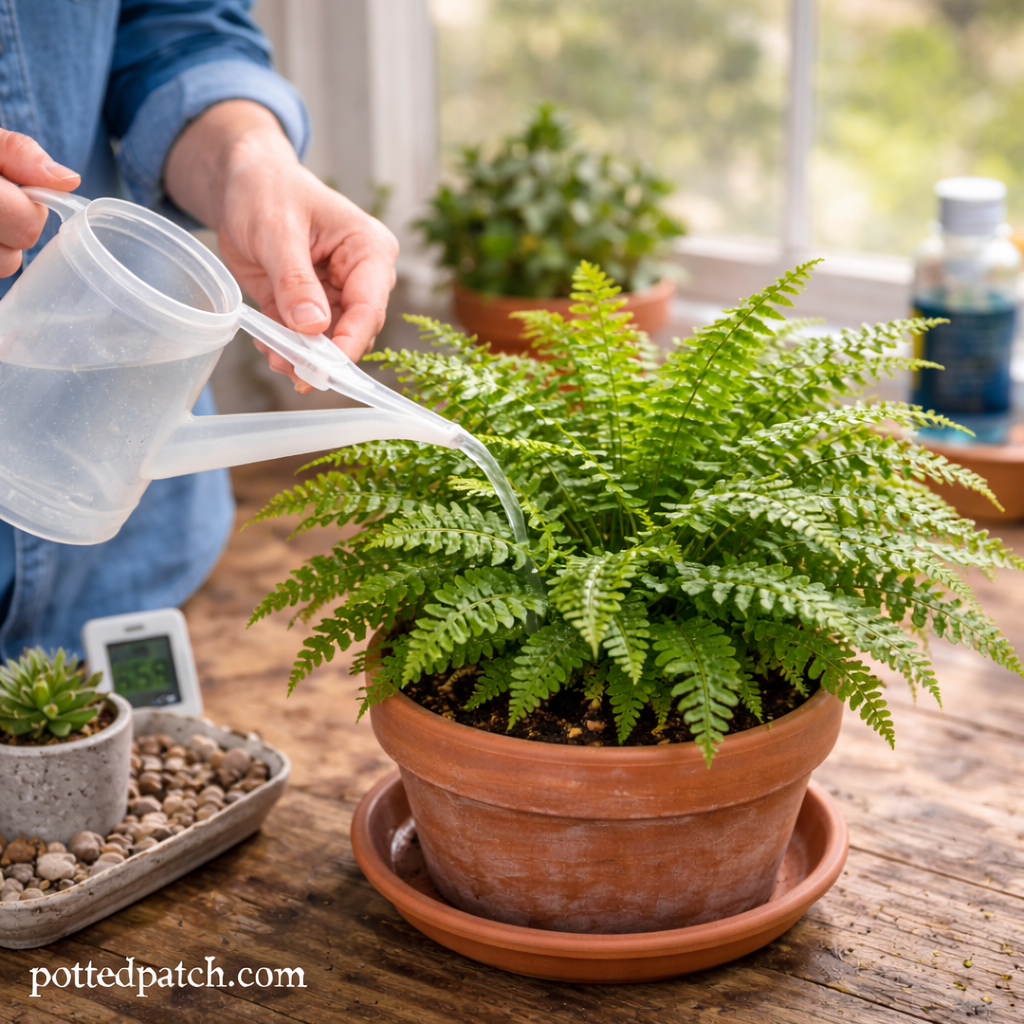
Watering is the most important part of fern care.
Ferns prefer evenly moist soil — not soggy and not dry.
Watering Tips
- Water when the top half-inch of soil feels slightly dry
- Keep soil consistently damp
- Never let the plant dry out completely
- Use room-temperature water
If the soil dries too much, fronds may turn crispy quickly.
Humidity Is Essential
Low humidity is the #1 reason indoor ferns struggle.
Most homes are too dry, especially in winter.
Ways to Increase Humidity
- Use a humidifier
- Place the pot on a pebble tray with water
- Group plants together
- Keep in bathrooms with natural light
Ferns prefer humidity levels above 50%.
If leaf tips turn brown, check humidity first.
Choosing the Right Soil
Ferns like rich, well-draining soil that retains moisture without becoming waterlogged.
Look for potting mixes that:
- Contain peat or coco coir
- Include perlite for drainage
- Stay lightly moist but airy
Avoid heavy garden soil.
Temperature Needs
Ferns prefer moderate indoor temperatures.
Ideal range:
- 60–75°F
Avoid:
- Cold drafts
- Air conditioning vents
- Direct heat from radiators
Sudden temperature swings can cause leaf drop.
Fertilizing Your Fern
Ferns are light feeders.
Fertilizer Guidelines
- Feed once per month in spring and summer
- Use diluted liquid houseplant fertilizer
- Avoid feeding in fall and winter
Over-fertilizing can burn roots and damage fronds.
Repotting a Fern
Repot when:
- Roots fill the container
- Water drains too quickly
- Growth slows
Choose a pot only 1–2 inches larger.
Repotting refreshes soil and encourages new growth.
Common Fern Problems and Fixes
Brown, Crispy Leaves
Usually caused by:
- Low humidity
- Underwatering
- Direct sunlight
Increase moisture and adjust placement.
Yellowing Leaves
Often due to:
- Overwatering
- Poor drainage
- Root stress
Check soil condition and drainage holes.
Drooping Fronds
Common causes:
- Dry soil
- Temperature stress
Rehydrate soil slowly and stabilize the environment.
Pruning and Maintenance
Remove:
- Dead fronds
- Yellow leaves
- Crispy edges
Use clean scissors and trim at the base.
Regular pruning encourages fuller growth.
Best Ferns for Indoor Growing
If you’re new to ferns, start with easier varieties:
- Boston fern
- Bird’s nest fern
- Kimberly Queen fern
Maidenhair ferns are beautiful but more sensitive to dryness.
Quick Fern Care Checklist
To keep your fern thriving:
- Bright, indirect light
- Consistently moist soil
- High humidity
- Moderate temperatures
- Light feeding in growing season
Consistency is key.
Final Thoughts
Ferns aren’t difficult — they’re just particular.
Give them:
- Moist soil
- Humid air
- Gentle light
And they’ll reward you with lush, feathery greenery that softens any indoor space.
Once you dial in humidity and watering, indoor fern care becomes simple and predictable.