
Calatheas are known for their bold leaf patterns, rich colors, and dramatic foliage movement. Often called “prayer plants,” their leaves rise and lower throughout the day in response to light.
While beautiful, calatheas have a reputation for being a bit particular. The good news? Once you understand their needs, they can thrive indoors with consistent care.
Here’s exactly how to keep a calathea healthy inside your home.
Understanding Calathea Basics
Calatheas are tropical plants native to warm, humid environments. Indoors, they require:
- Bright, indirect light
- Consistent moisture (but not soggy soil)
- High humidity
- Stable temperatures
They are sensitive to environmental stress, which means small adjustments make a big difference.
Light Requirements
Calatheas prefer bright, indirect light.
Ideal Placement
- Near an east-facing window
- A few feet back from a south or west window
- In a bright room with filtered light
Avoid direct sunlight. Harsh rays can cause:
- Faded leaf patterns
- Brown patches
- Curling leaves
Too little light, however, slows growth and reduces vibrancy.
Watering: The Most Important Factor
Calatheas like evenly moist soil — not dry and not waterlogged.
How to Water Properly
- Check the top 1 inch of soil.
- Water when it feels slightly dry.
- Water thoroughly until excess drains out.
- Empty the saucer.
Never let the plant sit in standing water.
Pro Tip
Calatheas are sensitive to chemicals in tap water. If possible, use:
- Filtered water
- Distilled water
- Rainwater
Brown leaf edges often result from mineral buildup.
Humidity Is Essential
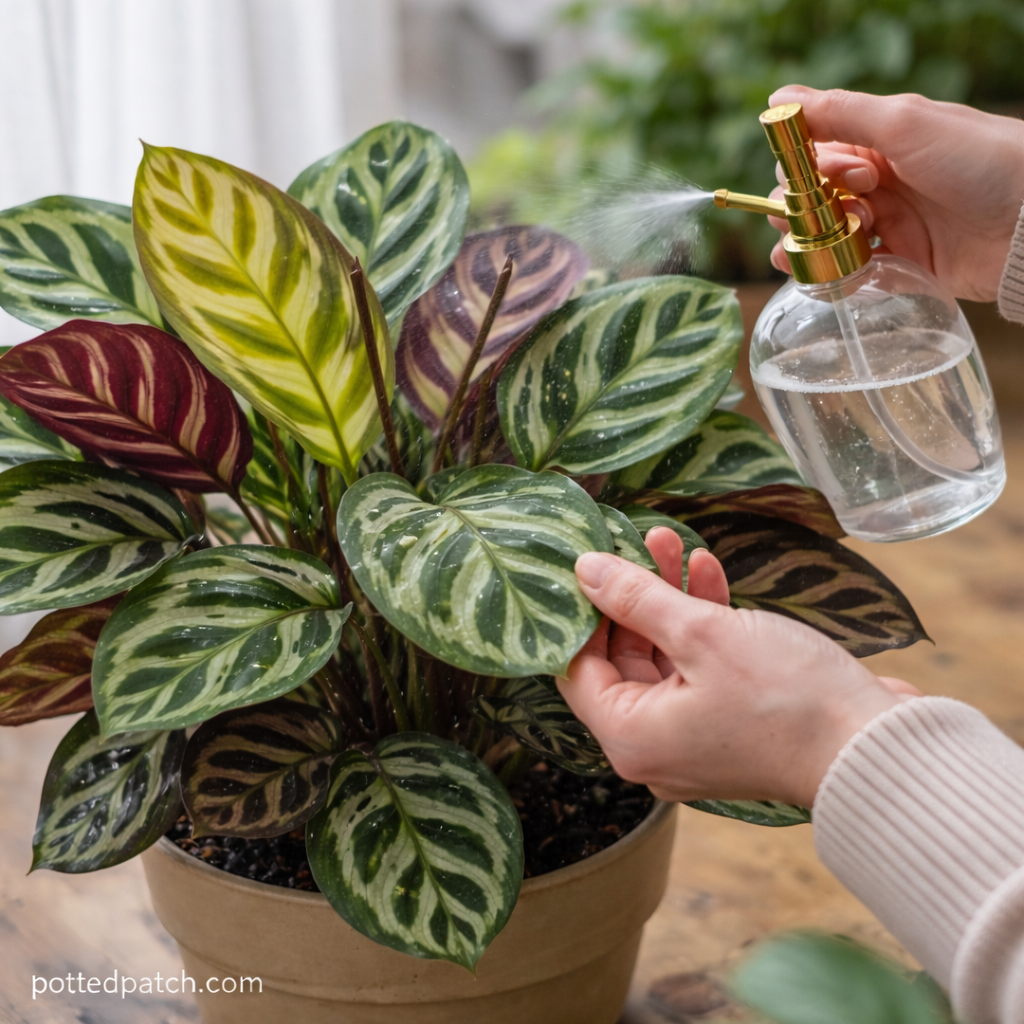
Calatheas thrive in high humidity — ideally 50–70% or higher.
Low humidity is the most common reason for:
- Crispy leaf edges
- Curling leaves
- Browning tips
Ways to Increase Humidity
- Use a humidifier
- Group plants together
- Place on a pebble tray
- Keep away from heating vents
In dry winter climates, a humidifier can make a noticeable difference.
Temperature Preferences
Calatheas prefer:
- 65–80°F
- Stable indoor temperatures
- No cold drafts
Avoid placing near:
- Air conditioning vents
- Exterior doors
- Drafty windows
Sudden temperature changes can stress the plant quickly.
Soil and Drainage
Calatheas prefer well-draining but moisture-retentive soil.
A good mix includes:
- High-quality potting soil
- Perlite
- Coco coir or peat
The goal is balance: soil should retain some moisture but never stay soggy.
Always use a pot with drainage holes.
Fertilizing Schedule
Feed during active growth (spring and summer).
Fertilizing Guidelines
- Use a balanced liquid fertilizer
- Dilute to half strength
- Feed every 4–6 weeks
- Stop fertilizing in fall and winter
Overfertilizing can cause leaf burn and browning tips.
Pruning and Maintenance
Calatheas don’t require heavy pruning.
Routine Care
- Remove yellow or damaged leaves at the base.
- Wipe dust from leaves gently with a damp cloth.
- Rotate the plant every few weeks for even growth.
Keeping leaves clean helps maintain vibrant patterns.
Common Calathea Problems
Brown Leaf Edges
Usually caused by:
- Low humidity
- Hard tap water
- Fertilizer buildup
Curling Leaves
Often a sign of:
- Underwatering
- Low humidity
- Temperature stress
Yellow Leaves
Can indicate:
- Overwatering
- Poor drainage
- Root issues
Adjusting watering and humidity typically resolves most issues.
How Often Should a Calathea Grow?
During spring and summer:
- New leaves may appear every few weeks.
- Leaves unfurl slowly and dramatically.
Growth slows in fall and winter, which is completely normal.
Final Thoughts
Caring for a calathea indoors comes down to consistency:
- Bright, indirect light
- Even moisture
- High humidity
- Stable temperatures
They may be slightly more sensitive than other houseplants, but their stunning foliage makes the effort worthwhile.
Once you dial in their environment, calatheas reward you with vibrant, eye-catching leaves year round.