
Cacti are some of the easiest houseplants to grow — but they’re also some of the most misunderstood.
Many indoor cactus problems come from too much care, not too little. Overwatering, poor lighting, and the wrong soil are the most common mistakes.
If you want a healthy, thriving cactus indoors, this guide covers everything you need to know.
Choosing the Right Cactus for Indoors
Not all cacti are the same. Some prefer intense desert sun, while others adapt better to indoor environments.
Great beginner-friendly indoor cactus types include:
- Barrel cactus
- Bunny ear cactus
- Christmas cactus (a tropical cactus)
- Star cactus
- Mammillaria varieties
When buying a cactus, choose one with:
- Firm, plump flesh
- No soft or mushy spots
- No blackened areas
- No visible pests
Healthy plants are easier to maintain long term.
Light Requirements for Indoor Cactus
Light is the most important factor.
Most cacti need bright, direct sunlight for several hours daily.
Ideal Placement
- South-facing window (best option)
- West-facing window (strong afternoon light)
- Bright room with consistent sunlight
If your cactus stretches, leans, or looks pale, it’s not getting enough light.
Signs of Too Little Light
- Elongated growth (etiolation)
- Thin, weak stems
- Faded color
If natural light is limited, consider a grow light placed 6–12 inches above the plant.
How Often to Water a Cactus Indoors
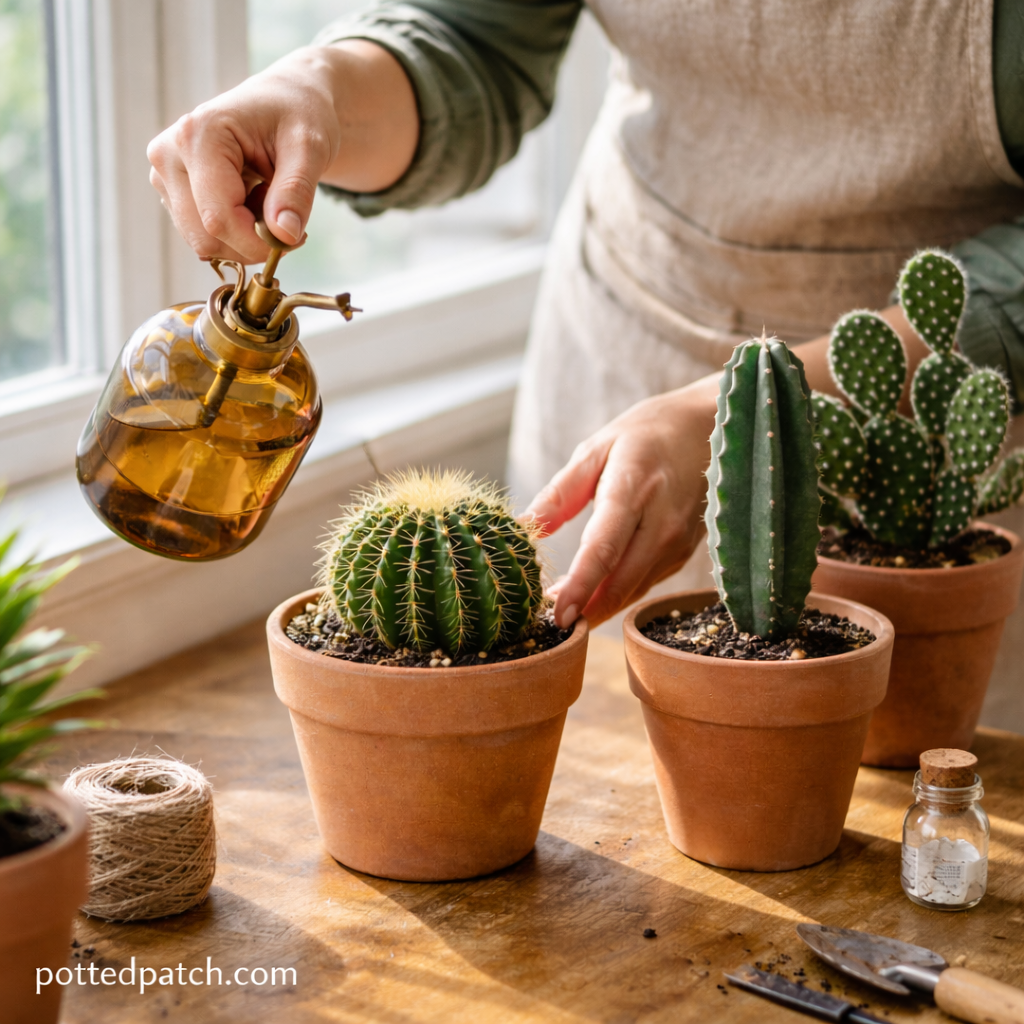
Overwatering is the #1 cactus killer.
Cacti store water in their stems, so they prefer dry conditions between waterings.
Basic Watering Rule
Water thoroughly — then let the soil dry out completely before watering again.
In most homes:
- Spring & summer: every 2–3 weeks
- Fall & winter: every 4–6 weeks
Always check the soil first. If it’s still damp, wait.
How to Water Properly
- Water until it drains from the bottom.
- Empty the drainage tray after 10–15 minutes.
- Do not mist the plant.
Never let a cactus sit in standing water.
Use the Right Soil and Pot
Regular potting soil holds too much moisture.
Cacti need fast-draining soil that mimics desert conditions.
Best Soil Mix
- Cactus/succulent mix
- Or standard potting soil mixed with:
- Sand
- Perlite
- Pumice
The pot must have drainage holes.
Terracotta pots are ideal because they allow excess moisture to evaporate faster.
Temperature and Humidity Needs
Most indoor cacti prefer:
- Daytime temperatures: 65–85°F
- Night temperatures: slightly cooler
- Low humidity
Avoid placing cacti near:
- Heating vents
- Air conditioners
- Drafty windows
Stable conditions help prevent stress.
Fertilizing an Indoor Cactus
Cacti don’t need much fertilizer.
During active growing season (spring and summer):
- Use a diluted cactus fertilizer
- Feed once every 4–6 weeks
Do not fertilize during fall or winter dormancy.
Over-fertilizing can cause weak, unnatural growth.
Repotting Your Cactus
Cacti grow slowly and only need repotting every 2–3 years.
Signs it’s time to repot:
- Roots growing out of drainage holes
- Soil drying too quickly
- Plant becoming top-heavy
When repotting:
- Use fresh cactus soil.
- Choose a pot only slightly larger than the current one.
- Wait about one week before watering after repotting.
This allows roots to settle and prevents rot.
Common Indoor Cactus Problems
Even low-maintenance plants can run into trouble.
Soft or Mushy Spots
Likely cause: overwatering or root rot.
Solution: reduce watering and inspect roots.
Wrinkled or Shriveled Appearance
Likely cause: underwatering.
Solution: water thoroughly and resume proper schedule.
Leaning Toward One Side
Likely cause: uneven light exposure.
Solution: rotate plant every 1–2 weeks.
Yellowing
Could be overwatering or insufficient light.
Check soil moisture and adjust lighting.
Seasonal Dormancy Matters
Many cacti go dormant in fall and winter.
During dormancy:
- Water less frequently
- Stop fertilizing
- Keep in bright light
Respecting dormancy improves flowering and long-term health.
Quick Indoor Cactus Care Checklist
- Bright, direct sunlight
- Well-draining cactus soil
- Pot with drainage holes
- Water only when soil is fully dry
- Minimal fertilizer
- Low humidity
Keep it simple — cacti thrive on neglect.
Final Thoughts
Caring for a cactus indoors isn’t complicated. The biggest key is restraint.
Give it plenty of light.
Avoid overwatering.
Use fast-draining soil.
Respect its natural growth cycle.
When you match its desert roots, your cactus will reward you with strong growth — and sometimes even beautiful blooms.