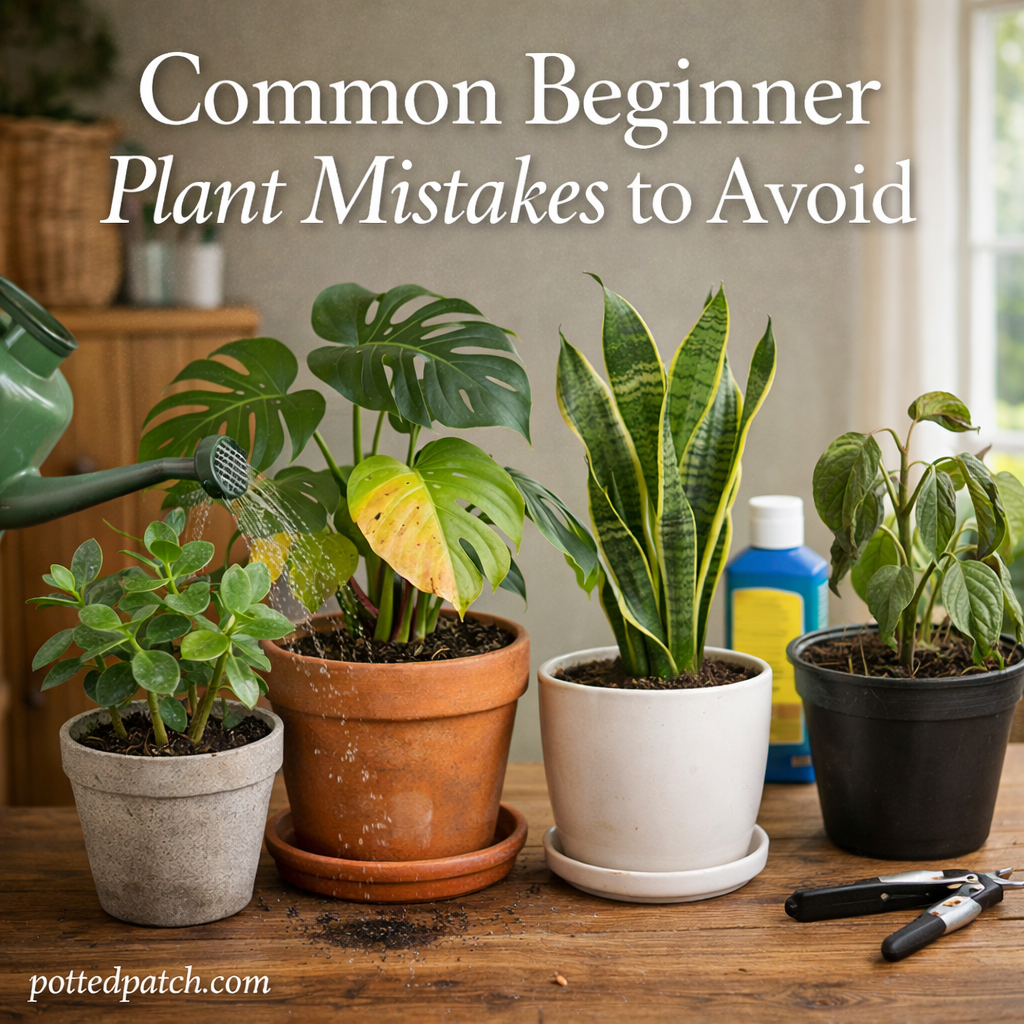
Overwatering is the number one mistake new plant owners make—and it’s also one of the easiest to fix once you understand what’s actually happening below the soil. Most houseplants don’t die from neglect; they die from roots sitting in water too long.
This beginner-friendly guide explains why overwatering happens, how to recognize it early, and simple habits that will keep your plants healthy and growing.
Why Overwatering Is So Common for Beginners
Overwatering usually comes from good intentions.
Many beginners assume:
- Drooping leaves mean the plant needs water
- A strict watering schedule is helpful
- More water equals better care
In reality, plant roots need oxygen just as much as they need moisture. Too much water fills the air pockets in soil, leading to stressed or rotting roots.
Understand What Overwatering Actually Means
Overwatering is not about how often you water—it’s about how long the soil stays wet.
Overwatering happens when:
- Soil never fully dries
- Pots don’t drain properly
- Watering happens before roots need it
A plant can be overwatered even if you only water once a week.
Learn to Check the Soil Before Watering
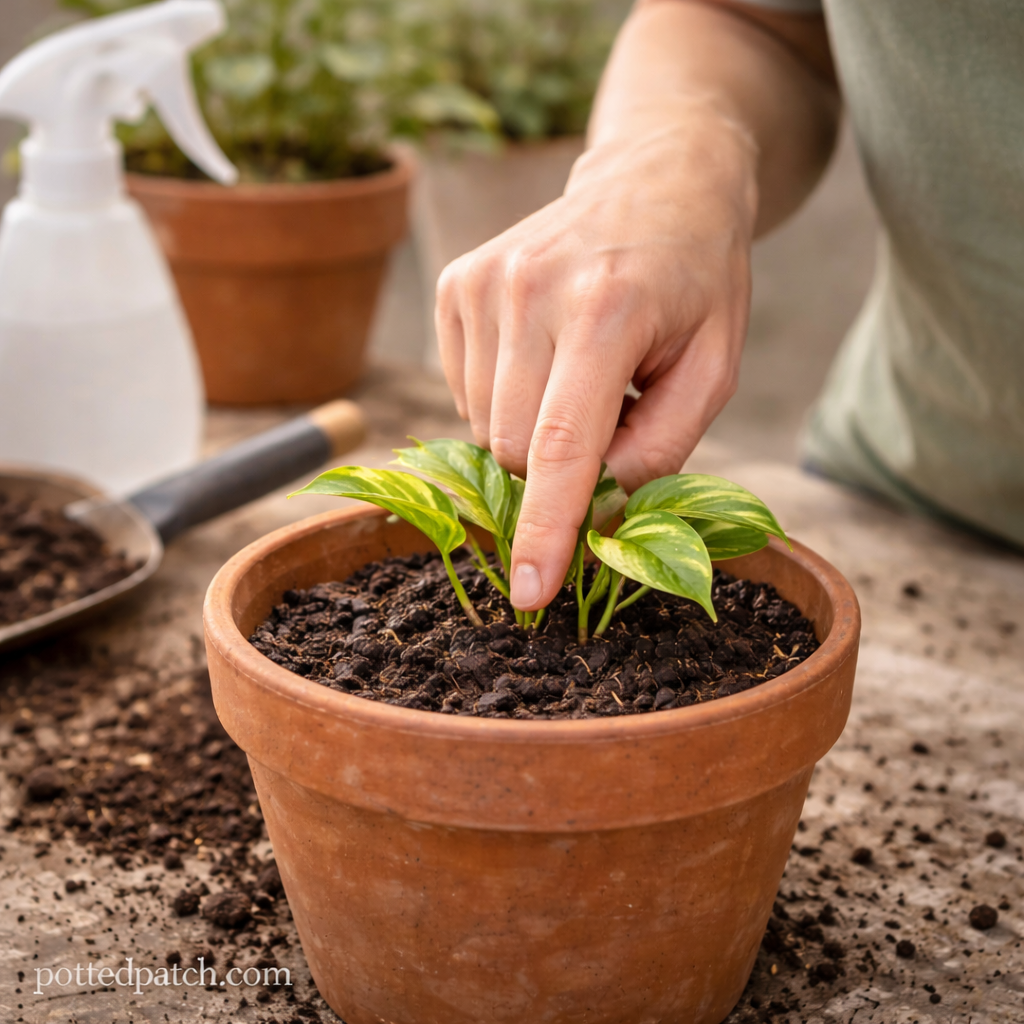
Never water a plant without checking the soil first.
Beginner-friendly methods:
- Finger test: Insert your finger 1–2 inches into the soil
- Wooden stick test: If it comes out damp or dark, wait
- Pot weight test: Light pots usually mean dry soil
If the top layer is still moist, hold off—even if it’s been “a while.”
Always Use Pots With Drainage Holes
Drainage is non-negotiable for beginners.
Without drainage holes:
- Excess water has nowhere to go
- Roots sit in stagnant moisture
- Root rot becomes much more likely
If you love decorative pots without holes, use them as cache pots and keep plants in nursery pots inside.
Match Watering to the Plant Type
Not all plants want the same amount of water.
General guidelines:
- Succulents & cacti: Let soil dry completely
- Tropical plants: Allow top 1–2 inches to dry
- Ferns & moisture lovers: Keep soil lightly moist, not soggy
When in doubt, underwatering is safer than overwatering.
Use the Right Soil Mix
Soil plays a huge role in water retention.
Poor soil signs:
- Soil stays wet for days
- Water pools on the surface
- Soil feels compacted or muddy
Better options:
- Use well-draining potting mixes
- Add perlite or bark for airflow
- Avoid garden soil indoors
Good soil lets excess water move through instead of trapping it.
Water Thoroughly, Then Stop
One common beginner mistake is watering a little bit too often.
Better technique:
- Water until it drains from the bottom
- Empty the saucer
- Wait until soil dries before watering again
This encourages strong roots and prevents shallow, weak growth.
Watch the Leaves for Early Warning Signs
Plants often show signs before serious damage occurs.
Common overwatering symptoms:
- Yellowing leaves
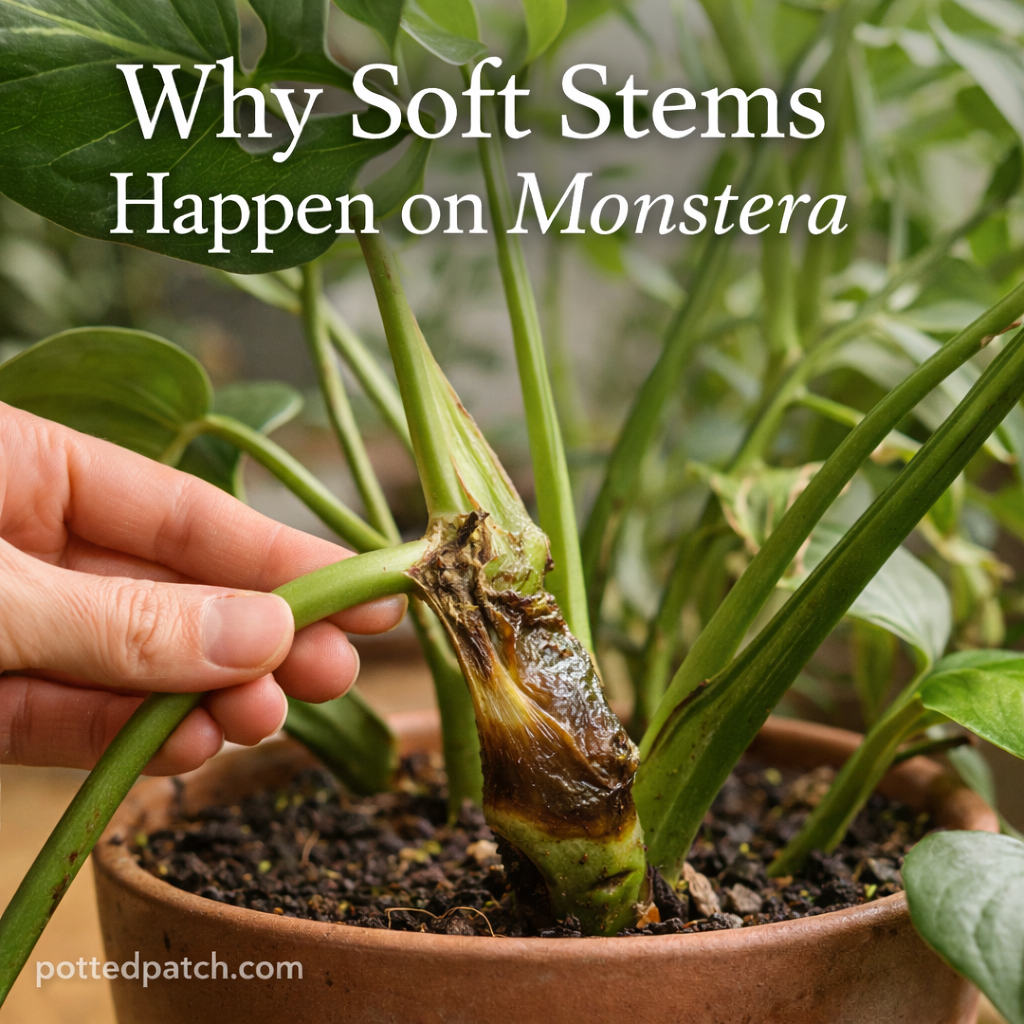
- Soft or mushy stems
- Leaves dropping despite wet soil
- Musty smell from soil
If you see these, stop watering immediately and let the soil dry.
Adjust for Season and Environment
Plants don’t need the same amount of water year-round.
Water less when:
- It’s winter
- Light levels are low
- Growth slows
- Temperatures drop
Water slightly more when:
- Light is bright
- Growth is active
- Temperatures are warm
Seasonal adjustment is key to long-term success.
A Simple Beginner Watering Rule
If you’re unsure, follow this rule:
When in doubt, wait one more day.
Most houseplants recover easily from slight dryness but struggle to bounce back from root rot.
Final Thoughts
Avoiding overwatering as a beginner isn’t about memorizing schedules—it’s about observation. By checking soil, using proper drainage, and learning your plant’s needs, you’ll prevent the most common cause of houseplant failure.
Slow down, let the soil guide you, and your plants will do the rest. 🌱