
Snake plants are known for surviving neglect, but watering them correctly is still essential for long-term health. Overwatering is the most common reason snake plants decline, while underwatering is rarely fatal. Understanding how often to water a snake plant depends on light, pot size, soil, and season—not a fixed schedule.
This guide explains exactly when to water, how to check moisture properly, and how to adjust watering throughout the year.
Why Snake Plants Need Infrequent Watering
Snake plants store water in their thick, upright leaves and rhizomes. This allows them to go long periods without moisture and makes them highly sensitive to excess water.
Watering too often can lead to:
- Root rot
- Mushy or collapsing leaves
- Fungal growth in the soil
- Slow or stalled growth
It’s always safer to underwater a snake plant than to overwater it.
General Watering Frequency for Snake Plants
While conditions vary, these ranges work for most indoor environments.
Typical watering frequency:
- Bright indirect light: every 2–3 weeks
- Medium light: every 3–4 weeks
- Low light: every 4–6 weeks
These are guidelines, not rules. Always check the soil before watering.
How to Know When a Snake Plant Needs Water
Check the Soil Depth
Snake plants should dry out almost completely between waterings.
How to test:
- Insert your finger 2–3 inches into the soil.
- If it feels dry all the way down, it’s time to water.
- If there’s any moisture, wait another week.
For deep pots, a wooden skewer or moisture meter can help check lower soil levels.
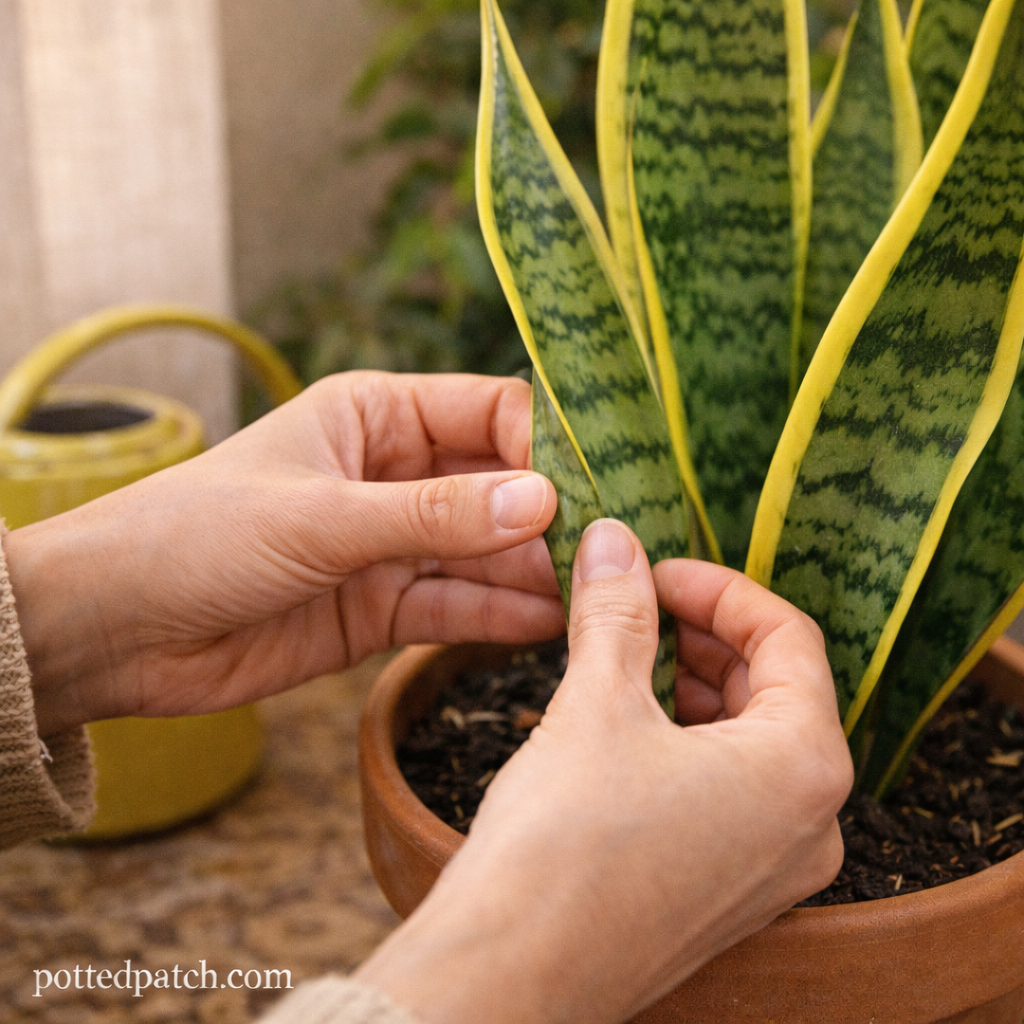
Feel the Leaves
Healthy snake plant leaves are firm and upright.
Signs it needs water:
- Leaves feel thinner or slightly flexible
- Very mild wrinkling near the base
- Growth has slowed during warm months
Soft, mushy leaves indicate overwatering, not thirst.
Lift the Pot
A dry snake plant pot feels noticeably lighter than a recently watered one. This method becomes very accurate with practice.
How Season Affects Watering
Spring and Summer
During active growth:
- Water slightly more often
- Expect faster soil drying
- Growth signals may appear sooner
Even in summer, snake plants rarely need weekly watering.
Fall and Winter
Growth slows significantly.
Adjust by:
- Extending watering intervals
- Letting soil stay dry longer
- Avoiding watering during cold spells
Many snake plants only need water once a month or less in winter.
How Pot Size and Material Change Watering Needs
Pot Size
Smaller pots:
- Dry faster
- May need water slightly more often
Larger pots:
- Hold moisture longer
- Require longer gaps between watering
Never increase watering just because the plant is large.
Pot Material
Terracotta:
- Breathable
- Soil dries faster
- Lower risk of overwatering
Plastic or ceramic:
- Retain moisture longer
- Require extra caution with watering frequency
Drainage holes are essential regardless of pot type.
Best Way to Water a Snake Plant
When it’s time to water:
- Water slowly until excess drains out
- Let the pot drain completely
- Empty saucers after watering
- Do not water again until soil is dry
Avoid misting. Snake plants absorb water through roots, not leaves.
Common Watering Mistakes to Avoid
- Watering on a schedule instead of checking soil
- Letting the plant sit in standing water
- Using pots without drainage
- Watering more often in low light
- Assuming drooping always means thirst
Most snake plant problems trace back to too much water, not too little.
Quick Watering Summary
- Let soil dry out almost completely
- Water every 2–6 weeks depending on conditions
- Reduce watering in winter
- Use well-draining soil and pots with drainage
- When in doubt, wait longer
Final Thoughts
Snake plants thrive on restraint. If you’re unsure whether to water, it’s usually better to wait another few days. By allowing the soil to dry fully and adjusting for light and season, your snake plant can stay healthy for years with minimal effort.