

Watering is the most important part of keeping a Money Tree healthy. Too much water is the most common cause of problems, while too little can cause stress and leaf drop.
The key is balance.
In this guide, you’ll learn exactly how often to water a Money Tree, how to test soil moisture, and how to adjust your routine based on the season and environment.
How Often Should You Water a Money Tree?
In most indoor environments, a Money Tree needs water:
- Every 1–2 weeks
- Only after the top 2–3 inches of soil are dry
There is no strict calendar schedule. Instead, always check the soil before watering.
Factors that affect watering frequency include:
- Light levels
- Room temperature
- Pot size
- Humidity
- Time of year
A plant in bright light will dry out faster than one in lower light.
The Best Way to Check Soil Moisture
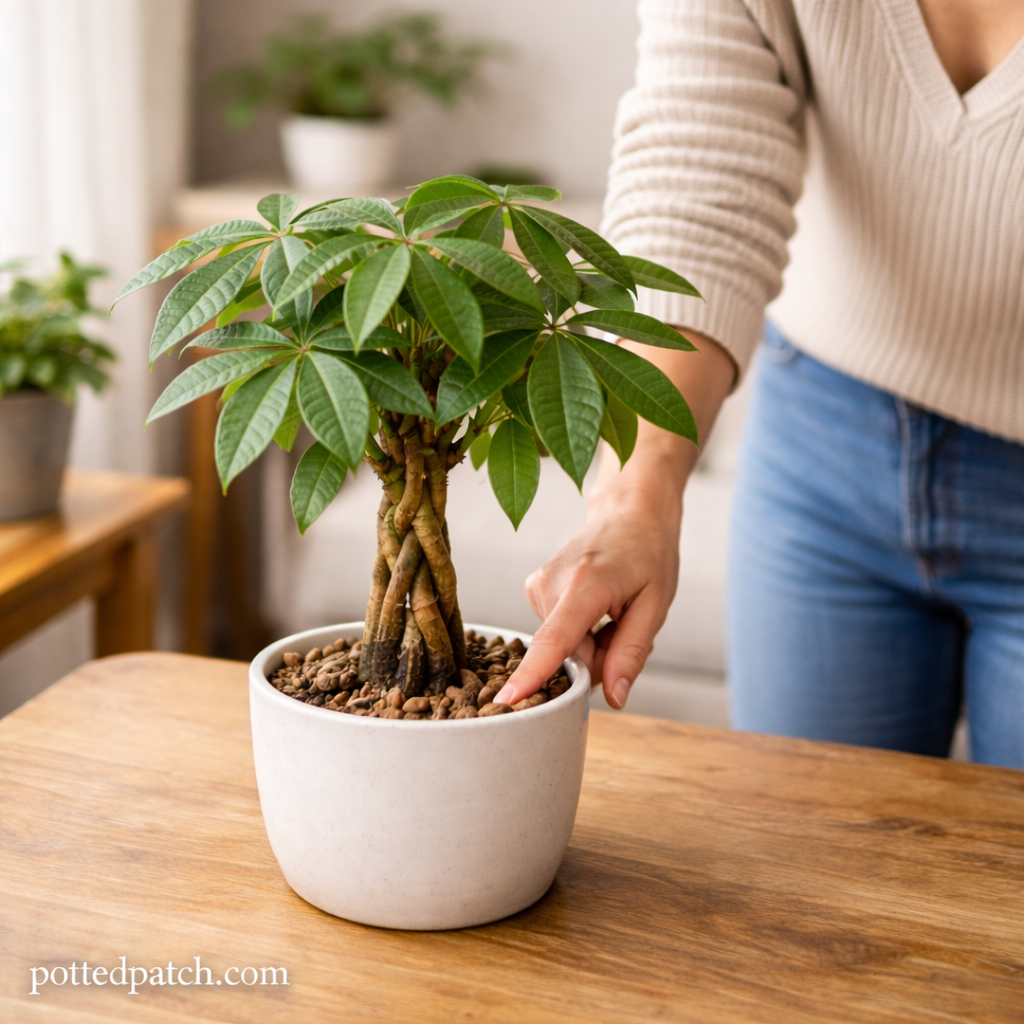
Do not rely on guesswork.
Use the finger test
- Insert your finger 2–3 inches into the soil.
- If it feels dry at that depth, it’s time to water.
- If it still feels moist, wait a few more days.
You can also use a moisture meter if you prefer more precision.
How to Water a Money Tree Properly
When it’s time to water, do it thoroughly.
Step-by-step method
- Use room-temperature water.
- Water slowly and evenly around the base.
- Continue until water drains from the bottom.
- Empty the saucer after 10–15 minutes.
Never let the plant sit in standing water.
Proper drainage is critical to prevent root rot.
Seasonal Watering Adjustments
Money Trees grow more actively in spring and summer.
Spring and Summer
- Check soil more frequently.
- You may water closer to every 7–10 days.
Fall and Winter
- Growth slows.
- Water less often (every 2–3 weeks is common).
- Soil takes longer to dry.
Always adjust based on how quickly the soil dries — not the calendar.
Signs You’re Overwatering
Overwatering is the most common issue.
Watch for:
- Yellowing leaves
- Soft or mushy trunk
- Dropping leaves
- Musty smell from soil
- Fungus gnats
If you notice these signs:
- Let soil dry out more between waterings.
- Ensure the pot has drainage holes.
- Consider repotting into fresh, well-draining soil if root rot is suspected.
Signs You’re Underwatering
Underwatering is less common but still possible.
Symptoms include:
- Drooping leaves
- Dry, crispy edges
- Soil pulling away from pot edges
- Slow growth
If underwatered, give the plant a thorough soak and resume a consistent schedule.
Does Humidity Affect Watering?
Yes.
Money Trees prefer moderate humidity (around 40–60%).
In dry indoor environments:
- Soil dries out faster.
- Leaves may develop brown tips.
You can help by:
- Using a humidifier
- Placing the plant on a pebble tray
- Grouping it with other houseplants
Higher humidity often reduces how frequently you need to water.
Common Watering Mistakes to Avoid
- Watering on a strict weekly schedule without checking soil
- Using pots without drainage holes
- Letting the plant sit in standing water
- Watering lightly instead of deeply
- Ignoring seasonal changes
Consistency and observation are more important than frequency.
Final Thoughts
A Money Tree does not need constant watering — it needs thoughtful watering.
Check the soil first. Water thoroughly. Let excess drain. Then wait until the top few inches are dry before watering again.
When you follow this pattern, your Money Tree will reward you with healthy, glossy leaves and steady growth.