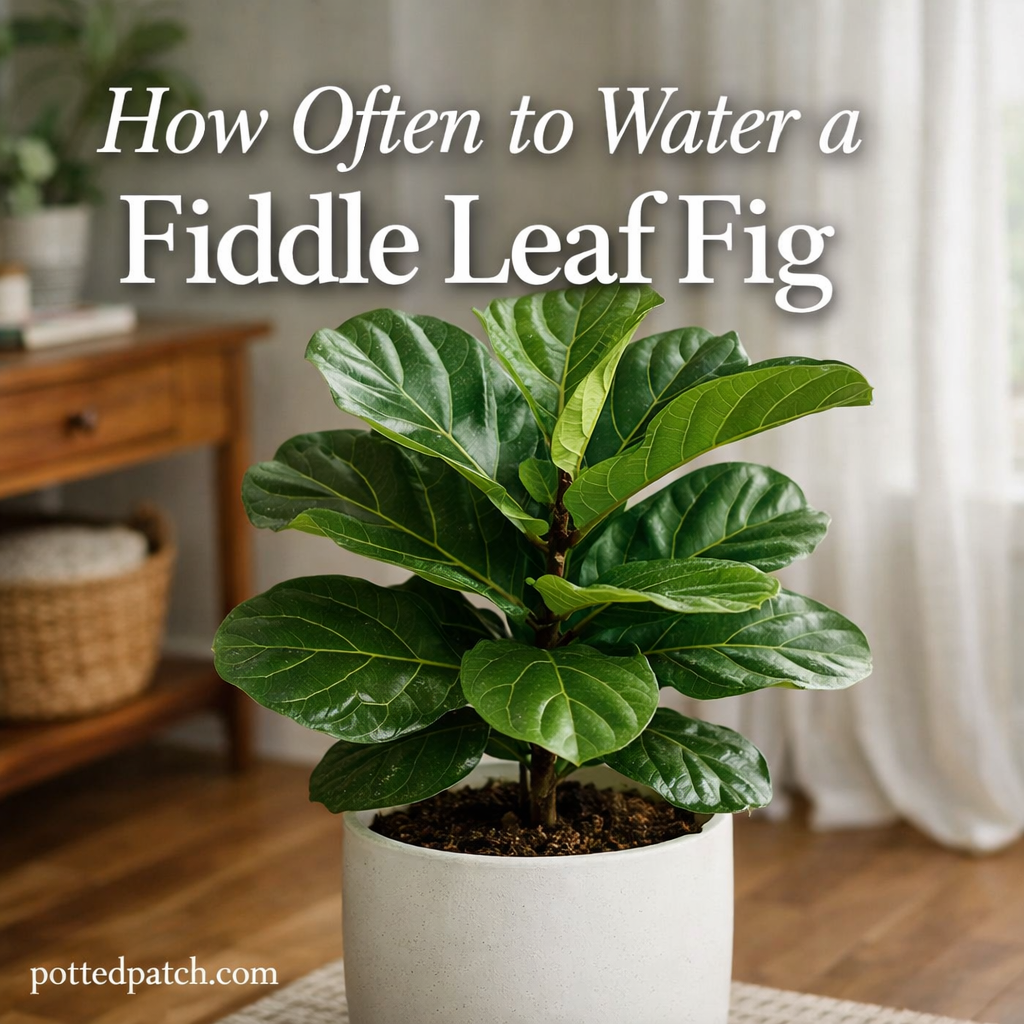
Fiddle leaf figs are stunning statement plants—but they’re also known for being a little dramatic. If you’ve ever wondered why your plant suddenly dropped a leaf or developed brown spots, watering is usually the reason.
So how often should you water a fiddle leaf fig?
The short answer: about every 7–10 days.
The real answer depends on light, pot size, soil, season, and your home’s humidity.
Let’s break it down so you can water confidently and avoid the most common mistakes.
Understanding the Fiddle Leaf Fig’s Water Needs
The fiddle leaf fig (Ficus lyrata) is native to tropical West Africa. In its natural environment, it experiences heavy rainfall followed by periods of drying out.
That means it prefers:
- Thorough watering
- Followed by partial soil drying
- Consistency (no extreme swings between bone-dry and soaked)
Overwatering is far more common than underwatering. Most problems start when the roots stay wet for too long.
The Ideal Watering Frequency
For most indoor homes:
- Every 7–10 days in spring and summer
- Every 10–14 days in fall and winter
But instead of sticking to a calendar, use this better rule:
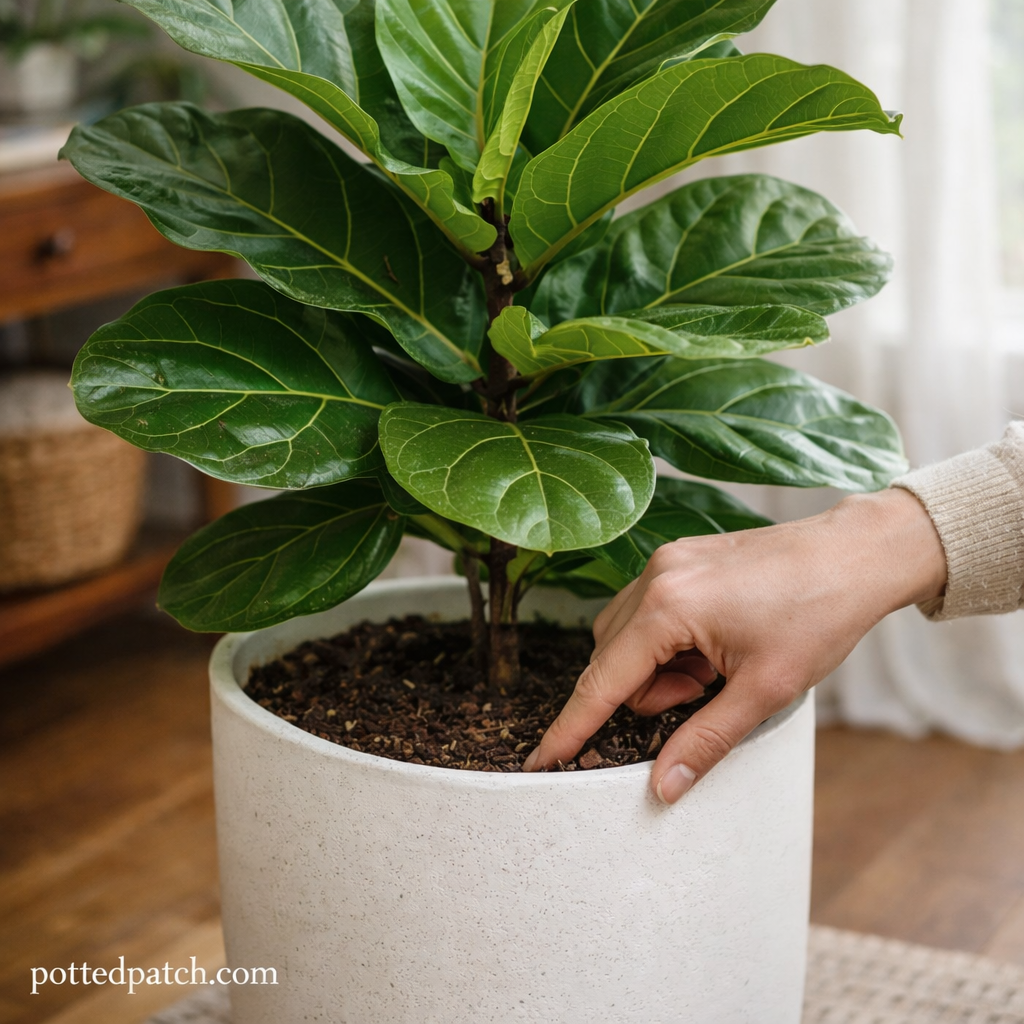
Water when the top 2 inches of soil are dry.
Stick your finger into the soil. If it feels dry down to your second knuckle, it’s time to water.
If it’s still moist, wait a few more days.
Step-by-Step: How to Water Properly
Watering technique matters just as much as frequency.
1. Check Soil Moisture First
Never water on autopilot. Always test the soil.
2. Water Thoroughly
Pour water slowly around the entire surface of the soil until it drains from the bottom.
3. Empty the Drainage Tray
Never let your plant sit in standing water. This causes root rot.
4. Return to Bright Light
Fiddle leaf figs need strong, indirect light to properly use the water you give them.
Signs You’re Watering Too Much
Overwatering is the number one killer of fiddle leaf figs.
Watch for:
- Brown spots with yellow halos
- Mushy stems
- Leaves dropping from the bottom first
- Soil that smells sour
- Fungus gnats
If you notice these signs, let the soil dry more deeply before watering again.
Signs You’re Not Watering Enough
Underwatering symptoms look different:
- Crispy brown leaf edges
- Drooping leaves that perk up after watering
- Soil pulling away from the edges of the pot
- Dry, compacted soil
If this happens, increase watering slightly and ensure water is soaking through evenly.
Factors That Change Watering Frequency
Your plant might need more or less water depending on:
Light
More light = more water usage
Low light = slower drying soil
Pot Size
- Small pots dry out faster
- Large pots hold moisture longer
Soil Type
Well-draining soil dries properly. Heavy, dense soil stays wet too long.
Season
Plants grow faster in spring and summer, meaning they use more water.
Indoor Humidity
Dry air (especially in winter) may increase watering needs.
Should You Use a Moisture Meter?
Moisture meters can help, especially for beginners. But they’re not perfect.
The most reliable method is still:
- Finger test
- Observing your plant
- Learning its drying pattern
Over time, you’ll develop a rhythm.
Common Watering Mistakes to Avoid
- Watering on a strict schedule without checking soil
- Using pots without drainage holes
- Giving small “sips” instead of thorough watering
- Letting water sit in the saucer
- Moving the plant frequently (which changes drying time)
Consistency is key.
A Simple Watering Routine to Follow
If you want a practical routine:
- Place your fiddle leaf fig in bright, indirect light.
- Check soil every 5–7 days.
- Water thoroughly when the top 2 inches are dry.
- Empty excess water from the tray.
- Reduce frequency slightly in winter.
That’s it.
Healthy fiddle leaf figs don’t need complicated care—they need consistent, mindful watering.
Final Thoughts
When it comes to watering a fiddle leaf fig, timing is less important than observation. These plants respond well when you pay attention to their soil and environment.
If you focus on:
- Proper drainage
- Bright light
- Letting the top layer dry
- Avoiding soggy roots
You’ll dramatically reduce leaf drop and keep your plant thriving.
Once you understand its rhythm, your fiddle leaf fig becomes much easier to care for—and far less dramatic.