

Watering is the make-or-break factor in fern care.
Unlike cacti or succulents, ferns do not tolerate dry soil well. But they also don’t want to sit in soggy conditions.
So how often should you water a fern?
The answer depends on light, humidity, temperature, and the season — but this guide will help you get it right every time.
The Short Answer
Most indoor ferns need watering:
- Every 3–7 days in spring and summer
- Every 7–10 days in fall and winter
But don’t rely on the calendar alone.
Always check the soil first.
The Best Way to Tell When to Water
Instead of following a schedule, use the touch test.
How to Check
- Insert your finger about ½ inch into the soil
- If it feels slightly dry on top but moist underneath, it’s time to water
- If the surface is still damp, wait
Ferns prefer consistently moist soil — never bone dry.
Why Ferns Dry Out Quickly
Ferns have delicate root systems and thin fronds.
They lose moisture faster than thicker-leaved plants.
They dry out more quickly when:
- Placed near windows
- Exposed to dry air
- Kept in smaller pots
- Sitting in warm rooms
Environmental conditions matter more than strict timing.
How to Water a Fern Properly
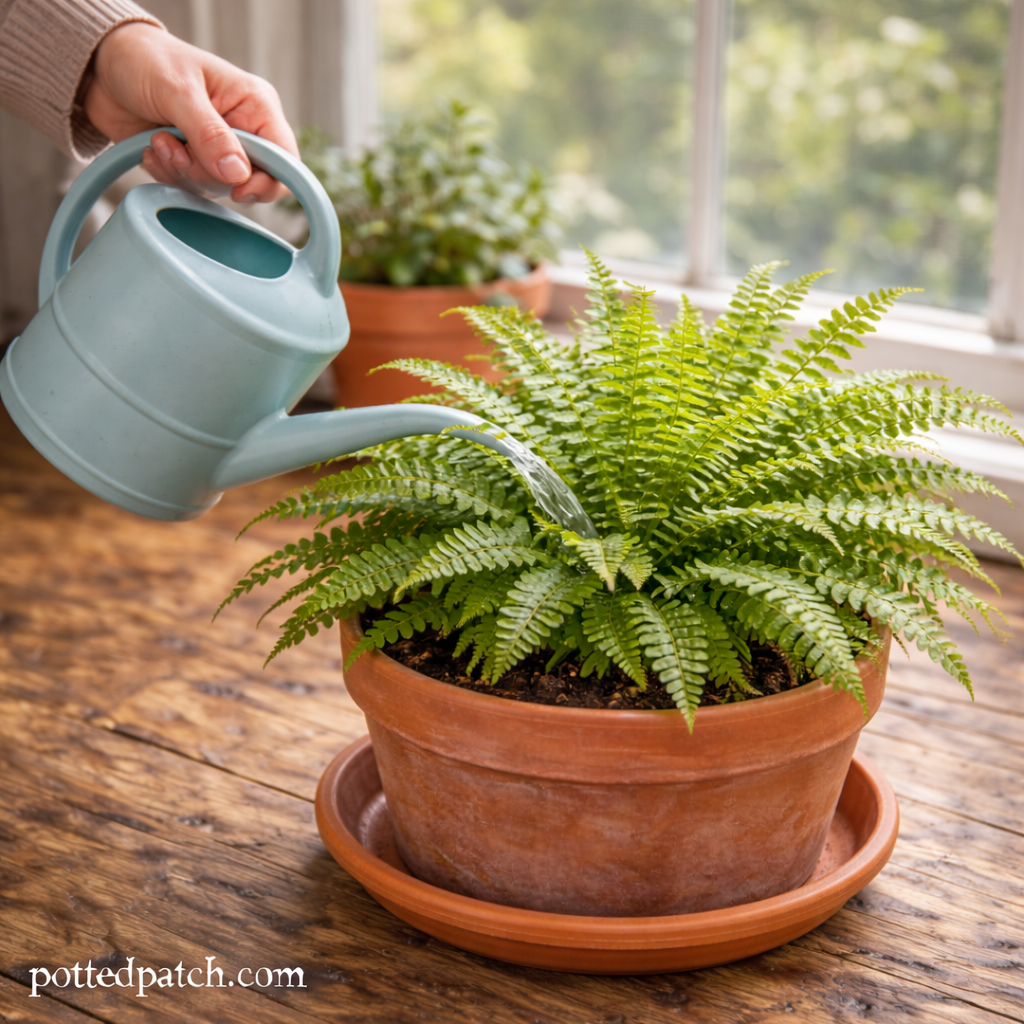
Watering technique is just as important as frequency.
Step-by-Step Method
- Water evenly across the soil surface
- Continue until water drains from the bottom
- Empty the saucer
- Avoid letting the pot sit in standing water
Even moisture prevents root stress.
Seasonal Watering Adjustments
Spring and Summer
- Growth is active
- Soil dries faster
- Water more frequently
Check every 2–3 days.
Fall and Winter
- Growth slows
- Soil stays moist longer
- Water less often
But never allow the soil to completely dry out.
Signs You’re Underwatering
- Crispy or brown leaf tips
- Drooping fronds
- Soil pulling away from the pot
- Lightweight pot
Ferns recover quickly once watered thoroughly.
Signs You’re Overwatering
- Yellowing leaves
- Mushy stems
- Foul smell from soil
- Constantly wet soil
Overwatering can lead to root rot if not corrected.
Does Humidity Affect Watering?
Absolutely.
Higher humidity slows moisture loss.
If your home is dry, especially in winter, you may need to:
- Water more frequently
- Use a humidifier
- Place the pot on a pebble tray
Dry air often causes browning before soil dries completely.
Pot Type Matters
The container affects how often you water.
Terracotta Pots
- Dry out faster
- May require more frequent watering
Plastic or Ceramic Pots
- Retain moisture longer
- Need less frequent watering
Always adjust based on soil dryness, not material alone.
Common Watering Mistakes
Avoid these common errors:
- Letting the soil fully dry out
- Watering lightly instead of deeply
- Leaving the pot in standing water
- Following a rigid weekly schedule
Consistency is key.
Quick Watering Checklist
To keep your fern properly hydrated:
- Check soil every few days
- Keep soil lightly and consistently moist
- Adjust for season and humidity
- Water deeply and drain completely
Healthy moisture levels mean lush, vibrant fronds.
Final Thoughts
Ferns like balance.
Not too dry. Not too wet.
Check the soil regularly, adjust with the seasons, and pay attention to your home’s humidity.
Once you learn your fern’s rhythm, watering becomes simple and predictable.