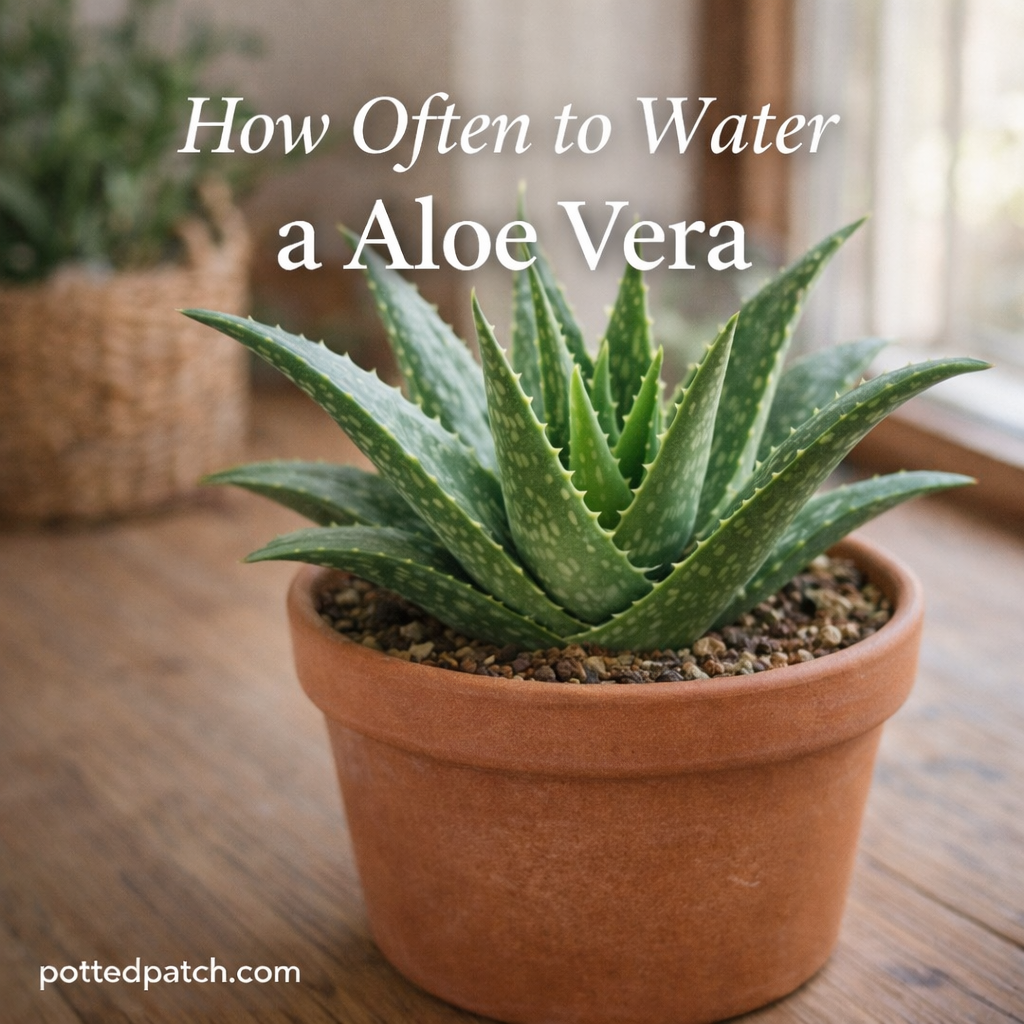
Aloe vera is one of the easiest houseplants to care for — but watering is where most people go wrong. Because aloe is a succulent, it stores water in its thick leaves and prefers dry conditions over constant moisture.
If you’re wondering how often to water a aloe vera, the short answer is: less often than you think.
This guide will break down the exact watering schedule, how to check soil moisture properly, and how to avoid common mistakes.
The Short Answer: Every 2–3 Weeks (Usually)
In most indoor environments, aloe vera should be watered:
- Every 2–3 weeks in spring and summer
- Every 3–4 weeks in fall and winter
- Only when the soil is completely dry
But the real key is not the calendar — it’s the soil.
How to Check If Your Aloe Needs Water
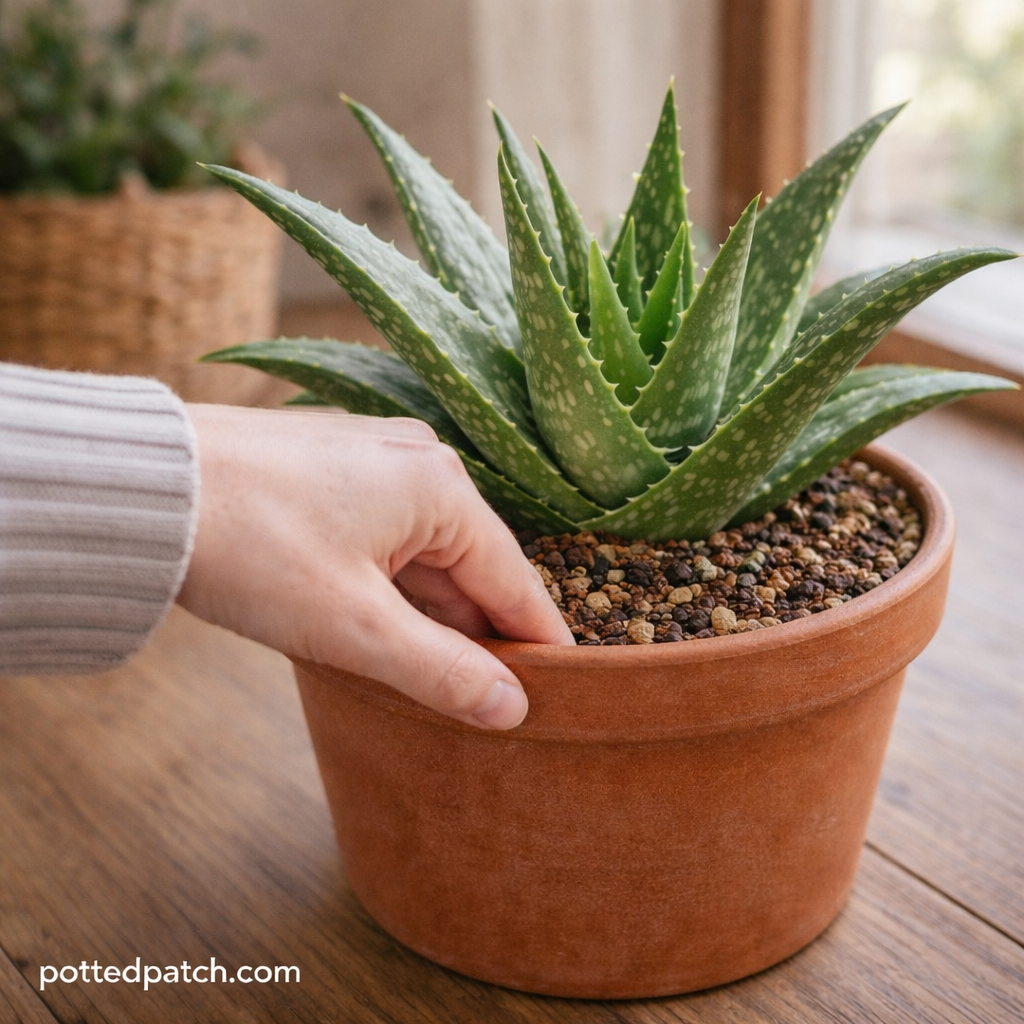
Never water on a strict schedule alone. Instead, check the soil first.
The Finger Test
- Insert your finger 2 inches into the soil.
- If it feels dry, it’s time to water.
- If it feels damp, wait a few more days.
The Pot Weight Method
Lift the pot when it’s dry and again after watering. Over time, you’ll learn to recognize the difference in weight.
Light pot = dry soil
Heavy pot = still moist
How to Water Aloe Vera Properly
Watering technique matters just as much as timing.
Follow These Steps
- Water deeply until excess drains from the bottom.
- Allow all water to drain fully.
- Empty the saucer underneath the pot.
- Never let the plant sit in standing water.
Aloe roots are highly sensitive to rot.
Why Overwatering Is So Dangerous
Overwatering is the #1 reason aloe plants die indoors.
When soil stays wet:
- Roots suffocate
- Fungal growth develops
- Leaves turn yellow or brown
- The base becomes soft or mushy
If you notice these signs, reduce watering immediately and check for root rot.
Seasonal Watering Adjustments
Aloe’s water needs change throughout the year.
Spring & Summer (Active Growth)
- Water approximately every 2–3 weeks
- Ensure bright light exposure
- Soil may dry slightly faster
Fall & Winter (Dormant Period)
- Reduce watering to every 3–4 weeks
- Growth slows significantly
- Soil takes longer to dry
Never water if the soil still feels moist.
How Pot Type and Soil Affect Watering Frequency
Your setup greatly impacts how often you’ll need to water.
Pot Material
- Terracotta dries out faster
- Plastic retains moisture longer
Soil Type
Use:
- Cactus or succulent mix
- Or regular potting soil mixed with perlite
Dense soil holds too much moisture and increases watering risks.
Signs Your Aloe Is Getting Too Much Water
Watch for:
- Yellowing lower leaves
- Soft, droopy foliage
- Mushy stem base
- Foul smell from soil
If caught early, allowing the soil to dry completely can often save the plant.
Signs Your Aloe Needs More Water
Underwatering is less common but still possible.
Look for:
- Wrinkled leaves
- Thinner leaf texture
- Extremely dry, compact soil
If this happens, water thoroughly and resume a balanced schedule.
Quick Watering Checklist
Before watering, ask:
- Is the soil completely dry?
- Does the pot feel light?
- Has it been at least 2–3 weeks?
- Is the plant receiving bright light?
If the answer is yes to the first two, it’s safe to water.
Final Thoughts
When it comes to how often to water a aloe vera, restraint is your best strategy. Aloe thrives on neglect more than attention.
Let the soil dry fully, water deeply but infrequently, and adjust based on season and light conditions. With the right balance, your aloe will stay firm, green, and healthy for years.