Succulents are often labeled as “low-maintenance” plants — and while that’s true compared to many houseplants, they’re not indestructible. In fact, most struggling succulents are suffering from the same few care mistakes.
If your plant looks stretched, mushy, shriveled, or just “off,” you’re likely making one of these common succulent care mistakes. The good news? They’re easy to fix once you know what to look for.
Let’s break them down.
1. Overwatering (The #1 Killer)
Overwatering is the most common reason succulents die indoors.
Unlike tropical houseplants, succulents store water in their leaves and stems. They don’t need frequent watering — and they absolutely hate soggy soil.
Signs of Overwatering
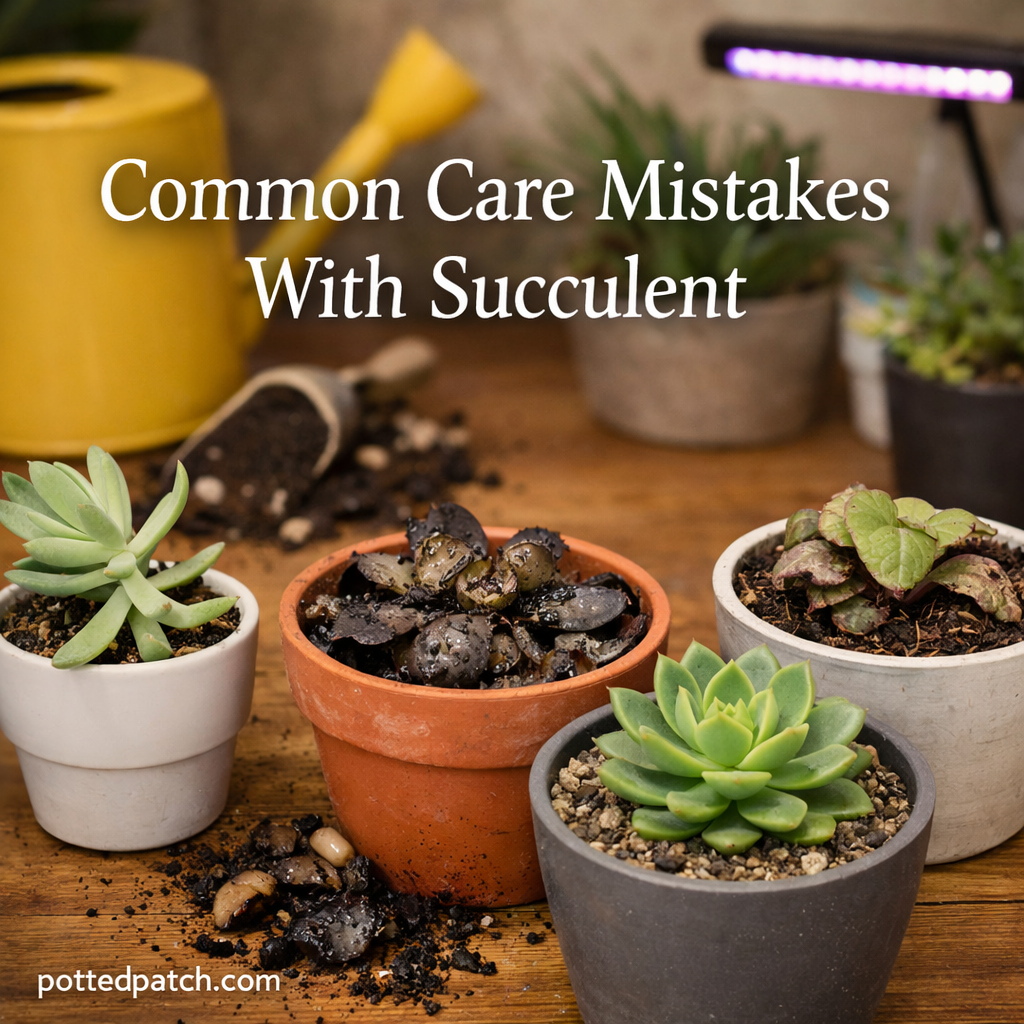
- Mushy or translucent leaves
- Leaves falling off easily
- Black or brown soft spots
- A rotting smell from the soil
- Stem turning soft near the base
How to Fix It
- Stop watering immediately.
- Check the roots for rot (black, slimy roots need trimming).
- Repot in fresh, dry succulent soil.
- Only water again when the soil is completely dry.
As a rule of thumb: it’s better to underwater a succulent than overwater it.
2. Not Enough Light
Succulents are light lovers. Indoors, they need far more light than most people think.
Placing them in a dim corner or several feet away from a window often leads to stretching and weak growth.
Signs of Insufficient Light
- Long, stretched stems (etiolation)
- Wide gaps between leaves
- Pale or faded color
- Leaning toward a window
How to Fix It
- Move the plant directly in front of a bright window (south or west-facing works best).
- Rotate the pot weekly for even growth.
- Consider a grow light if your space lacks natural sunlight.
Good light equals compact, vibrant succulents.
3. Using the Wrong Soil
Regular potting soil holds too much moisture for succulents. That extra water retention increases the risk of root rot.
Succulents need fast-draining soil that dries quickly between waterings.
The Right Soil Mix
Look for:
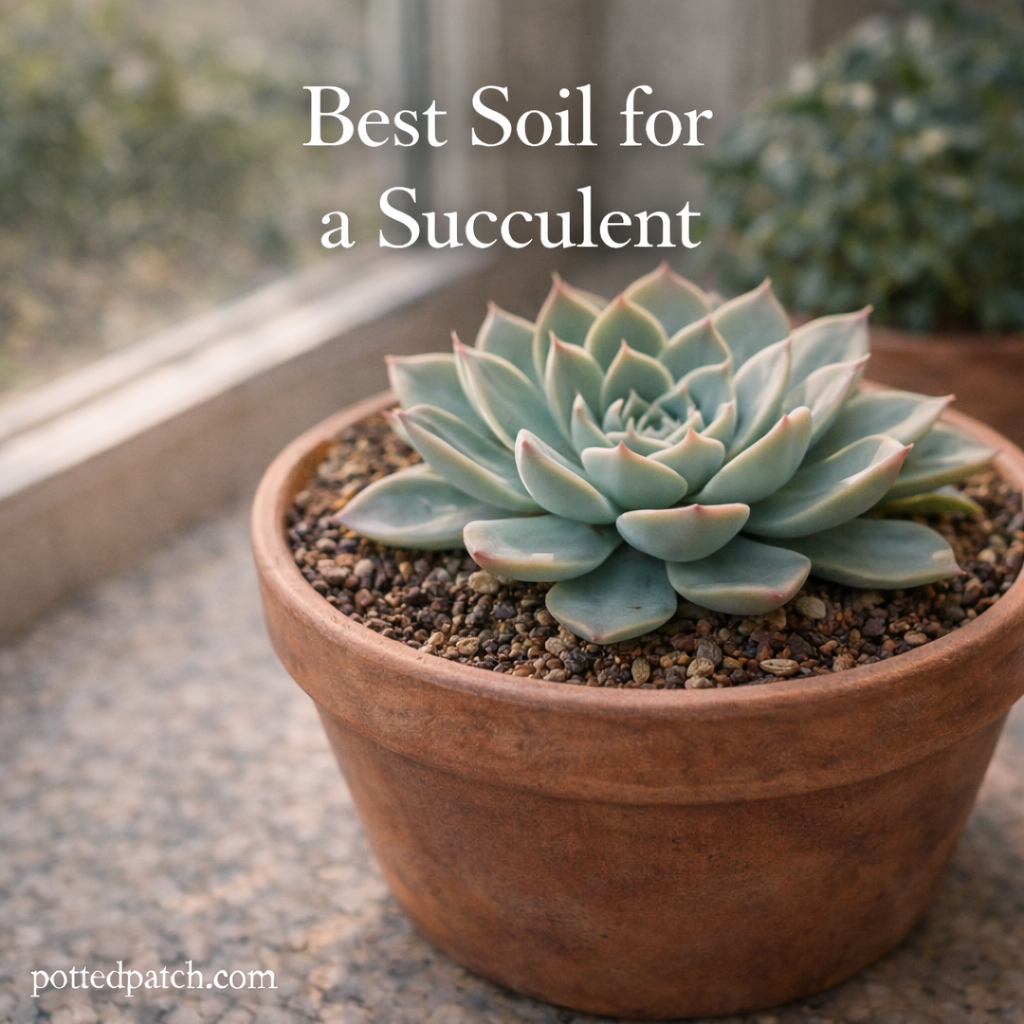
- “Cactus or succulent” labeled soil
- Gritty texture
- Added perlite or pumice
You can also improve regular potting soil by mixing in:
- Perlite
- Coarse sand
- Small gravel
Drainage is everything.
4. Pots Without Drainage Holes
Even perfect soil won’t save a succulent sitting in a pot without drainage.
When water has nowhere to escape, it pools at the bottom — and roots begin to rot.
Better Option
- Always choose a pot with a drainage hole.
- If you love decorative containers, use them as outer cachepots and keep your succulent in a nursery pot inside.
This small change can dramatically improve plant health.
5. Watering on a Schedule Instead of Checking Soil
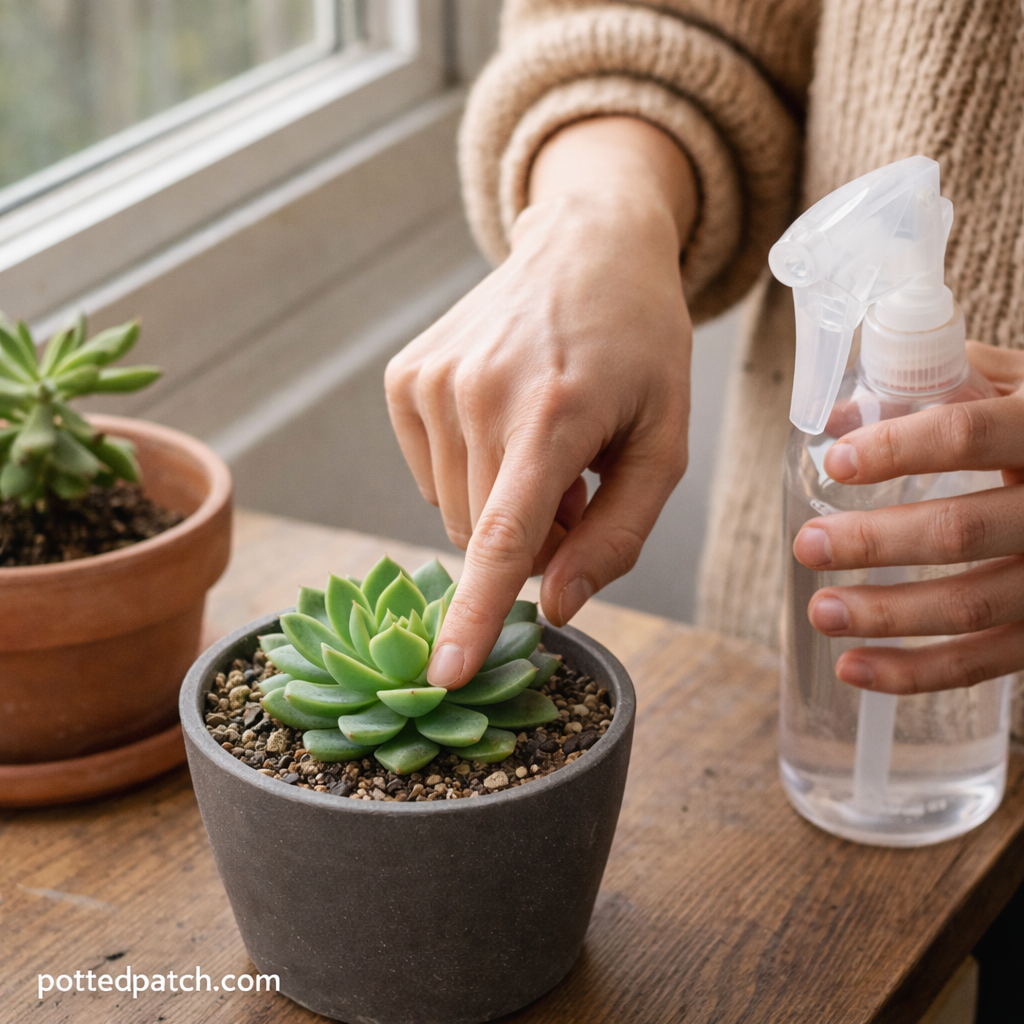
Succulents don’t follow a strict weekly watering routine.
Season, light levels, humidity, and pot size all affect how quickly soil dries.
Watering “every Sunday” is one of the biggest care mistakes.
What to Do Instead
- Stick your finger 1–2 inches into the soil.
- If it feels dry all the way through, water thoroughly.
- If there’s any moisture, wait a few more days.
Succulents prefer deep, infrequent watering — not light, frequent sips.
6. Ignoring Seasonal Changes
Succulents grow more actively in spring and summer and slow down in fall and winter.
Many people continue watering at the same rate year-round.
Seasonal Care Tips
- Water less in winter.
- Expect slower growth in cooler months.
- Reduce fertilizer during dormancy.
Adjusting care by season keeps plants healthier long-term.
7. Overcrowding or Not Repotting
As succulents grow, they can become rootbound or overcrowded.
This limits airflow and root space, affecting growth and increasing moisture retention.
When to Repot
- Roots growing out of drainage holes
- Soil drying extremely fast
- Plant becoming top-heavy
Repotting every 1–2 years keeps your succulent refreshed and thriving.
8. Mistaking Natural Leaf Drop for a Problem
Not every dropped leaf means disaster.
Succulents naturally shed older bottom leaves as they grow.
Normal vs. Concerning
Normal:
- Dry, crispy leaves at the bottom
Concerning:
- Soft, mushy, or translucent leaves
Understanding the difference prevents unnecessary panic.
Quick Succulent Care Checklist
If you want healthy succulents indoors, remember:
- Bright, direct light
- Fast-draining soil
- Pots with drainage holes
- Water only when fully dry
- Adjust care by season
Master these basics, and your succulents will reward you with compact growth, vibrant color, and long-lasting health.
Final Thoughts
Succulents are simple once you understand their natural environment. Most problems come from treating them like typical houseplants.
Give them more light, less water, and better drainage — and you’ll avoid nearly every common care mistake.
Small changes make a big difference.