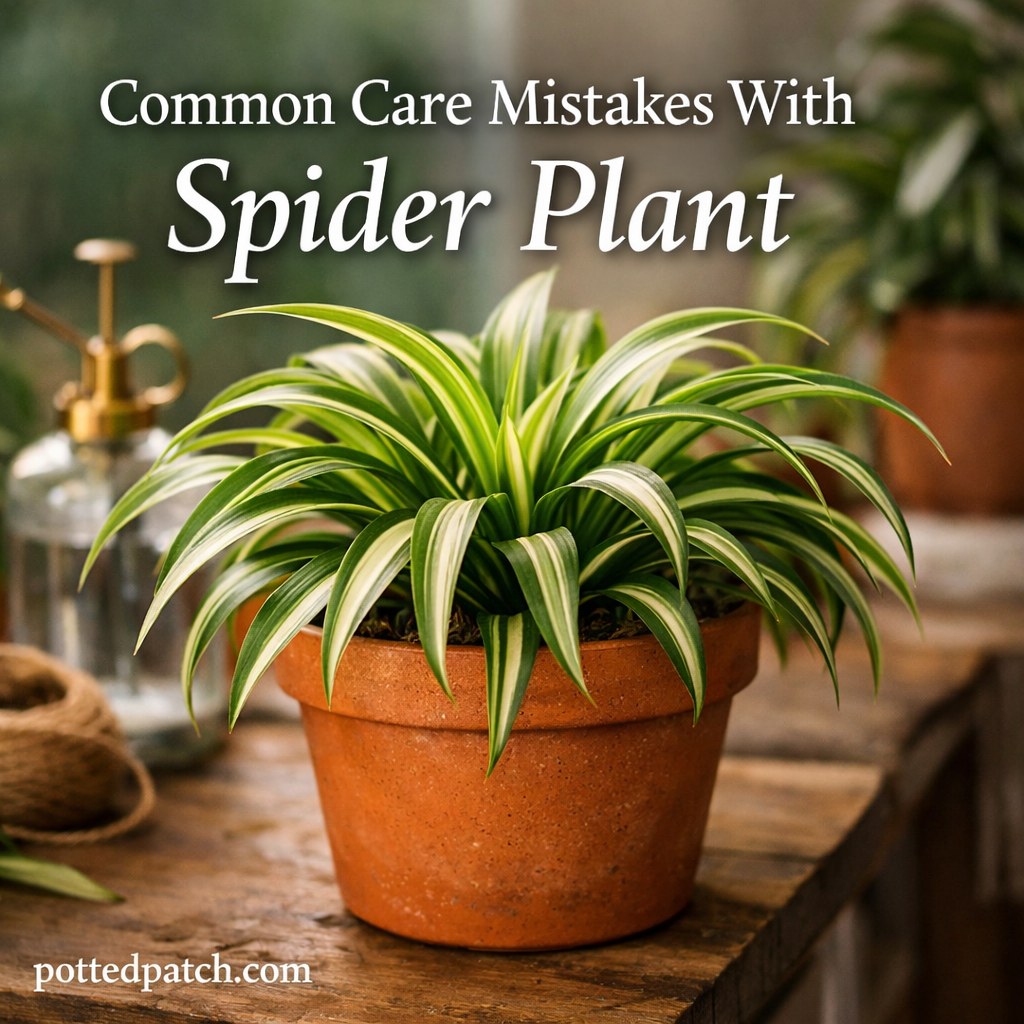
Spider plants (Chlorophytum comosum) are often called one of the easiest houseplants to grow — and for good reason. They’re resilient, adaptable, and quick to bounce back.
But “easy” doesn’t mean indestructible.
Many plant owners accidentally stress their spider plants without realizing it. Brown tips, drooping leaves, or stalled growth are often the result of small, preventable care mistakes.
In this guide, we’ll break down the most common spider plant care mistakes — and exactly how to fix them.
1. Overwatering the Plant
This is the most common mistake.
Spider plants prefer evenly moist soil — not soggy soil. When roots sit in constantly wet conditions, they can develop root rot.
Signs You’re Overwatering
- Yellowing leaves
- Mushy stems at the base
- A sour smell coming from the soil
- Wilting even though the soil is wet
How to Fix It
- Allow the top 1–2 inches of soil to dry before watering again.
- Make sure your pot has drainage holes.
- Empty the saucer after watering so roots aren’t sitting in water.
- If root rot has started, trim affected roots and repot in fresh soil.
Spider plants tolerate slight underwatering much better than constant overwatering.
2. Using Tap Water Without Letting It Sit
Spider plants are sensitive to fluoride and salts commonly found in tap water. This often shows up as brown leaf tips.
What Happens
Mineral buildup accumulates in the soil and stresses the roots, leading to crispy, discolored tips.
Better Options
- Use distilled water.
- Use filtered water.
- Let tap water sit out for 24 hours before watering.
- Flush the soil thoroughly once a month to remove salt buildup.
If your plant is otherwise healthy but has brown tips, water quality is often the cause.
3. Placing It in Too Much Direct Sunlight
Spider plants love bright light — but not harsh, direct afternoon sun.
Too much direct sunlight can bleach leaves or cause dry, crispy edges.
Ideal Light Conditions
- Bright, indirect light
- Near an east-facing window
- A few feet away from a south or west window
If leaves look faded or scorched, move the plant slightly farther from the window.
4. Ignoring Pot Size and Root Crowding
Spider plants grow thick, tuberous roots. They actually enjoy being slightly root-bound — but there’s a limit.
If roots completely fill the pot, the plant may:
- Stop producing new leaves
- Wilt quickly after watering
- Push soil up and out of the container
When to Repot
Repot when:
- Roots are circling tightly at the bottom.
- Water runs straight through without absorbing.
- Growth slows significantly.
Move up just one pot size (1–2 inches wider). Oversized pots can hold too much moisture.
5. Forgetting to Fertilize (or Overdoing It)
Spider plants don’t need heavy feeding, but they do benefit from occasional nutrients during the growing season.
Common Fertilizer Mistakes
- Using full-strength fertilizer every watering
- Fertilizing during winter dormancy
- Never fertilizing at all
Best Practice
- Use a balanced liquid fertilizer diluted to half strength.
- Feed once per month in spring and summer.
- Skip feeding in fall and winter.
Too much fertilizer can cause brown tips just like poor water quality.
6. Poor Drainage Soil
Standard potting soil that stays wet too long can suffocate spider plant roots.
They prefer loose, well-draining soil.
Ideal Soil Mix
- Regular potting mix
- Add perlite for drainage
- Optional: small amount of orchid bark for airflow
If soil feels heavy or compacted, consider refreshing it.
7. Not Rotating the Plant
Spider plants grow toward light. If you never rotate them, they can become lopsided.
Simply turn the pot a quarter turn every week or two to encourage even growth.
This small habit makes a big visual difference.
8. Cutting Off Healthy “Babies” Too Early
Spider plants produce offshoots called “pups.”
Some plant owners remove them immediately for a cleaner look. While this isn’t harmful, it can slightly reduce the plant’s energy flow if removed too early.
Let pups develop small roots before trimming them for propagation.
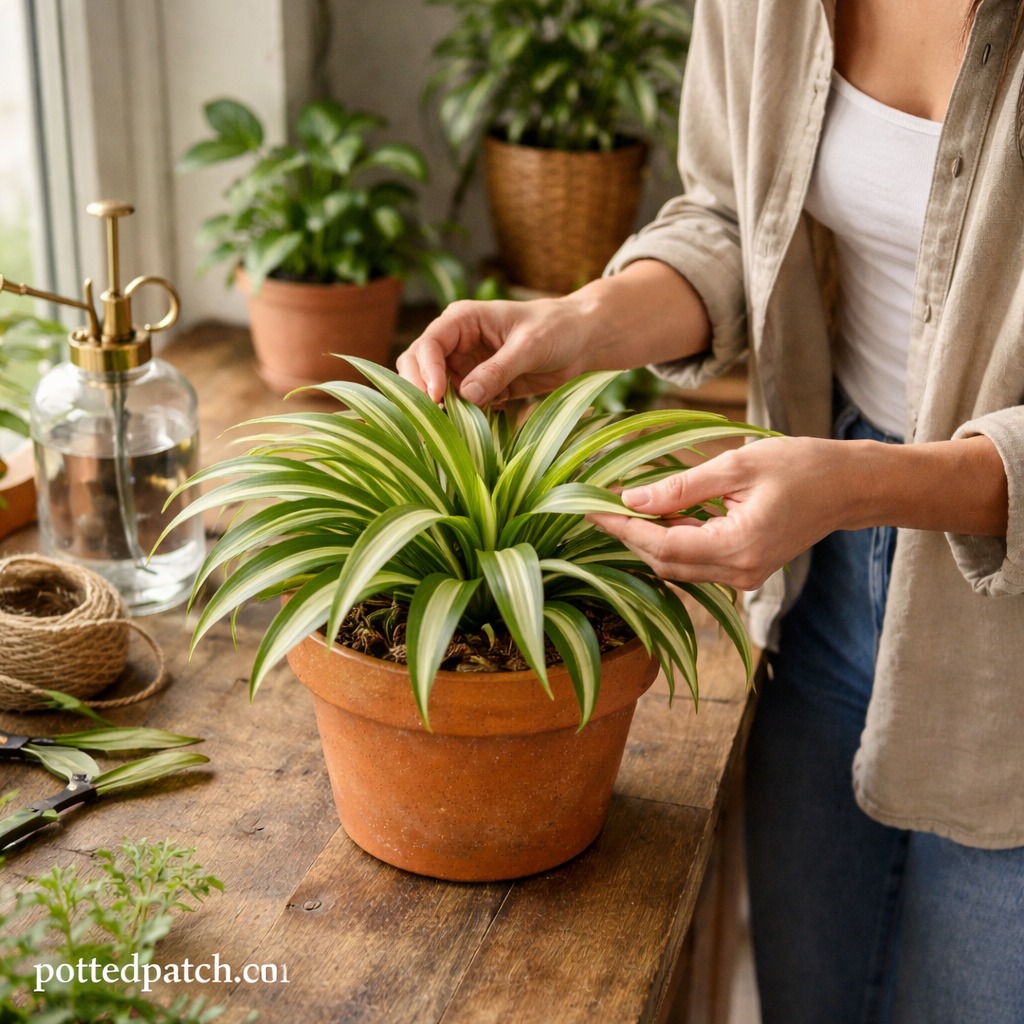
9. Panic-Pruning Brown Tips
Brown tips are common and often cosmetic.
Instead of cutting large sections of leaves:
- Trim only the brown tip following the leaf’s natural shape.
- Use clean, sharp scissors.
- Address the root cause (water, fertilizer, or salt buildup).
Over-pruning stresses the plant more than the brown tips themselves.
10. Neglecting Seasonal Adjustments
Spider plants grow actively in spring and summer but slow down in fall and winter.
During cooler months:
- Water less frequently.
- Stop fertilizing.
- Keep away from cold drafts.
Adjusting care with the seasons keeps the plant balanced year-round.
Final Thoughts
Spider plants are forgiving — but most issues come down to three things:
- Too much water
- Mineral buildup
- Incorrect lighting
If your spider plant looks stressed, step back and review the basics before making dramatic changes.
Small adjustments often lead to quick recovery.
With the right balance of light, watering, and occasional feeding, your spider plant can thrive for years — producing vibrant foliage and plenty of pups along the way.